Garden envy … er, inspiration

When my husband and I stroll by a certain neighbor’s yard, the one lined with Black-Eyed Susans at the front of her garden, he says quietly, “That looks really nice.” He’s right. The eight bushes shine their own light in the setting sun.

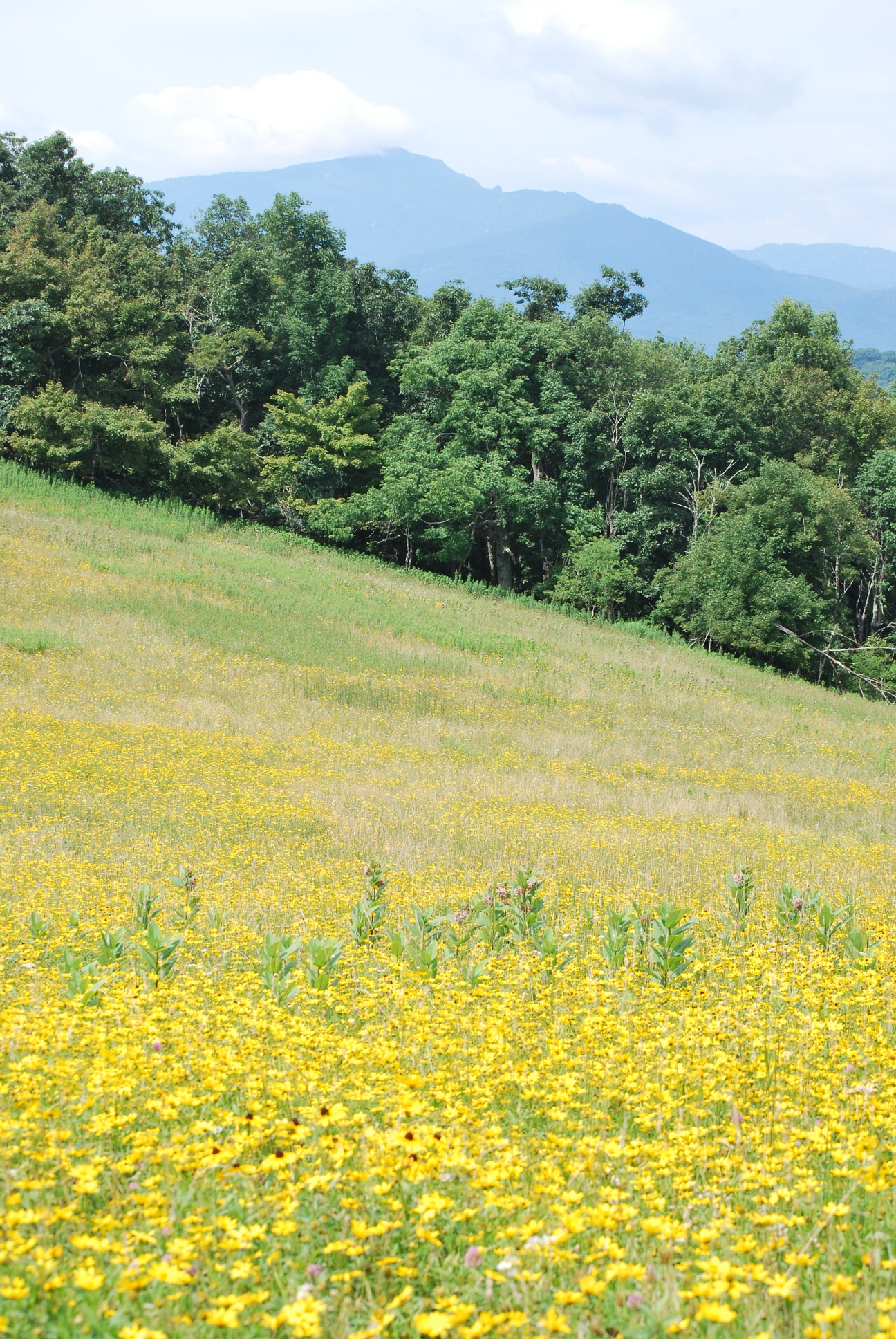
I walk through a meadow filled with Black-Eyed Susans and feel a need to capture a small part of that golden riot in my own yard.
fieldofblackeyedsusans_2013

A field ablaze with Black-Eyed Susans

I want to plant as many Black-Eyed Susans as I can find, except that I’m not sure how they’ll do in our less sun-filled garden spots shaded by towering trees. I hate to waste the money, and even more, I hate to waste the plants if I can’t put them in a good place to grow.

firstofmany_2013

Perhaps this one bloom will bring many more.

So I’ve started with two pots full – just to try them out – knowing I can add more if these two thrive where I’ve put them.

blackeyedsusansinthepot_2013

This one enjoys a sunny spot on the porch steps, but I must find a place in the ground for it.
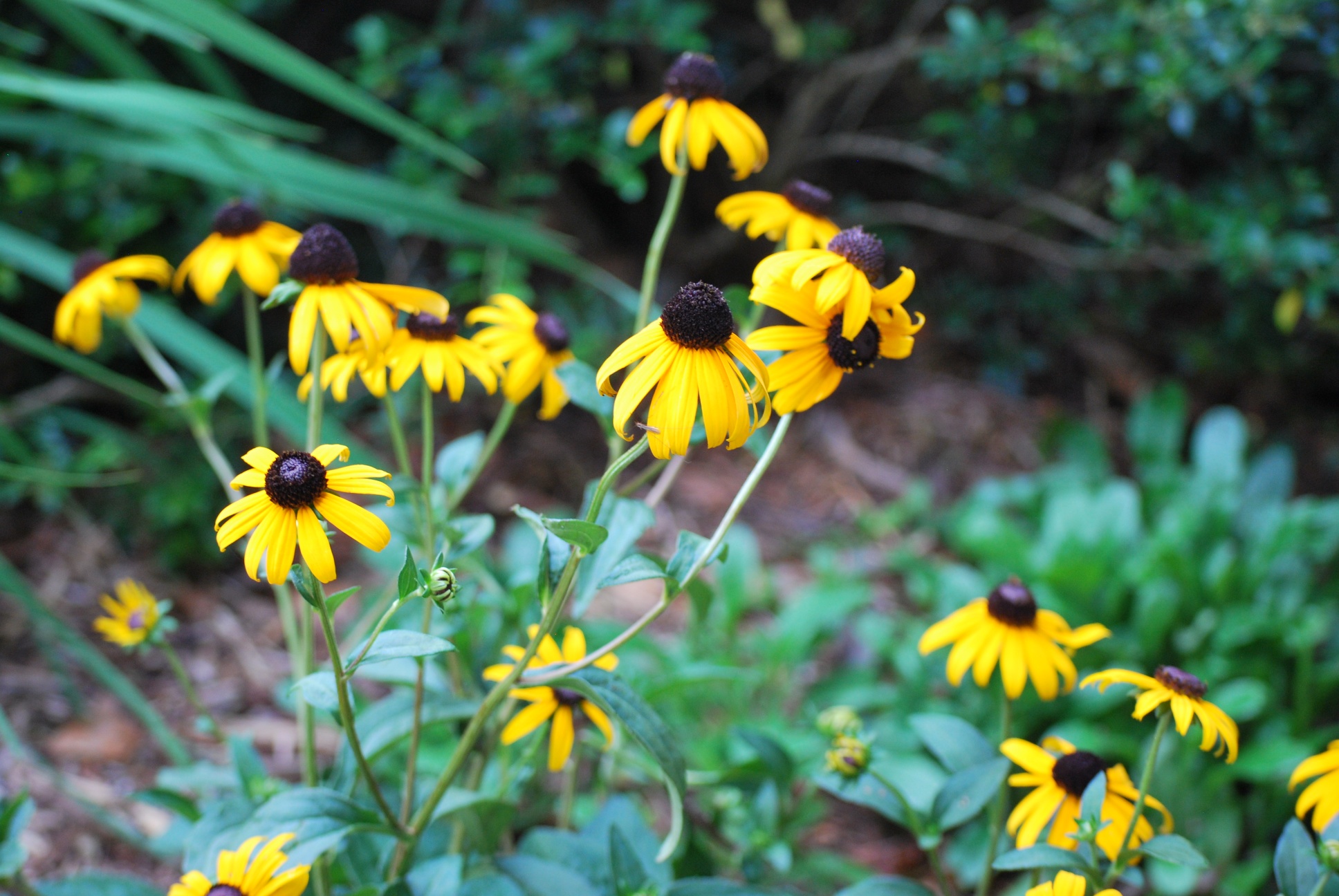
blackeyedsusansbythedoor_2013

In the ground. Will the deer and chipmunks leave them alone?

They’re in the ground now, and time will decide how they fare.

While I wait for time and the flowers to decide their own fate, I read Sandra Cisneros’ sweet coming-of-age book The House on Mango Street and am moved by what the young narrator – a girl with my name in Spanish – says right there on page 33:

You can never have too much sky. You can fall asleep and wake up
drunk on sky, and sky can keep you safe when you are sad. Here
there is too much sadness and not enough sky. Butterflies are too
few and so are flowers and most things that are beautiful. Still, we
take what we can get and make the best of it.

I plant because I want butterflies too many to count and flowers too numerous to pick a favorite and a garden that captures beauty, so that no one walking by will say there is not enough of any of it.

But there’s this small part of me that wonders: is envy what drives me to fill the garden? Or is it inspiration?
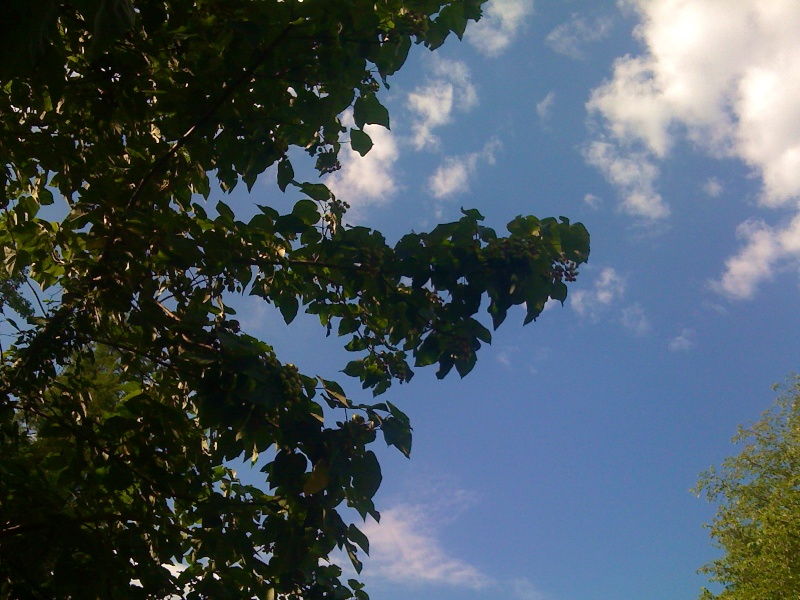
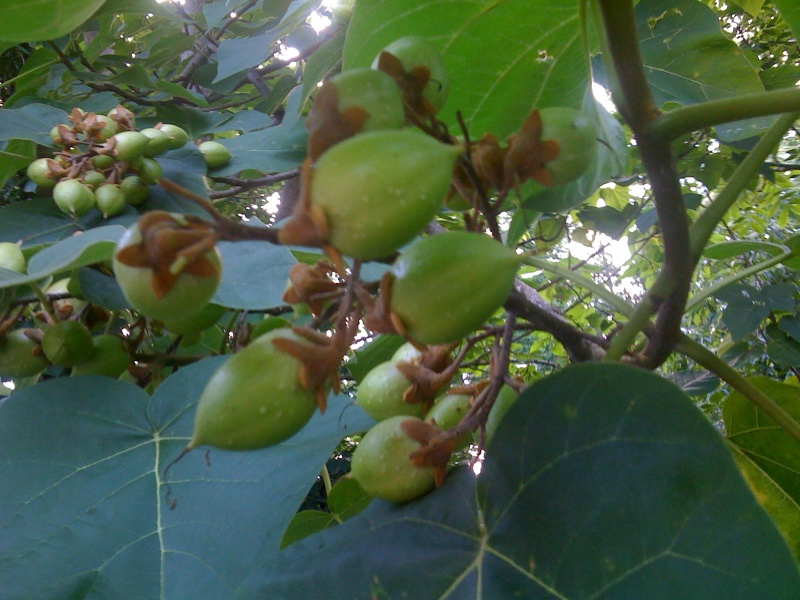
Runners under the mystery tree

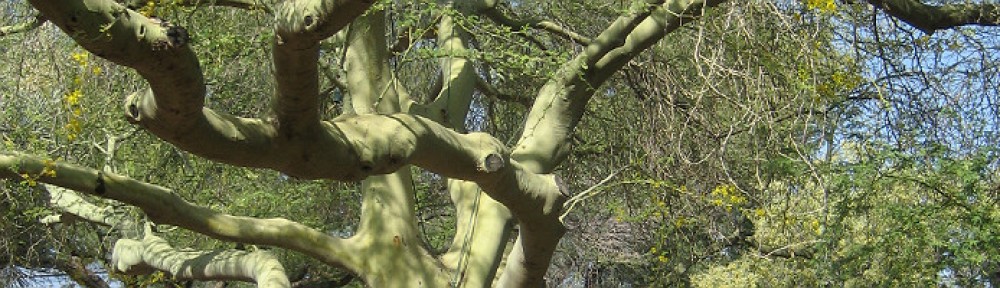
I was at an out-of-town race recently, and after the race, many of the runners and spectators milled around the snack table or sat along a shaded wall. Behind the wall, there grew a very unusual and interesting tree, one I had not seen before.

PaulowniaTree_2013

Under the shade of a Paulownia tree

PaulowniaTreeSeeds_2013

Paulownia seed pods (with apologies for the pictures quality from my phone instead of my usual camera)


The tree quickly became the topic of conversation among several of us, as we wondered aloud what it was. One of the runners thought he knew, and I got my phone from the car to see if his guess was correct. Sure enough, he was right: the tree was a Paulownia – or Empress – tree.

Because I had my phone, I could do a quick Wikipedia search to learn more about this strange tree and its odd seed pods that had piqued our interest in the first place. I learned that it comes from China, is considered invasive because of how easily it spreads and how quickly it grows, but it “cannot thrive in the shade of other trees.”

When I looked at online images of this tree, I realized I had seen it before after all, blooming in spring along highways. In spring, the tree’s purple blooms remind me of wisteria, a vine I think is pretty but would fight like the dickens to keep out of my own garden. So in some ways, considering that the Paulownia is invasive to this country, I guess it is the wisteria vine of trees. But it’s still a cool tree. It even has its own fan club of sorts.

What I liked about this particular Paulownia on this particular day was that it brought together a group of runners and gave us something to talk about for a brief moment other than the race (that brutal hill at the finish), the small turnout, the humidity, the awards, the last race we did, the next one coming up.

It offered a fun juxtaposition of two things I love: running and trees. I just wanted to share a bit of that fun with you today, and I hope you’re able to go out and find your own unexpected intersection of things you love.

Favorite trees of summer

Woweee – it’s hot here. After a cooler and wetter than usual season, the summer heat and humidity have finally arrived.

I’ve struggled to run all week. It doesn’t matter how early I get up to run. If I get up before the sun, it’s more humid. If I wait until the sun rises, the humidity starts to drop a little, but then there’s the blasting heat of the sun to contend with.

That’s why I especially love and appreciate trees during the summer: their glorious shade. I can wait for the sun to come up and then run a mostly shaded route. The shade keeps me from getting burned and provides good resting spots so I can catch my breath.

While I’ve been appreciating the shade that trees offer, I have also been thinking about the beautiful and delicious offerings trees give us in summer.

Peach2013

My favorite summer fruit from a tree

Of all the summer fruit, I love peaches the best. When I was little, we loaded up on peaches when we visited my great aunts each summer, and Mom would make an amazing peach cobbler with some and can the rest to last until the following summer. This has spoiled me to the point that I cannot eat store-bought canned peaches. But I do love eating them fresh during summer. I don’t even bother to peel their fuzzy skin.

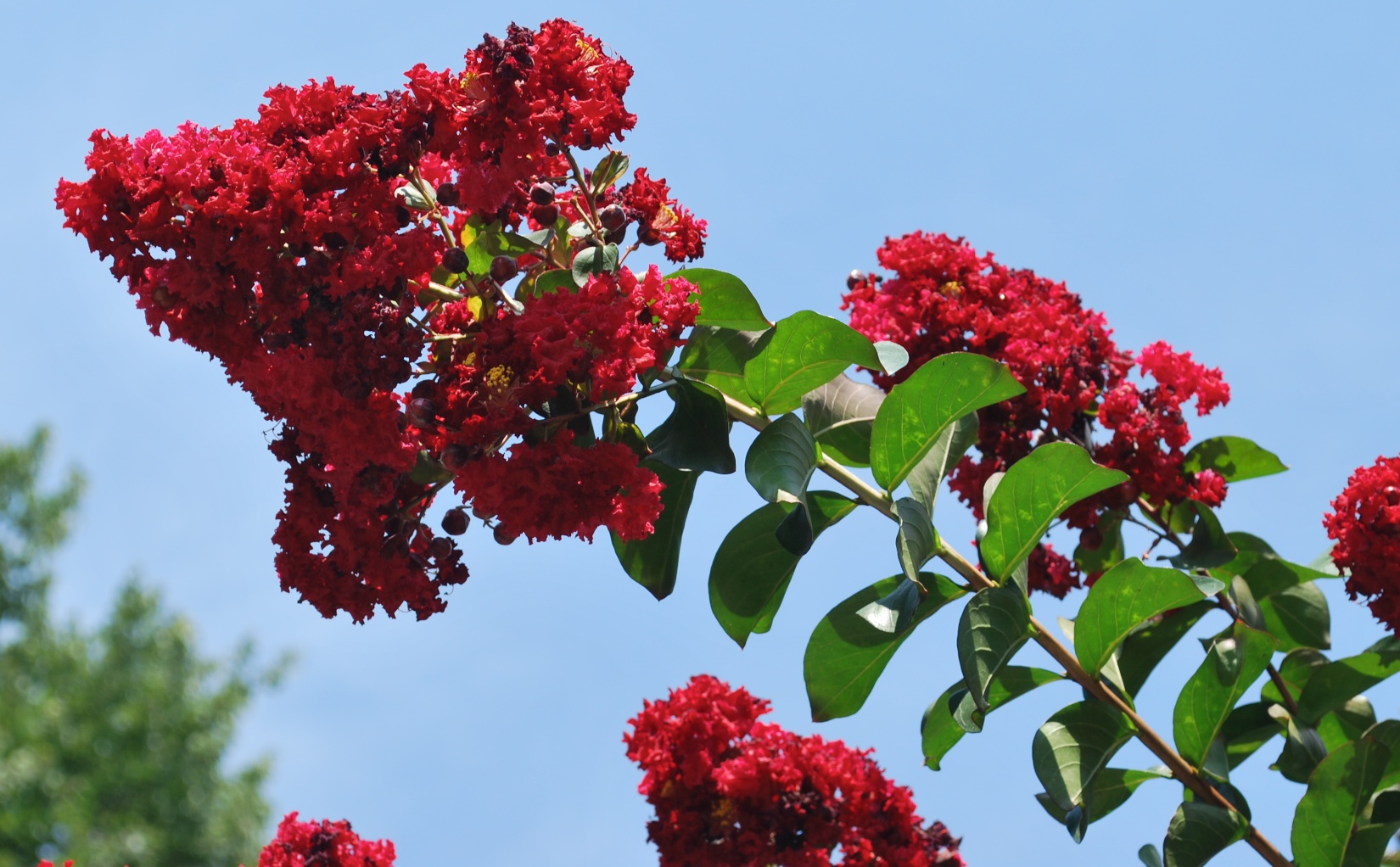
In the beauty category, nothing tops the showy display of crape myrtles. I realized just yesterday that all of a sudden (at least, it seems sudden to me), the crape myrtles have flowered. The young tree in my front yard hasn’t bloomed just yet, but I drove over to one of my favorite streets in the city to take a few pictures of the crape myrtles in bloom there:

CrapeMyrtleStreet2013

One of my favorite streets near where I live

It’s a narrow, twisty street, with cars usually parked on both sides. So drivers have to be polite to one another and let one car at a time go through the space between the cars (for the most part, drivers are respectful of one another while navigating this road; it’s a free-for-all again on connecting roads). The crape myrtles that adorn the street, though, make it worth the slow drive.

The trees on this particular stretch of the road are mostly dark pink, but I found one darker red one in bloom among the pink.

RedCrapeMyrtle2013

Red crape myrtle blooms among the mostly pink trees

The largest crape myrtles, like the one below, offer not just beautiful color but also a canopy of shade against the scorching sun.

CrapeMyrtleCanopy2013

What summer trees do you love best, and is it for their beauty or for their fruit?

Surprises in the garden

“I grow plants for many reasons: to please my eye or to please my soul, to challenge the elements or to challenge my patience, for novelty or for nostalgia, but mostly for the joy in seeing them grow.” – David Hobson

_______________________________________

I was at the hardware store this past weekend and overheard two men talking. One had come across a snake in his garden and was buying something (poison? trap? I didn’t look at what he was holding) to get rid of the snake. The other told him if it was a black snake, then he should leave it alone. He went on to say,”If you ever see a black snake out along the roadside, put him in the car and take him home with you.” Ugh.

I know he speaks some truth. Black snakes are supposedly your best friend when it comes to keeping poisonous snakes away from your yard. I just … well … I just don’t like snakes at all. I know they exist, but I prefer never to see them in my garden or along my running path or even behind glass in a cage at the nature museum.

My husband and I commented again about the two men’s conversation when we saw a large black snake on the other side of the road as we were out driving a few days later. Our dog was in the back of the car, and we envisioned the total chaos that would have ensued had we stopped and tossed the snake in with the dog to take home. I’m not sure who would have fared worse: the snake, our dog, the car or us. Again, ugh.

So I’m glad that I’ve only had pleasant surprises in my garden this past week, and I wanted to share some of them with you. I promise: there are no scary critters involved.

First was a calla lily in bloom. A dear friend of mine carried a bouquet of orange calla lilies at her wedding, and ever since, I associate these flowers with her. As I was planning out a new backyard garden spot a few years ago, I knew I wanted to put in some calla lilies. I have been disappointed each year as the huge, green leaves came up but never any blooms. And then this, as we officially entered summer:

Callabloom2013

I noticed a spot of yellow from my kitchen window and went running outside to see if my eyes were playing tricks on me.

I guess it’s simple things like this that delight my soul. The bloom has lasted for days now, and others have joined it to add beauty to my orange and yellow garden patch.

Callabloom2_2013

A calla lily bloom heralds the start of summer

The second surprise showed up in my front yard at about the same time. A Lady Baltimore hibiscus (one my longtime readers may remember from a post two summers ago) came up this summer as a double stalk instead of just the single one that has been coming up for several years now.  Continue reading

Spring hopes

For those of you who have been wondering if I’ve been neglecting my garden during the early spring with all the running my husband and I have been doing, you’re right. I have neglected my garden, and as a result, the chipmunks are winning a battle I didn’t realize we were already fighting this season.

When my husband and I came home from an out-of-town trip early this week, he went outside and stayed outside for a looooong time. When he came inside, he was steaming mad. Why? A beautiful camellia had tipped over, its roots eaten/disturbed by chipmunks tunneling around everywhere.

After several years of barely blooming, that particular camellia bloomed more abundantly this year, and a few weeks back, I took some photos of it:

A beautiful young camellia just weeks ago

A beautiful young camellia just weeks ago

I’m glad now that I photographed it when I did, because it may not survive the chipmunk wars to bloom another season. Its lovely blooms stayed well past a typical camellia season, probably because we’ve had a mostly chilly spring so far.

redcamelliabloom2013

A showy bloom from the camellia

My husband propped the camellia back up, and he filled in around it with dirt and my usual arsenal against varmints: permatill (tiny rocks that act as a soil conditioner and supposedly also as a deterrent to burrowing rodents like chipmunks); holy moley (mole repellent that apparently does not repel chipmunks); more dirt and new mulch; and holly tone (fertilizer to strengthen the camellia).

We have hope that our efforts will save the camellia, but it has already shed several yellow leaves, and the rest of the leaves look distressed. I’m not sure whether to cut it way back or leave it alone to see what parts may survive, if any. Master gardeners out there: I welcome your advice.

I’ve spent the last few days weeding and planning next steps for the garden, all the while listening for blasted chipmunks to chirp their way past the red camellia. I’m also trying to figure out the best way to protect the other two camellias we have, along with a young susanqua that is a transplant from my mother’s garden. Heaven help the chipmunks if they go there. Continue reading