Garden envy … er, inspiration

When my husband and I stroll by a certain neighbor’s yard, the one lined with Black-Eyed Susans at the front of her garden, he says quietly, “That looks really nice.” He’s right. The eight bushes shine their own light in the setting sun.

I walk through a meadow filled with Black-Eyed Susans and feel a need to capture a small part of that golden riot in my own yard.
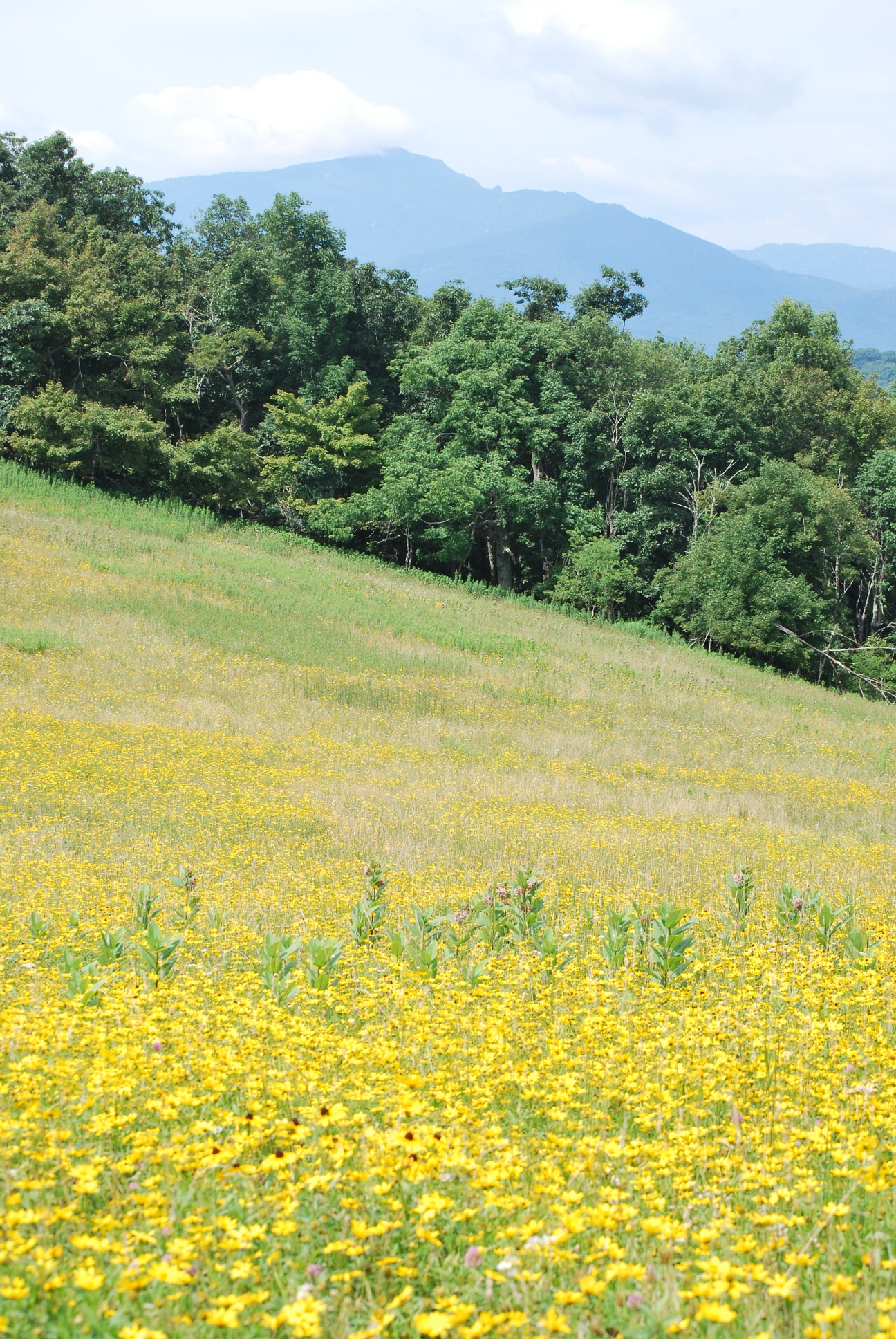
fieldofblackeyedsusans_2013

A field ablaze with Black-Eyed Susans

I want to plant as many Black-Eyed Susans as I can find, except that I’m not sure how they’ll do in our less sun-filled garden spots shaded by towering trees. I hate to waste the money, and even more, I hate to waste the plants if I can’t put them in a good place to grow.

firstofmany_2013

Perhaps this one bloom will bring many more.

So I’ve started with two pots full – just to try them out – knowing I can add more if these two thrive where I’ve put them.

blackeyedsusansinthepot_2013

This one enjoys a sunny spot on the porch steps, but I must find a place in the ground for it.
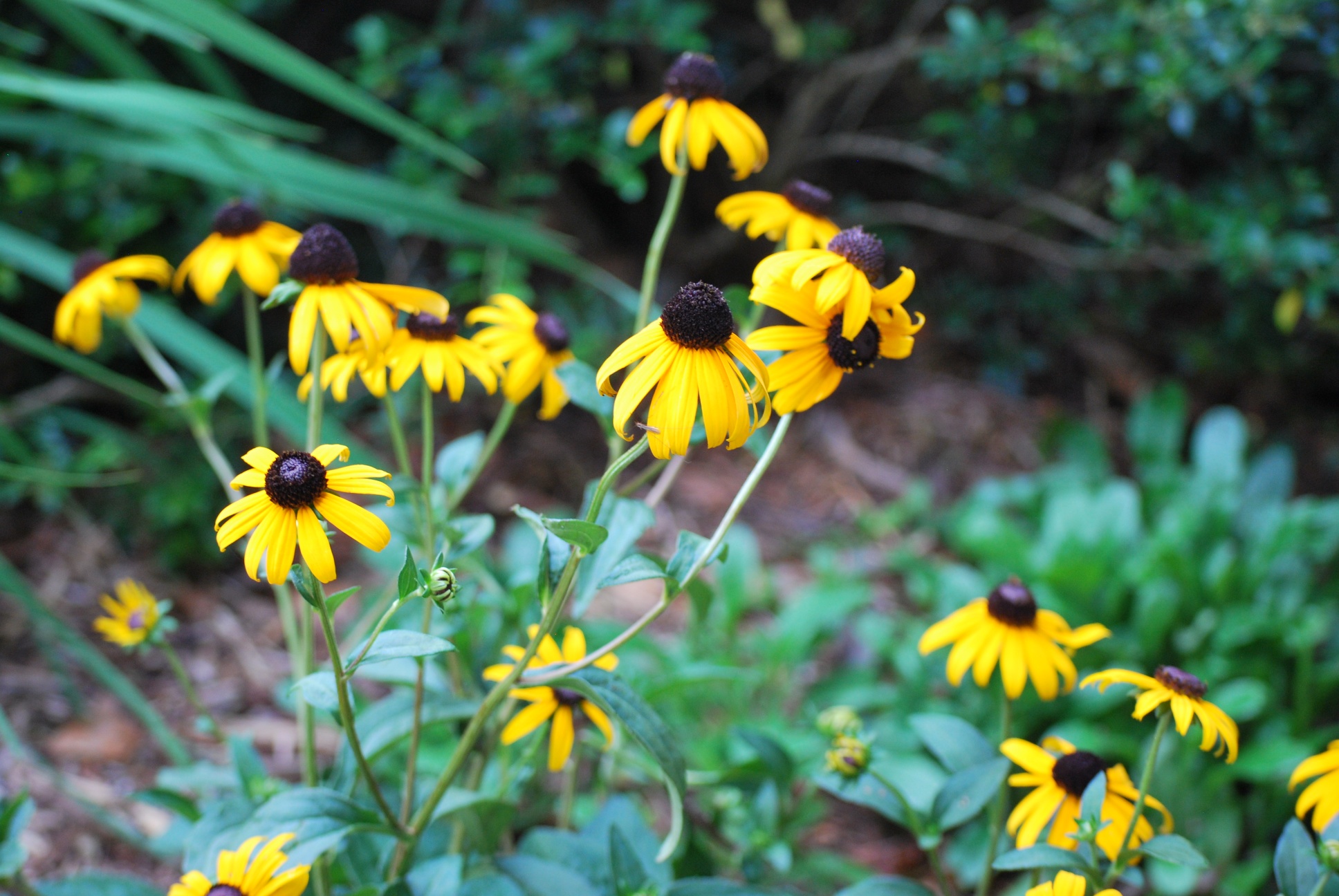
blackeyedsusansbythedoor_2013

In the ground. Will the deer and chipmunks leave them alone?

They’re in the ground now, and time will decide how they fare.

While I wait for time and the flowers to decide their own fate, I read Sandra Cisneros’ sweet coming-of-age book The House on Mango Street and am moved by what the young narrator – a girl with my name in Spanish – says right there on page 33:

You can never have too much sky. You can fall asleep and wake up
drunk on sky, and sky can keep you safe when you are sad. Here
there is too much sadness and not enough sky. Butterflies are too
few and so are flowers and most things that are beautiful. Still, we
take what we can get and make the best of it.

I plant because I want butterflies too many to count and flowers too numerous to pick a favorite and a garden that captures beauty, so that no one walking by will say there is not enough of any of it.

But there’s this small part of me that wonders: is envy what drives me to fill the garden? Or is it inspiration?

Running for an imperishable wreath

When I was six years old, I held my mother’s hand while we gleefully smashed the tiny acorns that scattered the sidewalk in front of our church.

When Lopez Lomong was the same age, he was ripped from his mother’s tight grip, taken by soldiers from under the trees where his family and others from surrounding villages had been in prayer during a church service.

I was born in America. Lomong was born in southern Sudan (now South Sudan). To quote Robert Frost, “That has made all the difference.” It’s a difference I can’t begin to grasp.

Lomong is one of my Olympic heroes, representing the USA in two Olympics – in 2008 in Beijing where he also served as flag bearer in the opening ceremonies and again this past summer in London where he came in 10th in the 5,000 meter final. I feel blessed that I got to see him earn a spot on both the 2008 and 2012 teams, watching him race at the U.S. Olympic Track & Field Trials in Eugene, Ore.

Lomong runs a victory lap after winning a spot on the US Olympic team this past June in Eugene, Ore.

Lomong runs a victory lap after winning a spot on the US Olympic team this past June in Eugene, Ore.

Lomong’s story is nothing short of amazing: from being abducted by soldiers in war-torn Sudan to living in a refugee camp in Kenya for 10 years to a journey to the United States where he would become a citizen and live out his own version of the American dream while never forgetting the other boys and girls left behind in Sudan.

Lomong has shared his life – its struggles and triumphs – in a moving memoir published last year, called Running for My Life. Never has a book title been so accurate. Running saved his life.

RunningforMyLifeLopezLomongCover

Lomong’s remarkable memoir of his life so far

Lomong’s book was one of the Christmas presents I gave my husband, and I read it right after he did, knowing that I needed to keep the kleenex nearby. I was still unprepared for how the book would affect me emotionally. Continue reading

On cutting down trees

This is one of those weeks where you know winter has set in for real. I spent last night wrapping plastic around my camellias – including the one I featured in last week’s post, now not looking so pretty with browning petals – and several other tender plants that I didn’t want harmed by the deep freeze.

I ventured outside this morning for an obligatory dog walk but waited to go back out for a run until the temperature was closer to the freezing mark. I was able to take off my gloves partway through the run, but the wind still had a bitter chill to it.

Yep. It’s winter. Best just to curl up with a cup of tea and a good book.

I’ve just started a book called American Canopy: Trees, Forests, and the Making of a Nation by Eric Rutkow. Re-started might be more correct. I tried reading this book a few months ago but set it aside after bursting into tears during the introduction, where Rutkow describes the killing of the oldest tree ever found (likely more than 5,000 years old), a bristlecone pine tree that a graduate student cut down so he could see how old it was. You read that right. He cut down the tree to count its rings. To his credit, he realized he had gone too far and became a conservationist as a result.

Knowing what to expect, I made it though the introduction a second time without any tears. But reading again about this tree called Prometheus (yes, some trees have names), got me to thinking about our relationship with trees. Continue reading

The colors of Christmas: white

Tis the season of Advent, a joyful time in the calendar as we prepare for Christmas. My husband and I got an unusually early start on our Christmas decorations this year, and our weekend of stringing up lights and hanging stockings on the mantel has me pondering the colors of Christmas.

In the coming weeks, I’ll focus on a different color of Christmas, starting today with the color white.

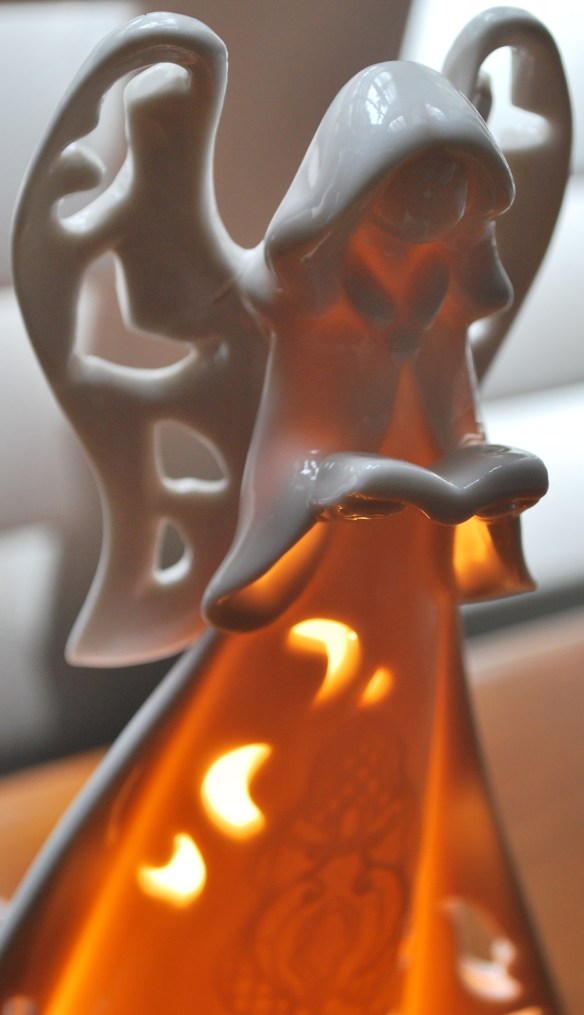
One of my favorite Christmas decorations: a white ceramic angel holding a book and lit from within

One of my favorite Christmas decorations: a white ceramic angel holding a book and lit from within

In our western culture, white represents many good qualities: innocence, purity, light, goodness. We sing songs dreaming of a white Christmas and get a little excited (at least in some parts of the country) if the weather forecast calls for snow to blanket everything in its stillness and quiet on that magical day.

White is the color you get when all other colors get absorbed. I think the Christmas season is a bit like that, absorbing all of our prayers and dreams and hopes and expectations, even our fears and sorrows.

A little white book
I have Enuma Okoro to thank for opening my eyes to this color of the season. I’m reading her latest book Silence and Other Surprising Invitations of Advent. The simple white cover drew me to the book, probably because I’ve found myself craving simplicity more than ever this year.

Continue reading

Trail Tales

Most of my friends know that I don’t especially love reading non-fiction. When I pick up a book, I usually prefer to escape the real world and go to a fictional place.

But a dear friend from childhood – the friend I totally and completely bonded with in fifth grade because we both loved reading and loathed field day in equally passionate measure – has enthusiastically taken up with camping and hiking. For months, she kept telling me to read Jennifer Pharr Davis’ Becoming Odyssa, a book Davis wrote after hiking the Appalachian Trail. I figured I’d get around to reading it some day.

The same friend loaned me her copy of Cheryl Strayed’s Wild: From Lost to Found on the Pacific Crest Trail. Her prologue begins with her looking out over the trees:

The trees were tall, but I was taller, standing above them on a steep
mountain slope in northern California. Moments before, I’d removed
my hiking boots and the left one had fallen into those trees, first cata-
pulting into the air when my enormous backpack toppled onto it, then
skittering across the gravelly trail and flying over the edge. It bounced
off of a rocky outcropping several feet beneath me before disappearing
into the forest canopy below, impossible to retrieve. (3)

She had me hooked. That was the start of my adventures into trail tales. And because I surprised myself by actually enjoying a book about Strayed’s solo hike, I picked up Becoming Odyssa, too.

My recent reads about thru-hiking

Those of you who know me best may be wondering why I’d even read the stories of women hiking the entire Pacific Crest Trail (Cheryl Strayed) and the Appalachian Trail (Jennifer Pharr Davis), given my own aversion to lots of outdoorsy activities and critters. Like stream crossings and big spiders and a lack of hot running water. But most especially snakes. Continue reading