The rejuvenating power of play

Deep in conversation

I wanted to follow up on a comment to last week’s post. A woman wrote in to thank me for challenging her assumption: “As a friend with kids, I just always assume my children are annoying people who don’t have kids.”

This assumption – that kids annoy adults who don’t have children – immediately made me think of so many of the women I interviewed talking about their own aunts playing with them or describing their love of playing with the children in their lives. I don’t have any evidence of how widespread this assumption is, but I hope today’s post will help dispel the notion that children always annoy those of us who aren’t parents.

The ways we play
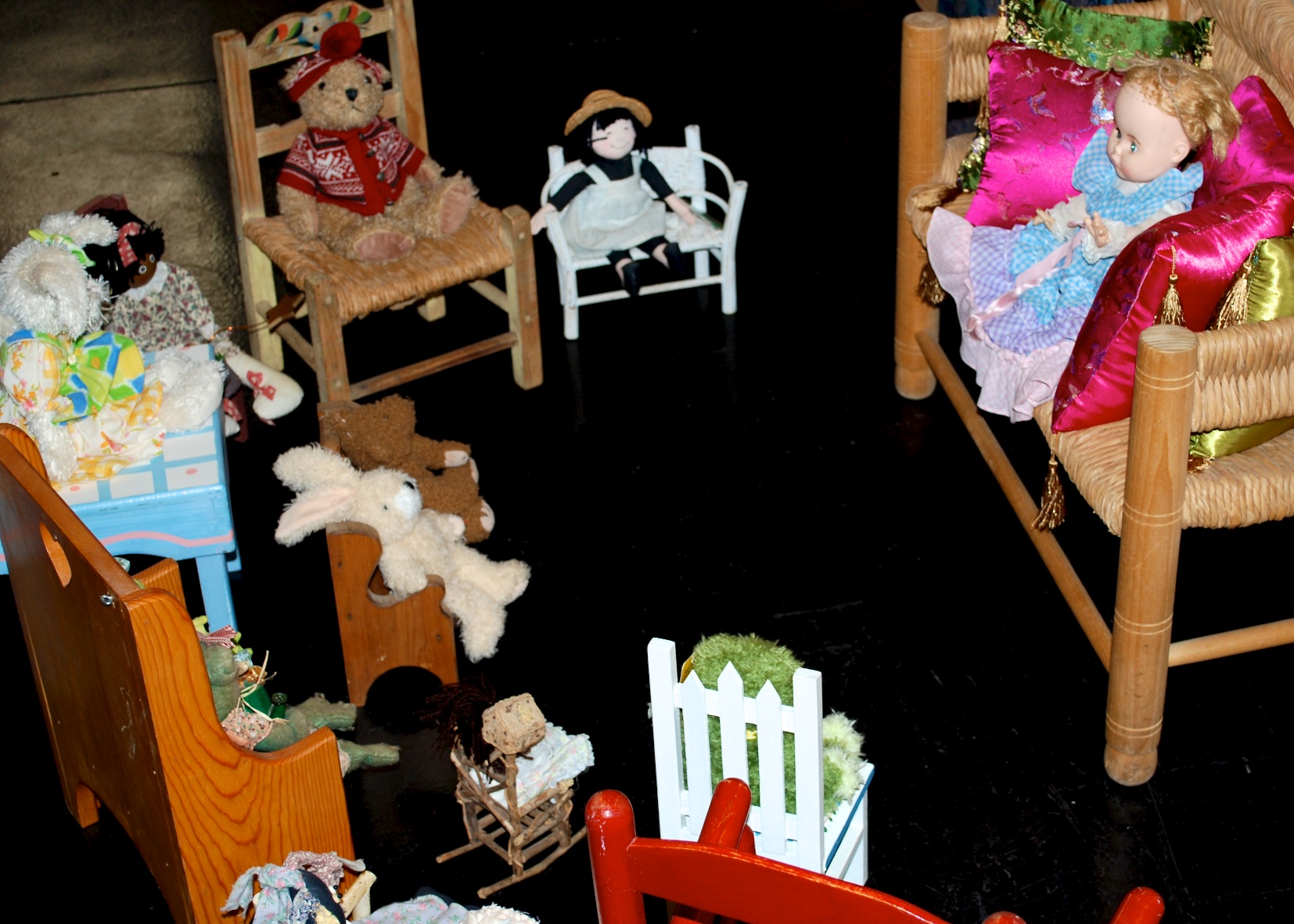
Remember the aunt who made clothes for her niece’s frog? By ensuring that the frog had a proper wardrobe, she was honoring her niece’s desire to play and showing her that playtime was valuable enough for her to contribute her own time and talent. I’m pretty sure I never played with frogs when I was little, but one of my mom’s friends (an unmarried, older lady) always brought me clothes she made for my Barbie. I cannot describe how special I (and my Barbie) felt to have these fabulous clothes. Continue reading

Celebrate Auntie’s Day this Sunday

Time for a bonus post for the week to let you know about Auntie’s Day this Sunday.

One of my very best friends reminded me that Sunday is Auntie’s Day. She’s a mom to four children (whom I consider honorary nieces and nephew), and she’s a fabulous friend, too.

If you’d like to know more about celebrating Auntie’s Day (with ecards and more), here’s the Savvy Auntie site. You can also click the graphic above, and it’ll take you to the site.

Celebrate
How will you celebrate? With an ecard or a real card or a phone call or a visit to your favorite aunt? If you’re an aunt, do your nieces and nephews even know about Auntie’s Day? (Feel free to send them a link to this post as a not-so-subtle hint about your special day.)

If any of you have especially fun celebrations this Sunday, I’d love to hear about them here. And whether your nieces and nephews honor you this weekend, I hope you’ll do a little something special to honor yourself. Because as the tagline of the Auntie’s Day promo says: “Aunthood is a gift.” Happy Auntie’s Day!


Proud aunts

I’ve written before about the pride we aunts take in our nieces and nephews, and the 10 days I spent in Oregon at the U.S. Olympic Track & Field Trials brought out a number of proud aunts to cheer on their family’s elite athletes. Today, I’ll share three “good aunt” stories with you from the competition.

Proud aunts follow through on a father’s inspiration
Early into the trials, I saw an article in the The Register-Guard talking about Amanda Smock, an expert in the women’s triple jump. She competed in the 2008 trials, but finished 5th and didn’t get to go to the Olympics that year.

After those trials, her father encouraged her to keep pursuing her dream, though he didn’t live to see her succeed. He died from cancer a year later, but four of Smock’s aunts (her father’s sisters) made the long drive from Minnesota to the trials to surprise her and cheer her on.

Smock finished first in the trials, and because of qualifying requirements to compete in the Olympics, she’ll be the only athlete to represent the United States in her event. Of winning and what it meant to have her four aunts watching from the stands, she said: Continue reading

Aunts (lovely and vile) in literature

I hope you won’t mind a lighter post today. I’m flying back from my vacation in Eugene, Oregon, where I spent 10 marvelous days watching the US Olympic Track and Field Trials. If you missed the trials and want to know who made the team for London, check out my favorite running site: Flotrack. I’m sure there are some proud aunts (not to mention moms and dads, too) of our US athletes.

For today’s post, I wanted to mention some aunts in literature, some that you’d love to have as your own aunt and some that are vile, ornery or downright evil.

I owe the inspiration for this post to a fellow blogger Jodi Chromey, whose post about Beverly Cleary’s Ramona and Beezus (and their aunt Beatrice) got me thinking about other aunts in literature. Check out her post. It’s a lovely tribute to Cleary and the power of literature in a child’s life. And Chromey describes in moving detail why Aunt Beatrice means even more to her now that she’s all grown up and a woman without children of her own but a niece and nephew to adore. Continue reading

The best and worst thing

Several of the women I interviewed spoke of relief after becoming an aunt, because it provided their parents (or in-laws) with grandchildren and took some of the pressure off of the women themselves to provide more grandchildren.

As aunts, we have children in our lives we can adore, spoil, teach, play with and watch grow into who they will become as adults. Aunthood also gives us a closer insight into how children change a marriage.

The advice: The best and worst thing
One of the women I interviewed, Bette*, told me about a conversation her husband Caleb had with his boss – who also happened to be a close friend and the father of grown twins – when Bette and Caleb were trying to decide whether to have children.

Caleb asked, “What advice would you give to somebody who’s trying to make this decision?”  His boss told him that having children is both the best and worst thing that could ever happen, simultaneously.

He said it’s the best thing because your capacity to love is multiplied, and you love these children more than you ever thought you could, and it enriches your life. On the other hand, it also completely changes your life. Your marriage changes. You don’t have time for former pursuits. Your priorities are different. When you’re in it, you’re glad your priorities are these children, but everything else suffers because of your shift in priorities. He finished by saying, “I’m not saying it’s not a worthwhile priority. Again, it’s the best thing that ever happened to me, but it’s also the worst thing.”

Bette said she and Caleb thought about that statement, “It’s the best and worst thing,” and turned it around and said perhaps not having children is also the best and the worst thing that would ever happen to them.

For them, it is the best because they have time and energy to focus on each other and their marriage. They travel extensively, and do plenty of other things they wouldn’t consider if they had children. Plus, they are able to be more involved in the lives of their extended family than they might otherwise be.

In this case, you really can’t have it all
Bette admits, though, that she just won’t ever fully know. She says she feels like she gets a glimpse of the best part of having children because of how much she loves her nieces and nephews, but she knows she’ll never know exactly what she has missed out on.

She says, “You can’t always have it all, and I have come to the realization in my life that I have the best of both worlds. If I didn’t have nieces and nephews, maybe I would feel differently. Maybe I would feel like there was something else that I was missing. But to hear a parent say that having children is simultaneously the best and worst thing that has ever happened was a turning point for us. I flip that idea around and think, ‘Maybe that’s me, too, just from a different perspective.’ ”

Whether you have children or not, I’d love to know what you think of this perspective: that either way – having children or not having children – it’s simultaneously the best and the worst thing that can happen.

____________
* To protect the privacy of the women I interviewed, I have changed all names.