The sower and the sun (for this rainy day)

I don’t know what the weather is like where you are, but where I live, it’s cold, rainy, dreary and gray. Ugh! When the weather is overcast for several days in a row during the summer, it’s not so bad, because there are bright flowers blooming, and their color keeps everything from taking on an ashen quality.

I’ve found myself grumbling a bit, though, about our latest string of rainy, winter days, with no promise of the sun in sight. And yet, even in my winter garden, there’s a reminder of things beautiful and bright and cheerful, alive because of the sunlight. A profusion of camellia blooms:

Camellias!

Camellias!

This small camellia bush is one of three that my husband and I have planted in our garden, and it’s always the first one to bloom each winter. Its numerous, large blooms are this winter’s reward for me finally figuring out what kind of fertilizer camellias like (I used Holly-tone on them this past fall).
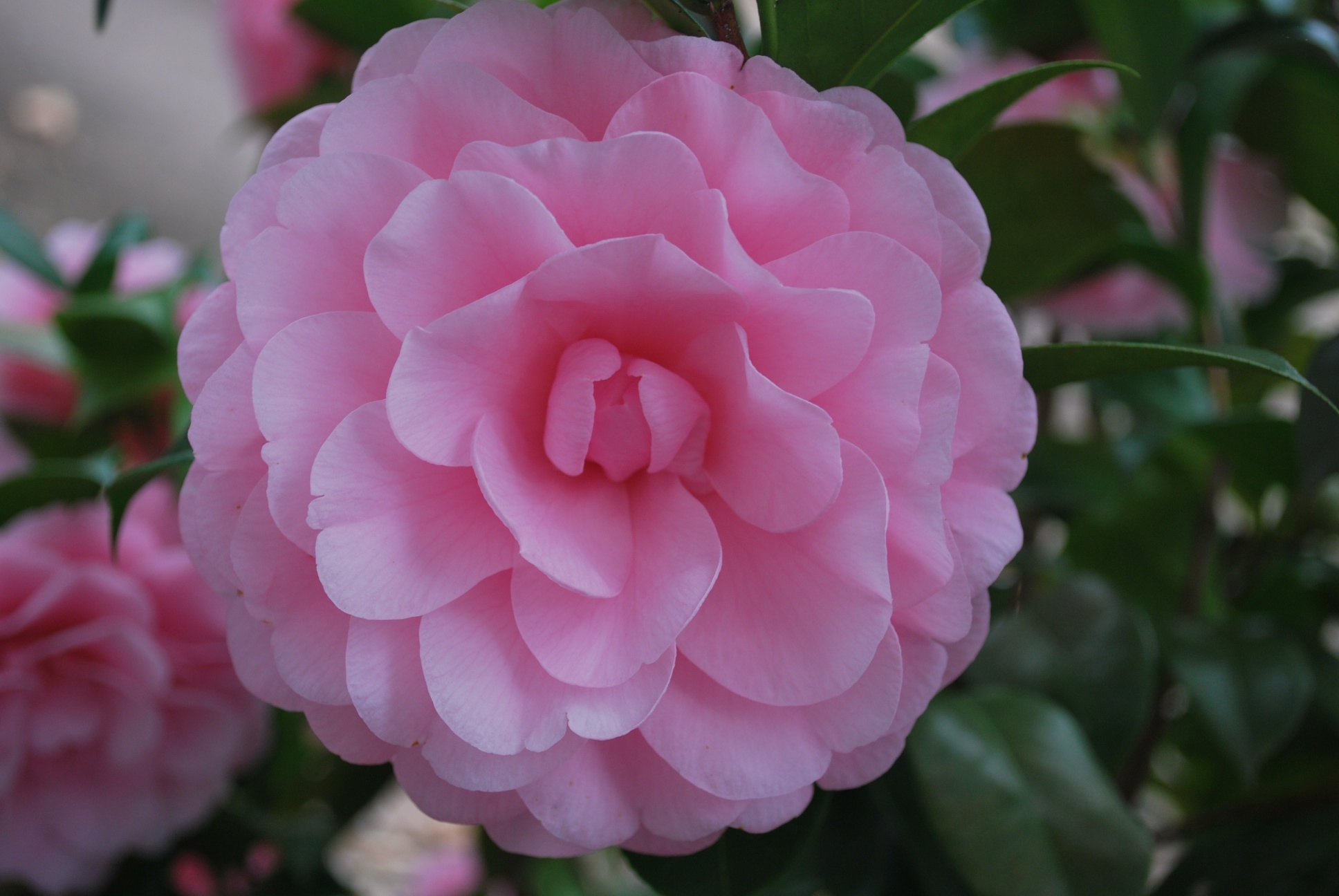
The perfect camellia bloom?

The perfect camellia bloom?

I don’t know why this bush blooms first, or why it has so many more buds and blooms on it than the other two. I suspect one of the others doesn’t get enough sunlight, and my husband doesn’t think it gets enough water either.

But the third camellia is almost equally situated with this one in the garden, gets the same amount of Holly-tone, light and water, and though a bit taller, doesn’t have nearly the quantity of buds on it as this one that’s blooming now.

As I puzzle over what makes one camellia flourish and another just stay alive, I’m reminded of the parable of the sower (Matthew 13:3-9) who sowed seeds all over the place: by the roadside, on the rocky places, among the thorns, and on the good soil.  Continue reading

Next year’s words and a new voice

A dear friend of mine sent me a new year’s greeting with wonderful words from T.S. Eliot:

“For last year’s words belong to last year’s language/ And next year’s words await another voice. … What we call the beginning is often the end/ And to make an end is to make a beginning.” (from Little Gidding, II and V)

These words resonated with me for so many reasons, not least of which is that I wrote the last words of the last chapter of The Flourishing Tree book on the last day of 2012 (well, the first draft anyway). They are last year’s words. And now that I’ve made an end, I’m ready to make a new beginning.

There’s still editing to do to the book, and there’s the daunting task of finding an agent and publisher, but I’m excited about other writing projects I’ll begin in the year ahead. These projects have patiently awaited my attention and my voice.

Your end of 2012 and beginning of 2013 may not have as much to do with writing, but I bet there are words involved, nonetheless.

Are there words of hurt or shame or pain that you have carried over into this year from last year? Perhaps a friendship that ended with a hurtful email? Or the sting of being overlooked by your boss for a well-deserved promotion? Or words spoken in anger to a spouse or child that threaten your most precious relationship(s)?

Let me invite you to heed Eliot’s advice: let last year’s words belong to last year’s language and begin to look for a new voice to embrace. A voice that is full of love and healing and soothing. Continue reading

The colors of Christmas: purple

For many of you, Christmas may be over. Perhaps you’ve already packed away your decorations, and the tree is out on the street waiting for the garbage men to collect. But for others, Christmas won’t be over until January 6, the day of Epiphany or Three Kings Day. This traditional 12th day of Christmas is a celebration of the magi visiting Jesus in Bethlehem, and for cultures who celebrate it, decorations won’t come down until then.

So in honor of Epiphany, I hope you won’t mind one last post in the colors of Christmas series. This week’s color is purple, and I have my friend Anna to thank for inspiring me to add it to the colors of Christmas. Early in December, she and I met for lunch, and she told me about decorating her tree with purple ribbon, despite her family’s skepticism. When I told her about the blog series, she asked (somewhat hopefully) if purple would be one of the colors. “After all,” she reminded me, “purple is the color of Advent.” She’s right, you know.

In many churches, the color of Advent is purple. You’ll often see purple candles in Advent wreaths and purple cloth draping altars and pulpits during the season leading up to Christmas. It’s not even that unusual to find purple Christmas ornaments these days.

A purple-winged peacock sits on my Christmas tree.

A purple-winged peacock sits on my Christmas tree.

But why is purple so closely associated with the season of Christmas? For two reasons: purple represents penance and also represents royalty. Penance will come into more focus during the season of Lent that leads us into Easter, but Advent is also supposed to be a time when we repent of our sins as we focus on the coming of the Christ child, the king of kings.

purplecloakedkings

Two of the three kings in my nativity set are clothed in purple. I especially love the crown of the one in the foreground, with alternating stripes of lavender and purple.

So in honor of Christ the king and the royalty whose visit we celebrate with Epiphany, let us embrace purple as a color of Christmas. And as Epiphany comes and leads us toward the season of Lent, may the color purple remind us of the reasons Christ calls us to repent of sins and continue to stay alert for His coming.

I’m going to leave you with another brain puzzler today, this time from a purple card from the set that came in my stocking for Christmas. There’s a message hidden in what appears to be a flower below. Can you find it?

purplegreetingcard

You’ll find this fun card and others like it at http://www.BelieveIAm.com

Once you think you have the answer, please post it in the comments below (don’t peek at the comments before you’ve given yourself a little time to figure out the message).

In last week’s post where I included a yellow card like this one, I promised a link to the very cool website where you can find these cards and more things to inspire and motivate you. Again, don’t peek until you’ve tried to figure out the message above, but here’s the site: www.BelieveIAm.com. Visit the site’s About page for a fun, inspirational poem to get your new year off to a great start.

I’ll leave you today by wishing you a happy New Year. I’m grateful to you, my readers, and I look forward to hearing what wonderful adventures God has planned for you in the year ahead.

The colors of Christmas: gold

Merry Christmas! I hope you’re enjoying time with your family and friends, as well as taking time to ponder the great gift of Christ’s birth and promise of His return.

Today, we continue the colors of Christmas series with gold, and there’s even a golden little brain teaser for you at the end of this post. I’ve got Burl Ives’ “Silver and Gold” going through my head, as I picture Yukon Cornelius failing time and again to find gold. (If “Rudolph the Red-Nosed Reindeer” isn’t a must-see on your list of Christmas TV specials, then you probably won’t know who I’m talking about, but trust me, Yukon Cornelius is the worst gold prospector in the whole world.)

In the song Ives sings, he reminds us that the hunt for material gold isn’t the most important way to celebrate Christmas: “Silver and Gold, Silver and Gold/ Means so much more when I see/ Silver and Gold decorations on every Christmas tree.”

This gold star tops our Christmas tree

This gold star tops our Christmas tree

It’s hard to imagine Christmas without gold decorations, especially stars to remind us of the one that appeared over the manger in Bethlehem where Christ was born, the same star that led the wise men to Jesus.

So it’s only natural at Christmas to think of stars and halos and even a box full of gold given to Jesus in honor of his birth.

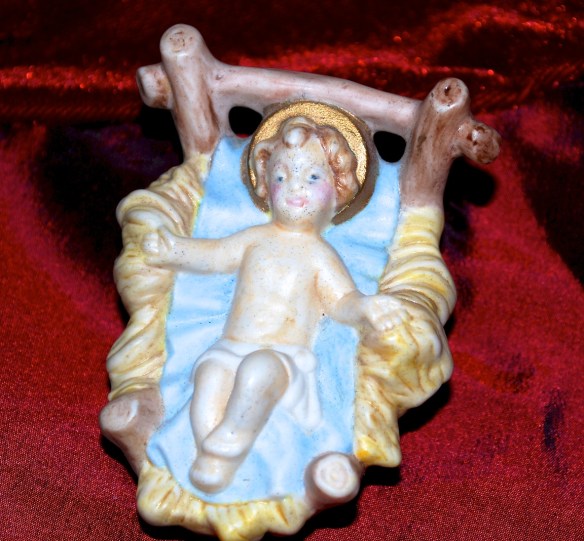
The baby Jesus is often depicted with a gold halo to signify his holiness.

The baby Jesus is often depicted with a gold halo to signify his holiness.

Continue reading

The colors of Christmas: green

“O Christmas tree, O Christmas tree, how lovely are your branches!” If you’ve missed the other posts in this series, you can go back and read all about white Christmases and red poinsettias. But today’s color is one of my favorites: green.

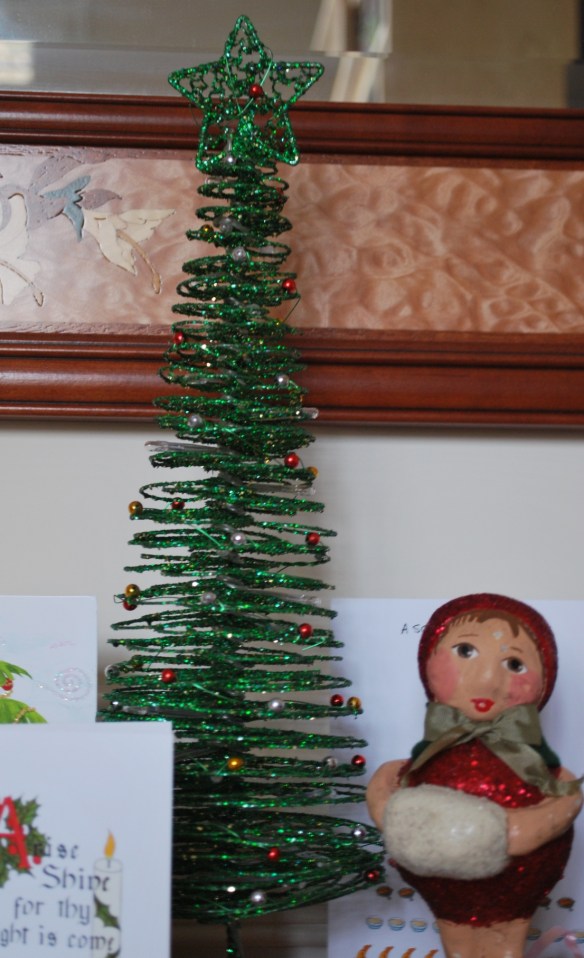
This little green tree decorates the table where we put all our Christmas cards.

This little green tree decorates the table where we put all our Christmas cards.

That green is one of my favorite colors shouldn’t surprise you, given the title of my blog and the fact that I write so frequently about trees. And unless you walk around with blinders on these days, you can’t go far without seeing some green of Christmas: trees, elf costumes, candy wrappers.

There are many conjectures about why green is one of the traditional colors of Christmas. Perhaps it’s because Italy’s flag had green in it. Or maybe the church set Christmas to coincide with pagan winter solstice celebrations, complete with their evergreen trees. Some sources suggest we celebrate with green trees because the German church in the 1300s used pines decorated with red apples to suggest a “paradise tree” in plays about Adam and Eve and the tree in the garden of Eden. Or maybe green is so popularly associated with Christmas because of holly plants, with their green, waxy leaves and bright red berries: Continue reading