Mandela’s sketches of prison

This past weekend, a friend and I went to the lobby of a building, looking for its exhibit of Nelson Mandela’s sketches from his time in prison on Robben Island. The exhibit was elegant in its simplicity, nothing boasting or grandiose, all the better to draw out the same sense of elegance-in-simplicity that Mandela’s sketches evoke.

The exhibit drew connections between South Africa’s time of apartheid and the American south’s own Jim Crow era, and lining the entry were dates and comparable events in South Africa and in the southern United States, not that many years apart from one another.

Etched into cool, frosted glass, this view greeted us before we stepped into the exhibit room – really just a pass-through area from one building to another – as if inviting us to enter into the prison itself:

Mandalaexhibit1_2014ft

A cold, stark greeting for visitors

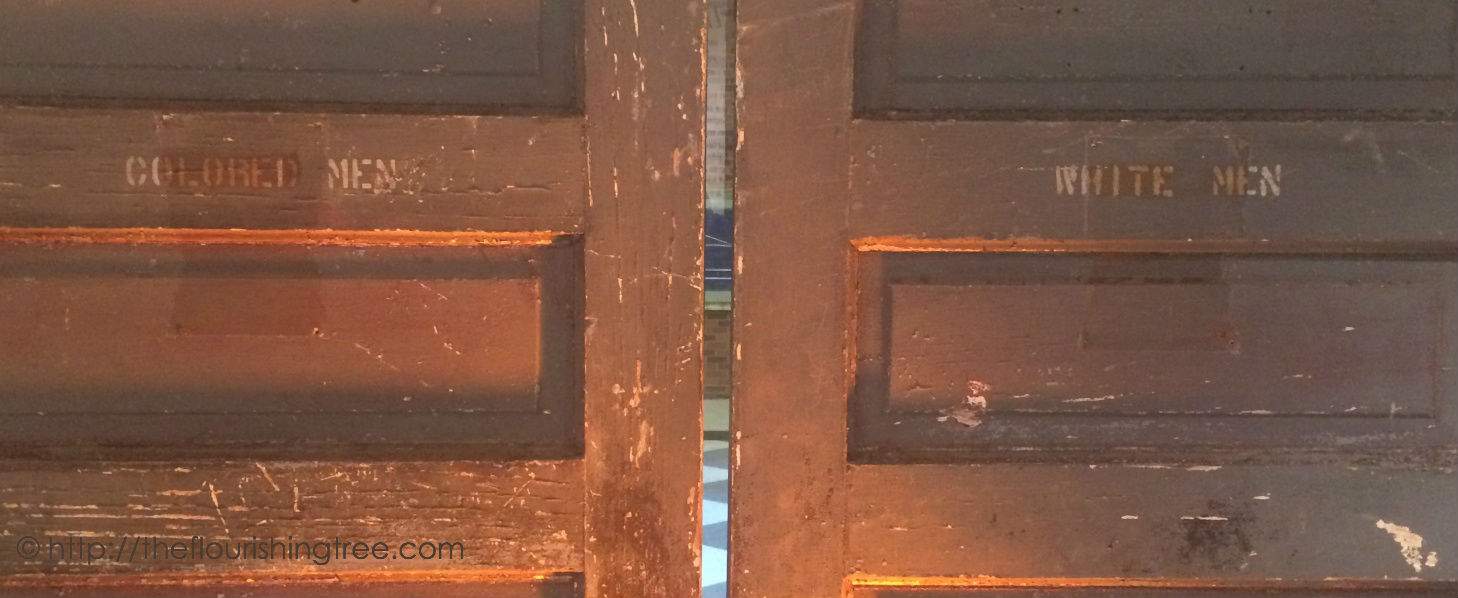
The rest of the window that looked back toward the lobby was filled with two doors that had been salvaged from old tobacco warehouses. These, too, hint at an oppressive prison of sorts.
Mandalaexhibit3_2014ft

Jim Crow era doors that marked separate entrances

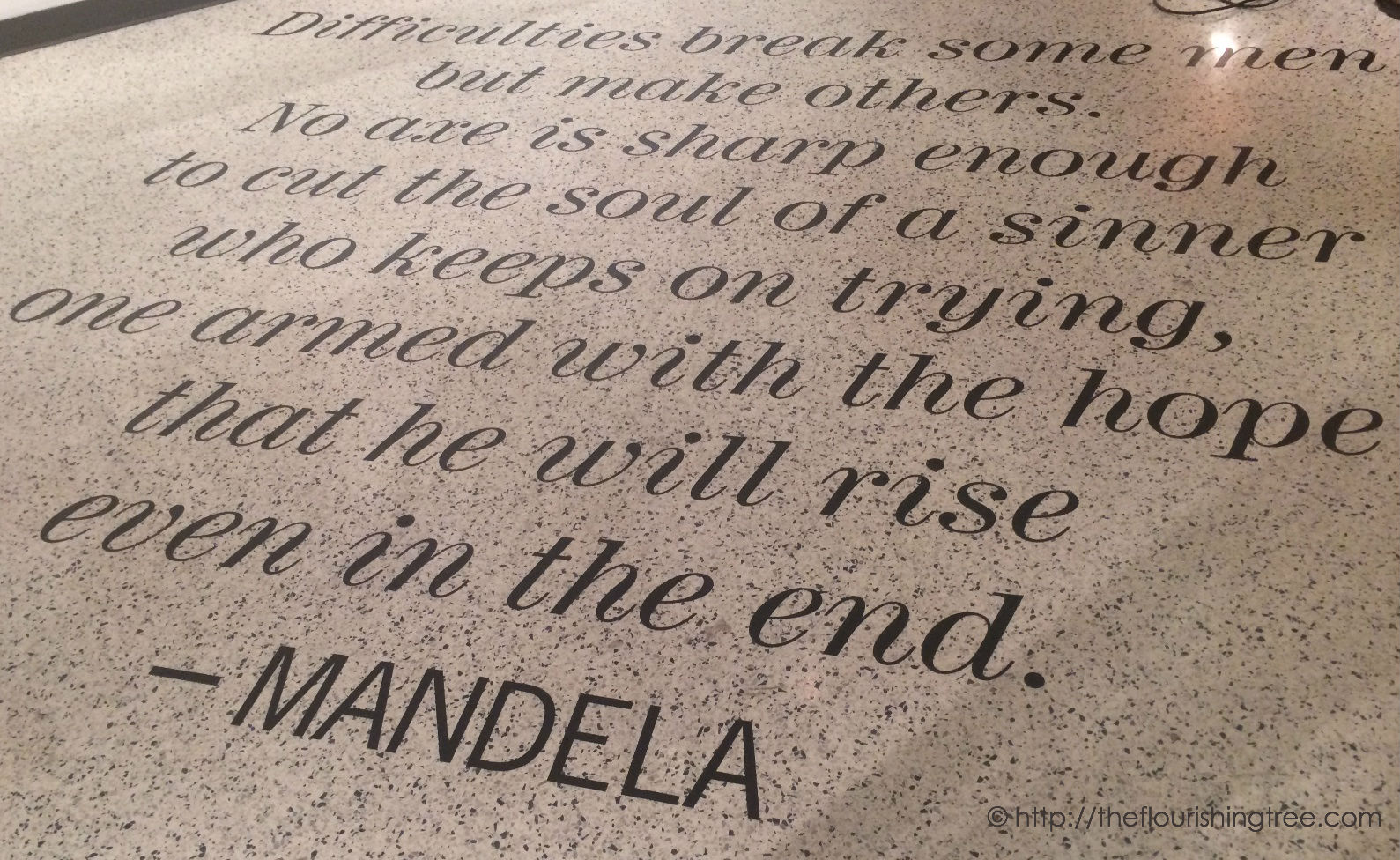
I’ve seen pictures and movie depictions of such doors, but I don’t know that I’ve ever stood in front of actual doors marked with that era’s shame. It was a relief to turn away from them to encounter Mandela’s sketches, writings and own thoughts everywhere, even on the floor:

Mandalaexhibit2_2014ft

Mandalaexhibit4_2014ft

Mandela returned to Robben Island with a photographer to capture a small part of what he had experienced there, but Mandela didn’t want to use the photographs or his own sketches incite anger. Rather, he wanted to inspire and give courage and show that this place had been unable to break his spirit or his resolve or his hope or his character. He accompanied each sketch or series of sketches with carefully written words that help the visitor step into Mandela’s shoes.

Mandalaexhibit10_2014ft

Nelson describes his desire for these sketches.

In these sketches entitled: My Robben Island, I have attempted to colour the island sketches in ways that reflect the positive light in which I view it. This is what I would like to share with people around the world and, hopefully, also project the idea that even the most fantastic dreams can be achieved if we are prepared to endure life’s challenges. NMandela

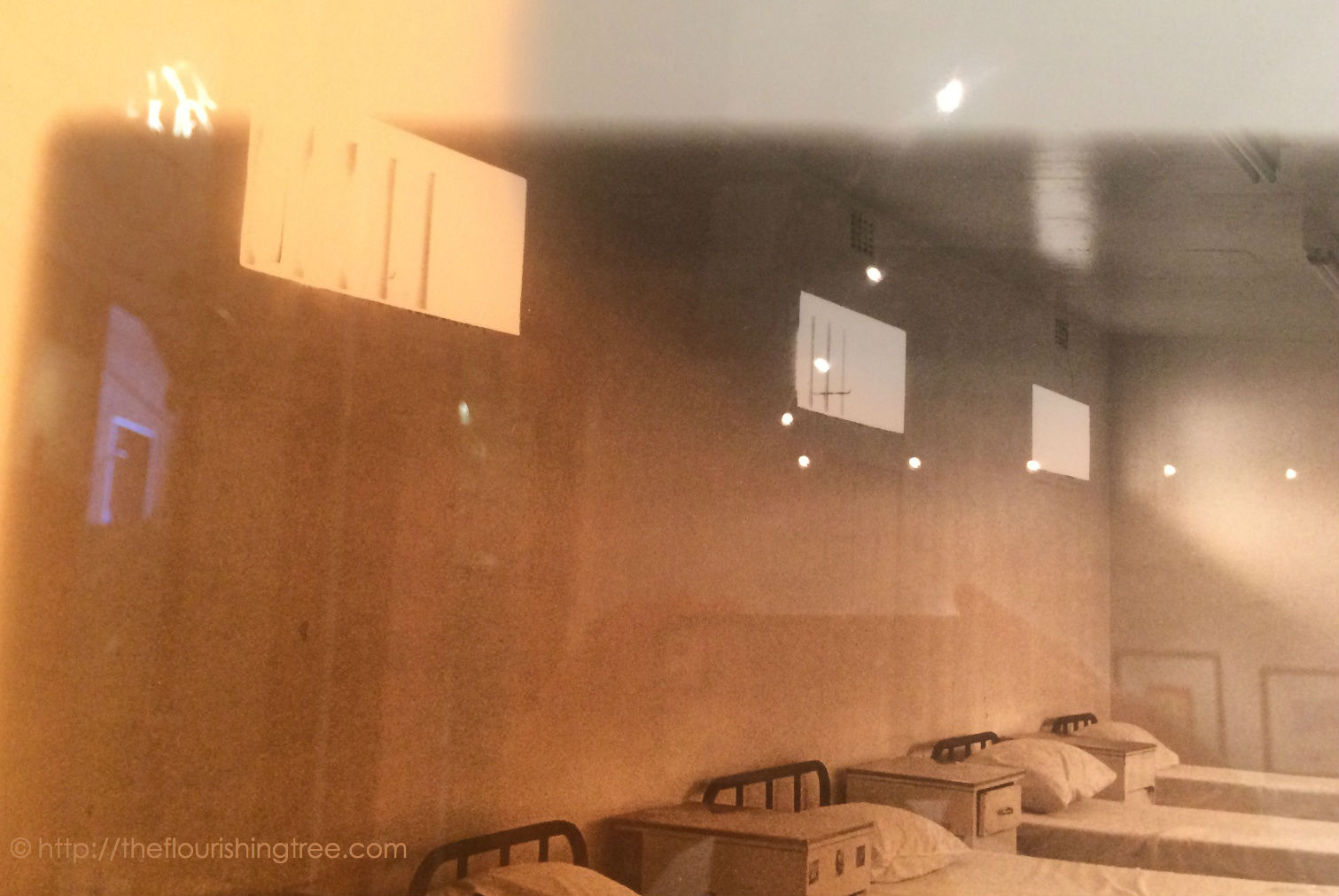
The colors Mandela used in his sketches were cheerful and bright, and I was struck in this first series that he had drawn windows without the bars that are so clearly there in the photograph:

Mandalaexhibit6_2014ft

The hospital offered a different sort of freedom in prison: the exchange of information.
Mandalaexhibit5_2014ft

Bars on the windows

Mandela wrote of political prisoners feigning illness to go to the hospital, as it was the only place where they could get word of what was going on in the outside world. Imagine the hope that sustained them on these hospital visits, as they heard of a world changing outside their island prison. Perhaps that’s why Mandela left the bars out of the windows in his sketch. It was a room of some small freedom.
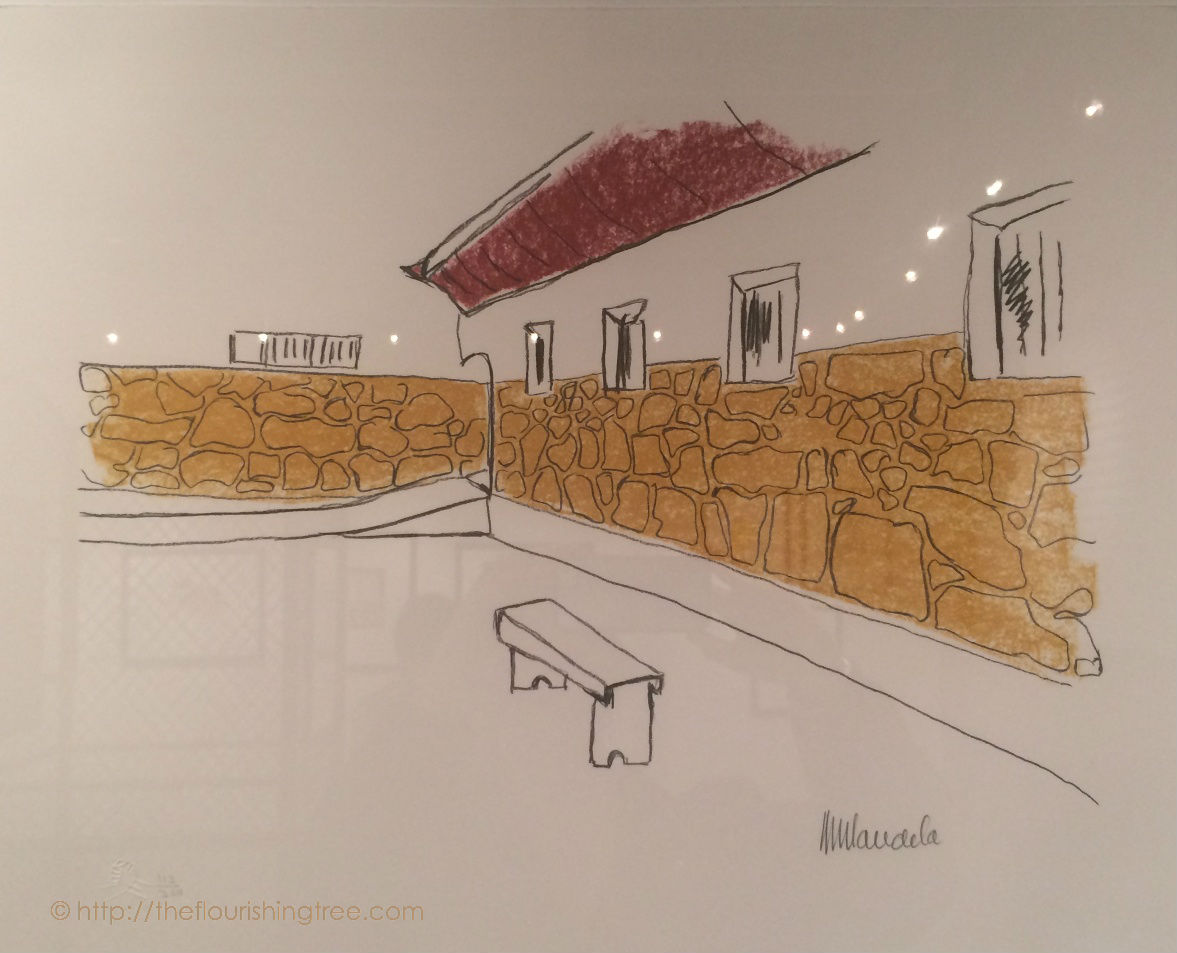
Mandalaexhibit8_2014ft

The stark prison yard

Mandela wrote about memories of marking a tennis court in this yard and of planting a small garden. These activities were not allowed at first, but eventually the prisoners were able to convince the guards to let them use the space for something other than sitting and marching.

He wrote of the wonderful outlet of the physical activity, and though the gardening brought life, it brought poignant and painful reminders, too:

Mandalaexhibit7_2014ft

The memory of a cherished tomato plant

A powerful memory that I have is of a beautiful tomato plant that I coaxed from tiny seed to tender seedling to a strong plant that gave plump bright red juicy tomatoes. Despite my efforts the plant began to wither and die and nothing I did would heal it. When it died I took it carefully from the soil, washed its roots and buried it in a corner of the garden. I felt sad. It once again reminded me of where I was, and the hopelessness I felt at being unable to nourish other relationships in my life. My wife, my children, my family and my friends. It made me realise the beauty, simplicity and sacred value of family, of loved ones and friends. I swore to myself that I would never take another human being, their friendship or their love for granted ever again.

Mandalaexhibit9_2014ft

An inescapable reminder

Mandela featured the prison tower prominently in several of his sketches, and he wrote of returning from grueling work outside of the prison walls that at least enabled the men to do something physical. The prisoners talked as they walked back to the prison, but Mandela noted that they became quiet as the tower grew closer.

Mandalaexhibit13_2014ft

My favorite sketch

The prisoners found ways to remain hopeful, in spite of their bleak circumstances and surroundings. Though the prisoners weren’t allowed inside the church, it served as a beacon to them.

Mandalaexhibit14_2014ft

Mandela’s cell, with his possessions colored, another element of the hope he found in the prison.

Mandela’s jail cell was small: he could walk it in three paces and said that when he lay down, his feet brushed one wall and he could feel the other wall against his head.
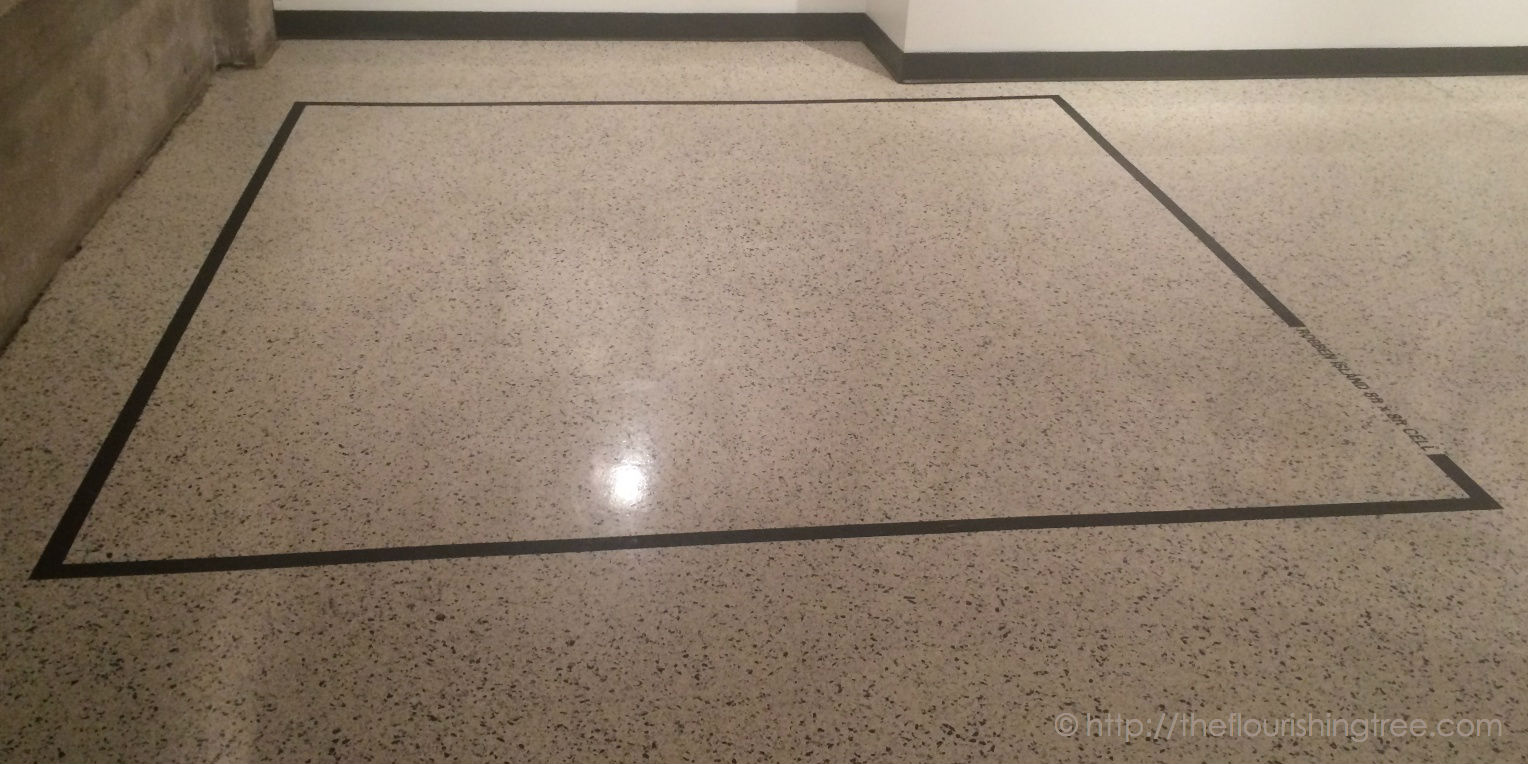
Mandalaexhibit12_2014ft

An 8×8 outline of a Robben Island jail cell. Mandela’s account suggests a slightly smaller space.

Imprisoned for 27 years, it’s no wonder Mandela felt his was a long walk to freedom.

Mandalaexhibit11_2014ft

a long walk …

The curators for the exhibit grouped Mandela’s sketches under four headers, and it was then that I understood the ellipsis in the exhibit’s name.

Mandalaexhibit16_2014ft

… to freedom

Mandela’s journey was a long walk … to justice … to equality … to opportunity … to freedom. And somewhere along the way, he was able to shed any bitterness that might have conquered lesser men.

Mandalaexhibit17_2014ft

What strikes you most about Mandela’s sketches? What inspires you most about his long walk?

To hear the words of love

Where I live, we’re anticipating snow and an icepocalypse (thanks to eager weather forecasters who thrive on the drama of a scary forecast). Because of the amount of ice we may get, it’s likely we’ll lose power, not something that endears this winter to me any more than it already hasn’t.

But I thought you might like some book recommendations, in case you lose power and are cut off from TV and movies and the outside world in general. These three books are my first three library books in ages. Two of them made me wait months while they worked their way through the library hold list, and the other practically leapt off the shelf at me when I walked by. I’ll share them with you in the order that I read them. Continue reading

The new library card

When I was growing up, one of my favorite adventures was accompanying my parents to the library. There was a beautifully illustrated Cinderella (way superior to Disney’s version) that I checked out as much as possible and wish now I could find in a used bookstore somewhere.

I spent many happy hours reading at the library, and my parents always encouraged me to check out plenty of books. There’s still that one science fiction book from when I was in late elementary school or maybe already middle school, the one about the girl who finds out she’s actually a clone when she takes an unplanned detour that lands her face-to-face with one of her clones. I read it quite happily for 20 or 30 minutes and then set it back on the shelf, for some reason not checking it out. I regretted that decision because I wanted to find out what happened but had completely forgotten the name of the book. I searched the shelves for the book on many subsequent trips, never finding it again.

People flock in, nevertheless, in search of answers to those questions only librarians are considered to be able to answer, such as “Is this the laundry?” “How do you spell surreptitious?” and, on a regular basis, “Do you have a book I remember reading once? It had a red cover and it turned out they were twins.”
― Terry Pratchett, Going Postal

My dad was something of a hero at our local library. I had checked out a beautiful picture book on our state, and when the library thought I had lost it (despite my knowing and insisting I had returned it), my dad paid to replace the book. Months passed. The book turned up at the library, mis-shelved. The librarian called to apologize and asked if he wanted his money back. He told them they could consider it a donation. And so, he became a hero to them (which also helped get us out of a few overdue book fines). It’s wise to endear oneself to the local librarian.
Continue reading

The dog days of winter

I love snow days, and today has offered up a good one where I live. I know many of you who live north of here are sick and tired of snow, but for those of us who don’t often get snow, it’s pretty special when it happens.

My dog and I got out early this morning, and with the exception of a few cars trying to head down the road and a few other paw prints and footprints in the snow, we had the streets to ourselves.

I have always loved snow days. My dad often had to walk to work, but both he and my mom made sure snow days were special for us. My brother and I spent most of our time outside on snow days: sledding, building snowmen, having snowball fights, sledding, sledding, more sledding. Even my mom, a northern transplant herself, took some rides on the sled. It helped that we lived on the perfect hill for sledding, and I sometimes wonder how many times I’ve walked that hill dragging the Flexible Flyer behind me for the next ride.

When we came in to thaw out, she’d have soup and grilled cheese and maybe even hot chocolate waiting for us after we peeled off sopping-wet layers to dry by the fire. I even wrote my first book (when I was five) on a snow day and called it The Snowy Day. It was a picture book – because I liked to draw, too, and I was busy reading picture books at that age – and I updated it a few short years later on another snow day.

I think my inner child taps into those memories and enjoys spending time outside, alternating with trips inside to thaw out with something hot to drink and a pen in my hand.

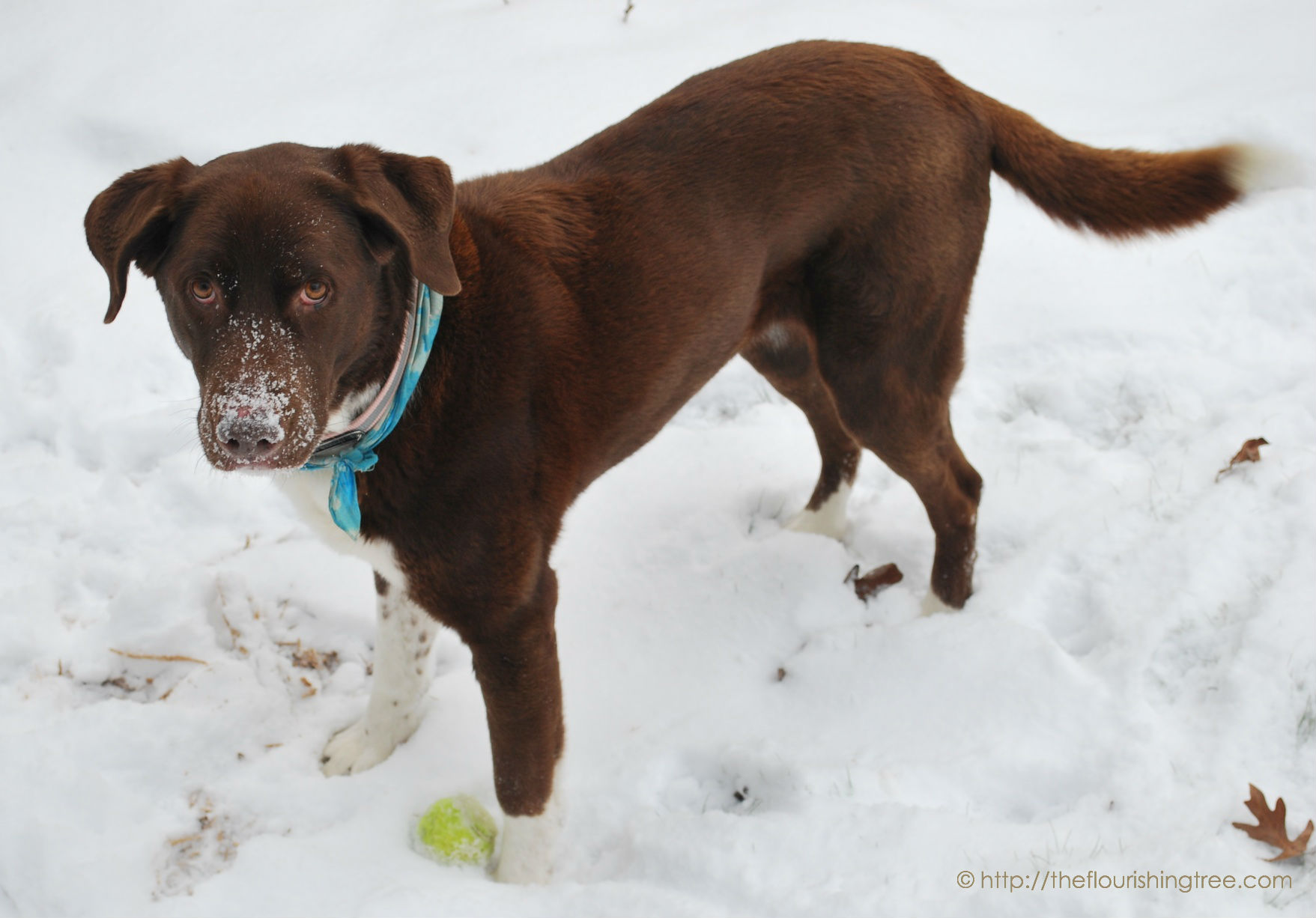
Having a dog makes snow days even more fun. My dog especially loves to freeze her tennis ball in layers of snow, chase after it, bury it in the snow and then dig it back up with her nose or her paws. She is equal parts joy and energy on snow days.

Adogssnowday_2014ft

A blur of fun

SnowPup_2014ft

Guarding her prized tennis ball; waiting for another throw

I think this is one of my favorite pictures of her.

The colder-than-usual weather forced both of us back inside pretty quickly (she would have lingered if I had let her). It’s one thing to play in 30 degrees and snow but another entirely in 18 in wind and snow.

Teaforsnowdays_2014ft

Warming up from the snowy chill

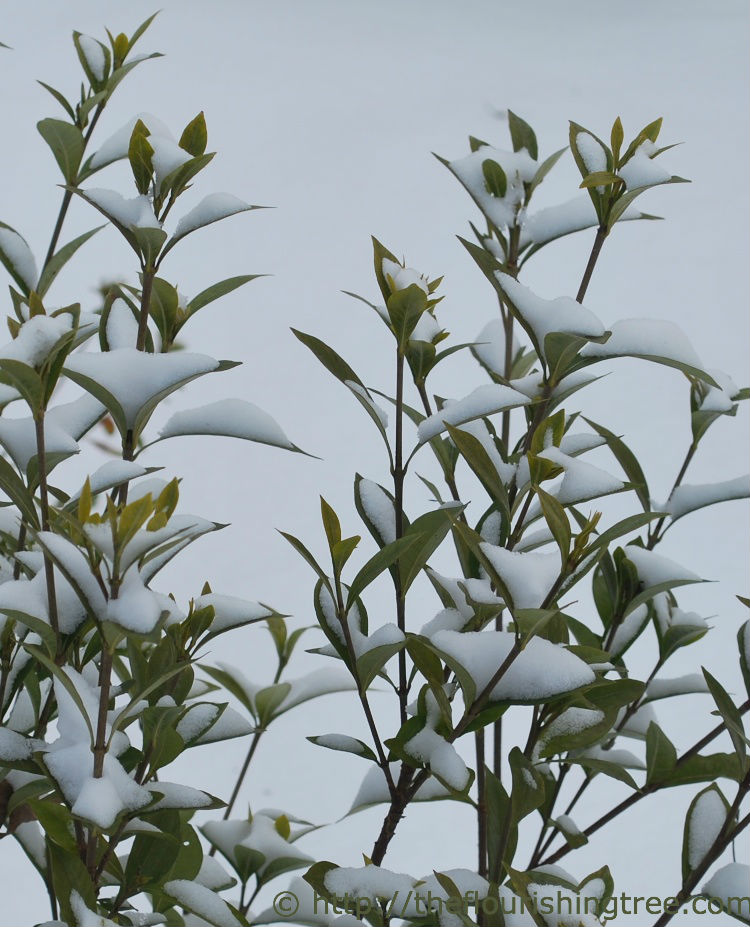
I went back outside later to take some more photographs. Tonight looks like it’ll be the coldest night we have had in years, and I’m hoping the snow will protect the plants. I guess I won’t know until spring which ones will survive and which won’t.

Gardeniaswaitingforspring_2014ft

A gardenia waiting for spring

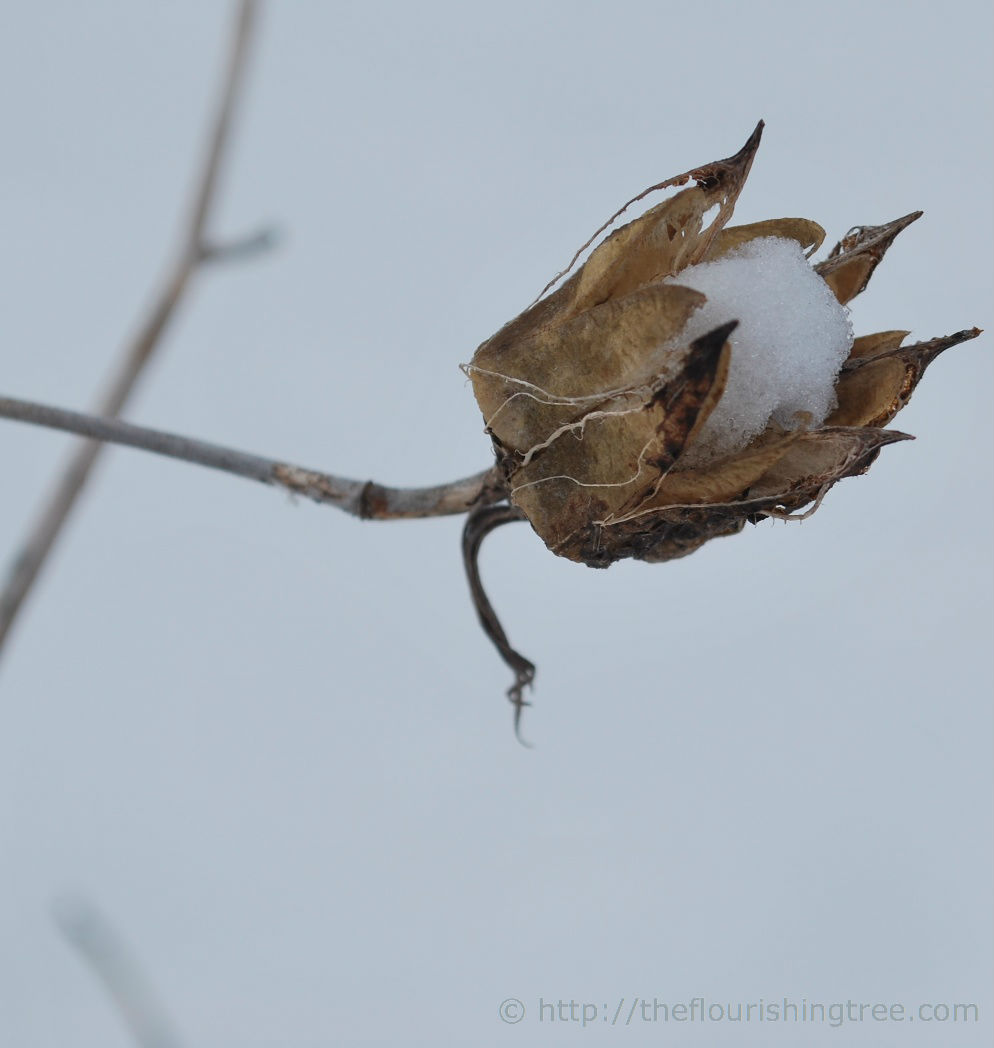
SnowBud_2014ft

A snow bud?

I didn’t last long on this trip outside with my camera.

When I went back inside, I curled up under a blanket with a book I’ve been reading, Isabel Allende’s memoir My Invented Country. The dog snored and dreamed of chasing her snow-encrusted tennis ball while I read for a bit and enjoyed some hot tea.

One of the most poignant parts of Allende’s book so far is her description of leaving Chile as a child, with a journal in hand to keep her company:

I wrote everything down in my notebook with the industry of a notary,
as if even then I foresaw that only writing would anchor me to reality.
… When she gave me that notebook, my mother somehow intuited
that I would have to dig up my Chilean roots, and that lacking a land
into which to sink them I would have to do that on paper. (108-109)

My parents always kept scrap paper handy, and so I can relate to Allende’s sense that writing would be an anchor for her, that paper would be where she thrived. Maybe that’s why writing is one of my anchors on snow days and why snow days remind me of my earliest days as a writer.

How about you? What do you love best about snow days?

The promise of spring

“Ha!” I can hear many of you saying as you sit blanketed under snow today. Or is it a “Bah!” that you’re calling out to my promising the return of spring.

Spring seems an unreal probability in this wintry season. Even here in the south, we got a little sneeze of snow last night. Not enough to cover the world with its cleansing white cover, but enough to get the local kids excited about a school delay and enough to glue the little kid still inside me to the windows as the snow drifted down last night. I dream of a proper snow day while many of you are ready for it to just. go. away. already.

I will admit to wishing for warmer weather. too. This has been an unusually cold winter, and if it’s going to be this cold, I’d prefer snow to accompany it. While I’m busy wishing for more snow or warmer weather or both – after all, it could be warmer here and still snow, too – I thought I’d share some photos from my recent visit to San Francisco’s Japanese Tea Garden with you.

Some of the trees in the gardens are bare, but there are cherry blossoms, too. And nothing promises spring to me as much as a cherry blossom. So enjoy these photos and a cup of something warm. I promise: spring is on its way, but for some of us, it can’t get here soon enough.

SFJTG_promiseofspring_2014ft

Nothing promises spring to me like a cherry blossom

SFJTG_treesandpond_2014ft

Someone is having fun training these shrubs (trees?) to grow like this.

SFJTG_koiandtrees_2014ft

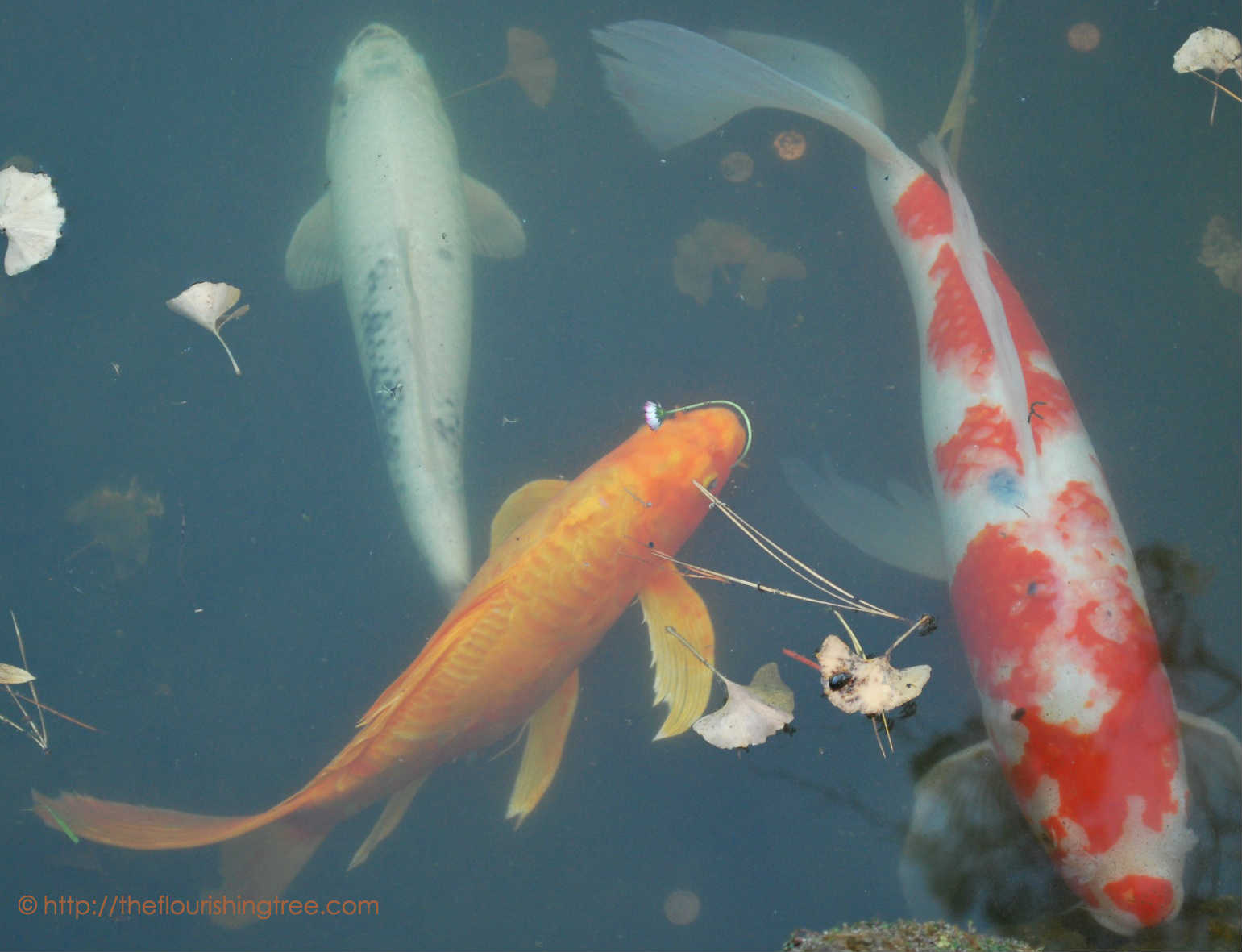
The koi and the trees’ reflections mesmerized me in equal measure.

SFJTG_clearreflection_2014ft

More reflections, thanks to a clear, still day

SFJTG_gnarledtree_2014ft

I love the shape of this gnarled tree and am thankful for winter’s opportunity to see the flinging shape of its branches.

SFJTG_dwarftrees_2014ft

A garden of dwarf trees, while a pagoda looms over the garden

A quick note about this garden of dwarf trees. Sometimes even trees get caught up in wars, and these dwarf trees are no exception. The Hagiwara family that cared for this garden from 1895 to 1942 was, according to the plaque nearby, “forced to relocate” during World War II. I guess that’s the genteel way of describing the internment of Japanese Americans during that war. The Hagiwara family left these trees in the care of a landscape architect Samuel Newson, who later sold the collection to Hugh Fraser. Fraser’s wife gave the collection back to the tea garden in her will, and they’ve been back here – flourishing – for almost 50 years.

SFJTG_hopefulkoi_2014ft

One last picture of these hopeful koi (I didn’t feed them, but they hoped nonetheless.)

What are the signals or promises that you look for to prove that spring will return?