A tourist’s impression of trees

My husband and I headed to Kentucky this weekend to run a race – a 10K road race for me and a 60K (!) trail race for him. This was my first visit to Kentucky and my husband’s first stay there when he wasn’t just driving through from one state to another.

We ran in a beautiful National Recreation Area called Land Between the Lakes, and I was struck by how much beauty and grace trees lend to a landscape. Maybe I was thinking of the trees so much because I had a long wait for my husband to come through a path among the trees before he could head to the finish line.

I’d had enough time after my race to drive back to our hotel, shower, change and check out before heading back out to watch him finish. I waited at this final trail crossing/aid station for over an hour, grateful for having finished my race but also grateful for such a beautiful place to run. I was also happy to see little signs that spring was coming, the hint of color rising on the trees, a bit of green peeking through here and there. I also didn’t mind the wait because it’s always fun to see how different runners react when heading in to another loop or turning toward the finish.
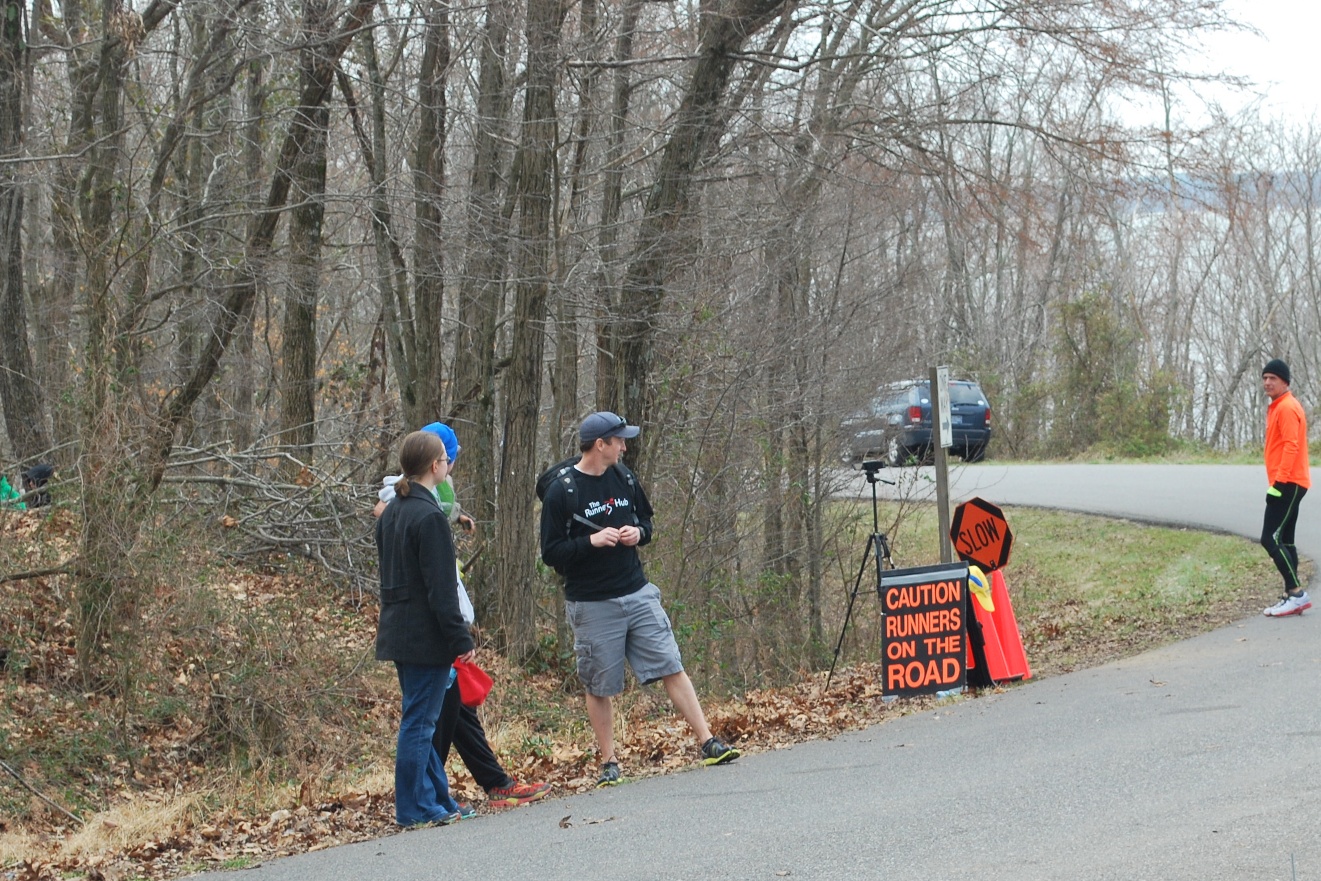
I wasn't the only one waiting for a runner to come out of these woods.
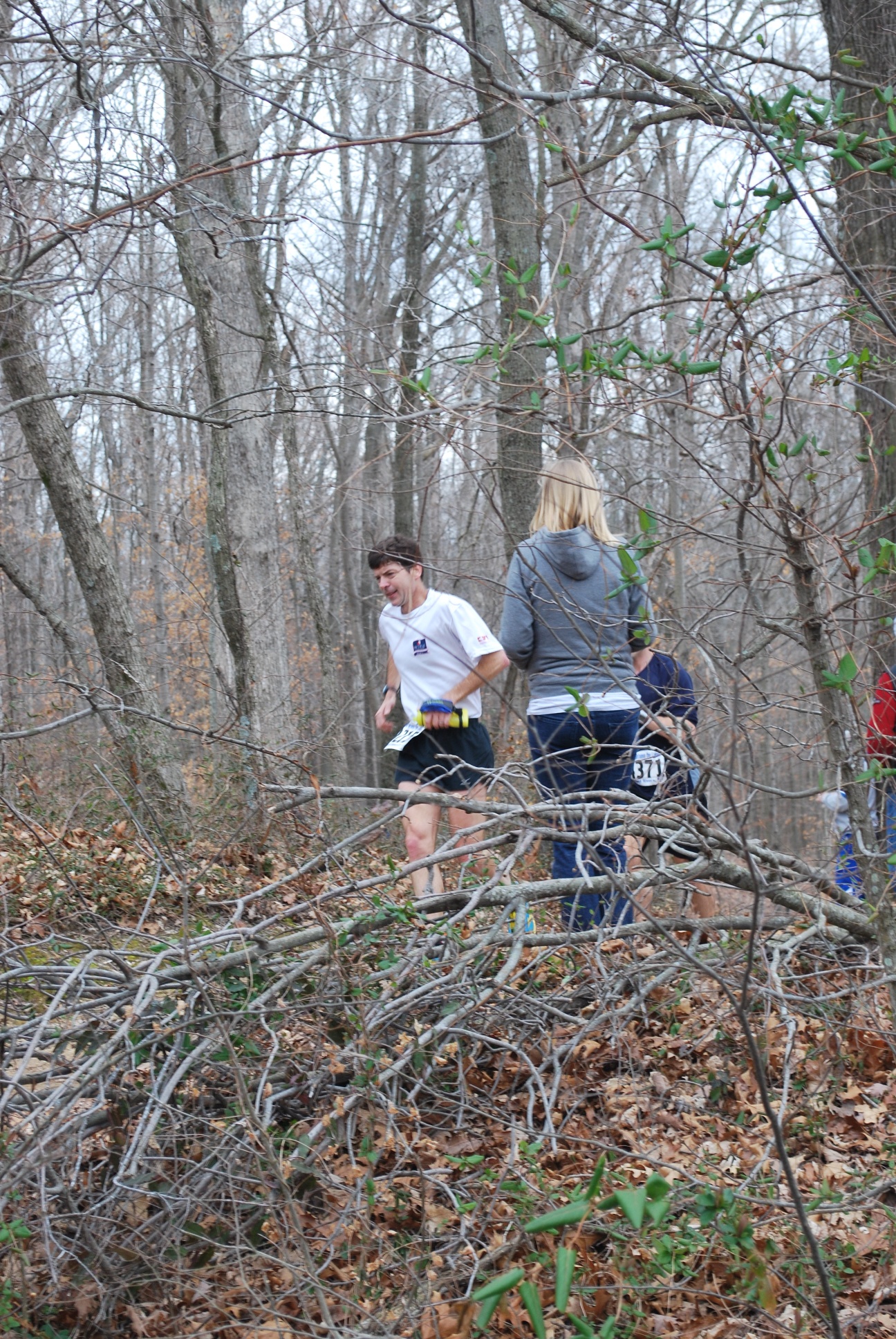
I wasn’t the only one waiting for a runner to come out of these woods.

LBLtrailcrossing2013

A little green vine by the runners’ trail promised of spring coming soon.

When we drove through Land Between the Lakes the day before, we stopped at one of the visitor centers to walk around a bit. While there, we walked through a historical exhibit that spoke of the sacrifices of turning this area into a National Recreation Area. The Tennessee Valley Authority displaced whole communities to create this area, and though I’m glad for the beauty of the place, I know it didn’t come without great economic and emotional cost for those who lived here before.

From trail to traffic
After my husband finished his race, we headed for Nashville. Talk about a transition! We went from serene, quiet, tree-filled trails and small towns to really, really terrible traffic and the constant wail of car horns and sirens. We headed to the Ryman for a concert Saturday night, and the traffic on the way from our hotel left me saying, “I would not ever want to live here.”  Continue reading
On cutting down trees, again

Back in January, I wrote a post about some tree cutting that happened nearby to put up a needless sidewalk. Then, a few weekends ago, the tree men came to my own neighborhood to cut down one of the grand old oaks that has graced us for many decades.

It’s not the only tree to die because of the construction craze in the neighborhood (the neighborhood is experiencing a “tear-down” renaissance where new, large homes replace older, smaller ones), but it was a beautiful tree that I hoped might just survive its mistreatment.

The tree had declined after stresses piled on to it one after another: back-to-back summers of heat and drought coupled with a construction crew that didn’t understand – or didn’t care – what day after day of painting materials washed out at the base of the tree would do to it. Of course, the new owners had no idea about the paint, and they consulted tree experts to try to save the tree. But after holding off for a couple of years to try to help the tree survive, they decided it was time to take it down.

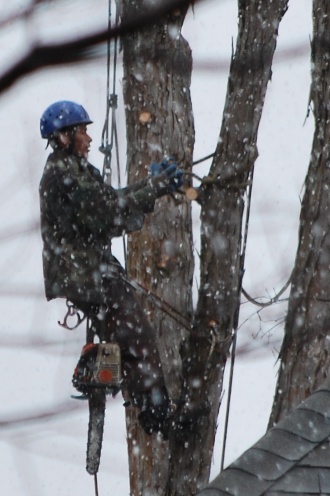
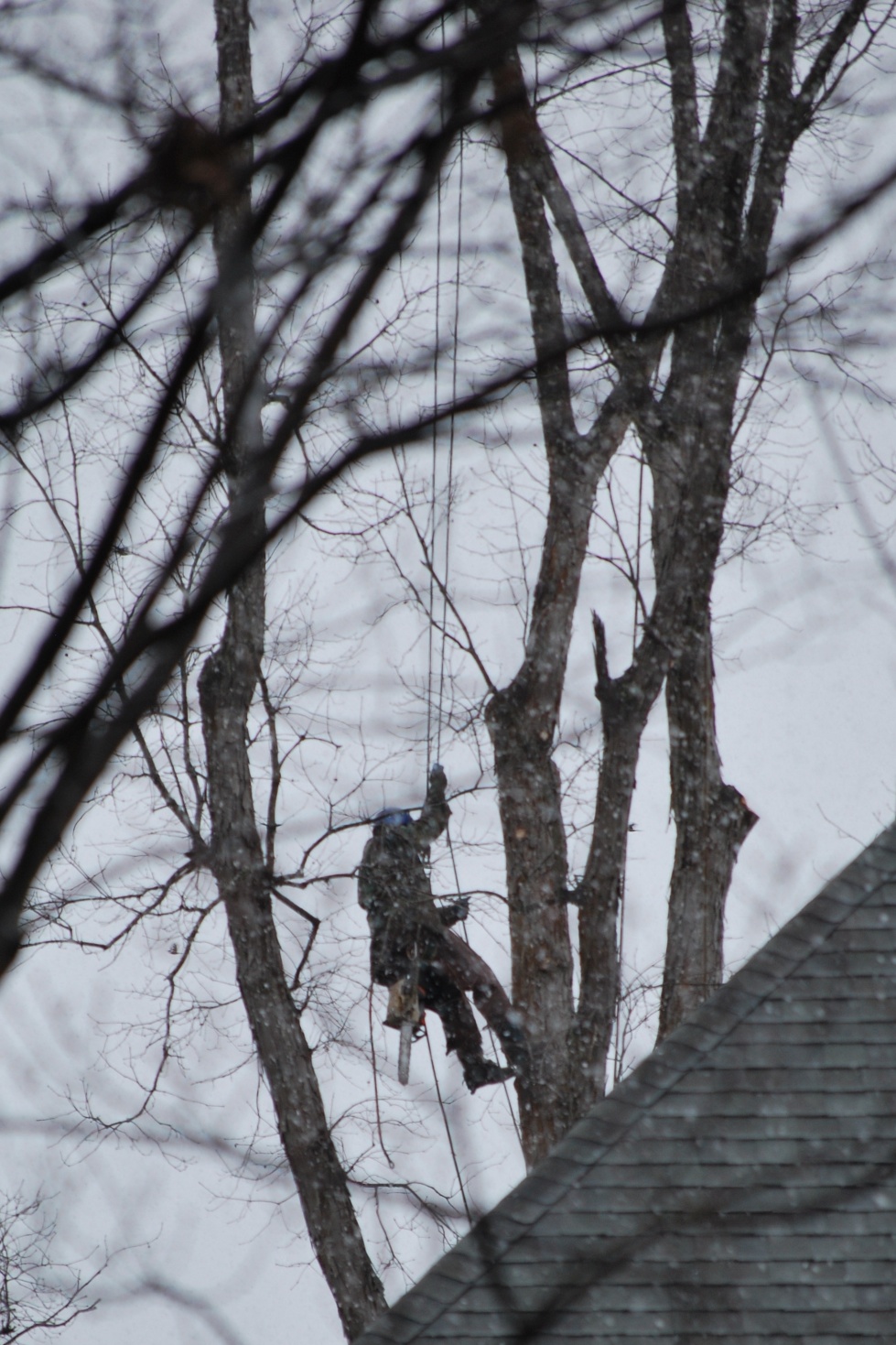
So a few Saturdays ago, with snow falling (a rarity around here), I was getting my house ready to entertain guests later that evening. I realized I was hearing the steady drone of a chainsaw and looked out to see across the roof of the house behind ours, a man up in the tree:

TreeCutting2013_2

When I saw what was happening, I stopped cleaning to grab my camera, and over the next few hours (with some dusting and laundry and food prep in between), documented as the tree came down, limb by limb.

I’m scared of heights, and though I love trees, I don’t enjoy climbing them at all. So this sight awed me, this man connected to the tree by ropes and also connected to his chainsaw by a rope that swung at his side.  TreeCutting2013_3 Continue reading

Love of place (and a Lenten challenge)

Before I launch into today’s post, I want to thank those of you who responded to last week’s post, The obsession with our scales. I enjoyed the range of comments you emailed and wanted to encourage you to take the season of Lent (which starts today) to consider whether you need to shift the way you think about food and weight. Lent offers a time to repent of sins in preparation for Christ’s crucifixion and resurrection, and it’s a season that Christians traditionally give something up as a way of focusing more on Christ.

Maybe it’s your scale (and the anxieties that accompany stepping on it) that you need to give up to God this Lent. Could you put it away in a closet and not look at it again until after Easter and spend the time you would normally stand pondering the number on the scale instead reading a Bible verse or saying a quick prayer? Or maybe you need to change some eating habits (too much sugar/alcohol/caffeine, not enough vegetables/fruit/water) so you’ll have the energy you need to get up five minutes early every morning to spend time with God. I’d love to know if you’re giving something up or adding something in this season of Lent, and if it’s extra challenging, I’d be honored to pray for your success in this area. Just let me know by emailing me or commenting below! And now for today’s post …

~~~~~~~~~~~~~~~~~~~~~~~~~~~~~~~~~~

Love of place
I spent this past weekend in the mountains, a place that is home away from home for my husband and me, a place that sometimes feels most like “home,” though we don’t live there permanently, a place so wrapped in natural beauty that I feel closer to God when I’m there.

We had been away for too long, and I was giddy at returning, proving that the adage “Distance makes the heart grow fonder” doesn’t apply only to people. This place has wound its way into my heart.

I took some time simply reacquainting myself with this place, walking its trails, skirting its places still icy with winter, sitting in a favorite restaurant filled with laughter and the unforgettable smell of a wood-fired oven, driving to catch the best moments of setting sun.

So on this eve of Valentine’s Day, I wanted to honor this place I love so dearly by sharing some photos of it with you.

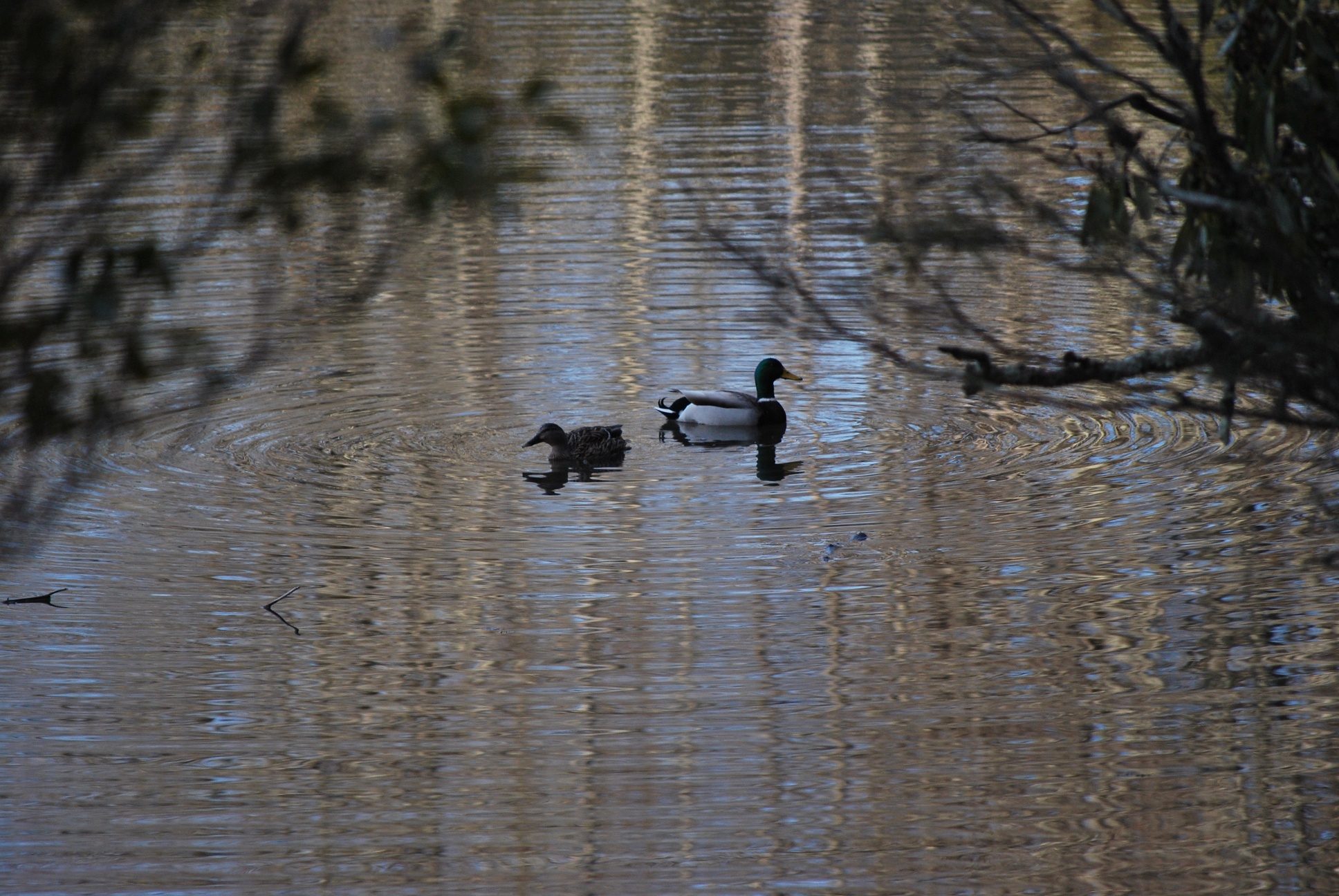
Ducksandripples

Ducks and ripples in a part of the lake without ice

I discovered a few fallen friends along the trails I walked, victims of wind and winter.

I discovered a few fallen friends along the trails I walked, victims of wind and winter.

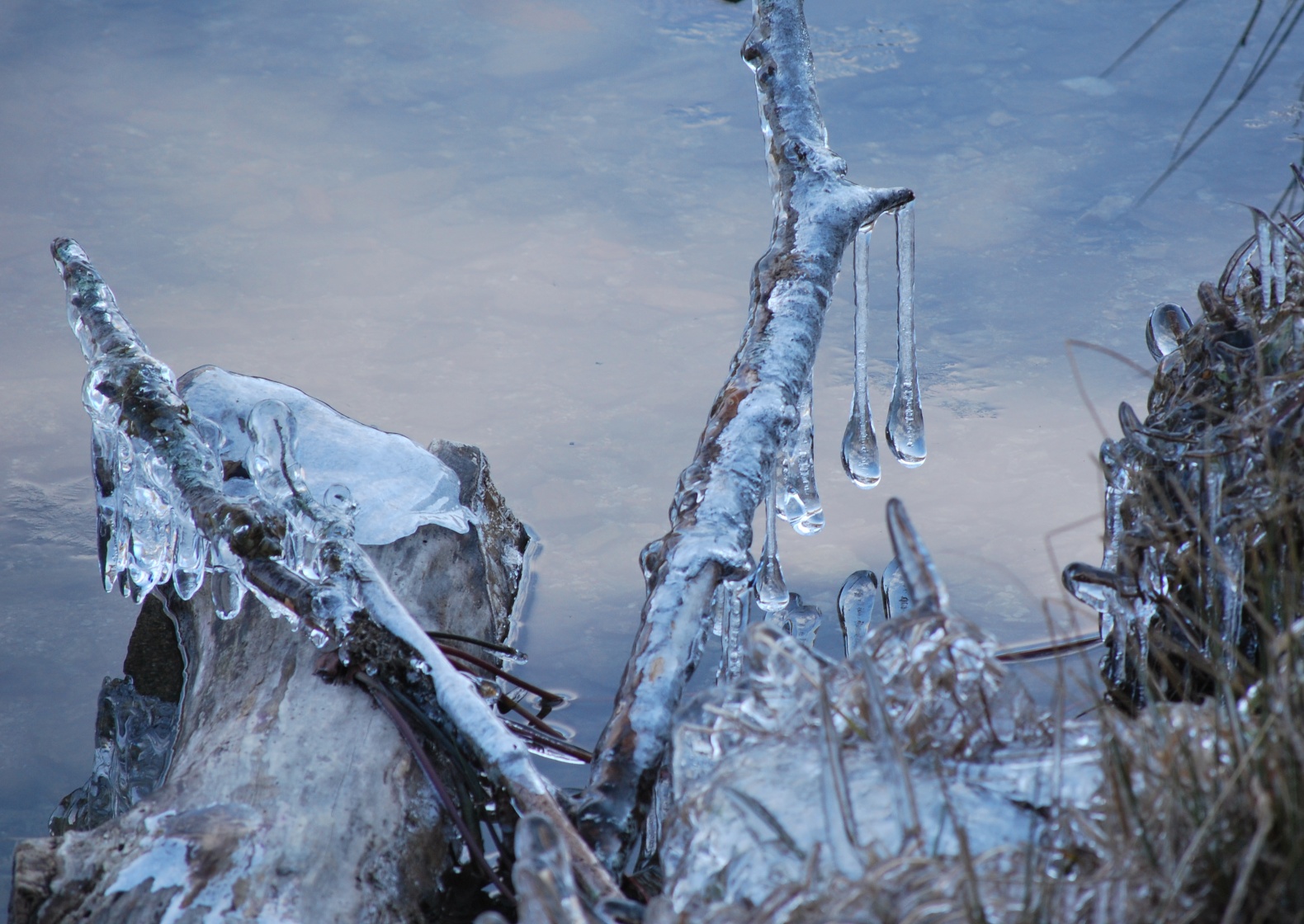
icedroplets

I saw these ice crystals and wondered if earlier versions had inspired the first chandelier makers.

frozenmidmelt

More chandelier inspiration; I love how many colors show up in this photograph, proving that winter isn’t all gray and brown

stillreflection

Time for reflection — both mine and nature’s

sunsetatMosesCone

A broad horizon at sunset

WonderlandSunset

Layers of blue ridgelines as the sun sets

Perhaps you understand? Maybe you, too, have a deep and abiding love of place? What place grips your heart this way? What about it feels like “home” to you? Why not send it a little Valentine in the comments below?

Running for an imperishable wreath

When I was six years old, I held my mother’s hand while we gleefully smashed the tiny acorns that scattered the sidewalk in front of our church.

When Lopez Lomong was the same age, he was ripped from his mother’s tight grip, taken by soldiers from under the trees where his family and others from surrounding villages had been in prayer during a church service.

I was born in America. Lomong was born in southern Sudan (now South Sudan). To quote Robert Frost, “That has made all the difference.” It’s a difference I can’t begin to grasp.

Lomong is one of my Olympic heroes, representing the USA in two Olympics – in 2008 in Beijing where he also served as flag bearer in the opening ceremonies and again this past summer in London where he came in 10th in the 5,000 meter final. I feel blessed that I got to see him earn a spot on both the 2008 and 2012 teams, watching him race at the U.S. Olympic Track & Field Trials in Eugene, Ore.

Lomong runs a victory lap after winning a spot on the US Olympic team this past June in Eugene, Ore.

Lomong runs a victory lap after winning a spot on the US Olympic team this past June in Eugene, Ore.

Lomong’s story is nothing short of amazing: from being abducted by soldiers in war-torn Sudan to living in a refugee camp in Kenya for 10 years to a journey to the United States where he would become a citizen and live out his own version of the American dream while never forgetting the other boys and girls left behind in Sudan.

Lomong has shared his life – its struggles and triumphs – in a moving memoir published last year, called Running for My Life. Never has a book title been so accurate. Running saved his life.

RunningforMyLifeLopezLomongCover

Lomong’s remarkable memoir of his life so far

Lomong’s book was one of the Christmas presents I gave my husband, and I read it right after he did, knowing that I needed to keep the kleenex nearby. I was still unprepared for how the book would affect me emotionally. Continue reading

On cutting down trees

This is one of those weeks where you know winter has set in for real. I spent last night wrapping plastic around my camellias – including the one I featured in last week’s post, now not looking so pretty with browning petals – and several other tender plants that I didn’t want harmed by the deep freeze.

I ventured outside this morning for an obligatory dog walk but waited to go back out for a run until the temperature was closer to the freezing mark. I was able to take off my gloves partway through the run, but the wind still had a bitter chill to it.

Yep. It’s winter. Best just to curl up with a cup of tea and a good book.

I’ve just started a book called American Canopy: Trees, Forests, and the Making of a Nation by Eric Rutkow. Re-started might be more correct. I tried reading this book a few months ago but set it aside after bursting into tears during the introduction, where Rutkow describes the killing of the oldest tree ever found (likely more than 5,000 years old), a bristlecone pine tree that a graduate student cut down so he could see how old it was. You read that right. He cut down the tree to count its rings. To his credit, he realized he had gone too far and became a conservationist as a result.

Knowing what to expect, I made it though the introduction a second time without any tears. But reading again about this tree called Prometheus (yes, some trees have names), got me to thinking about our relationship with trees. Continue reading