Thankful for trees and books and a book about trees

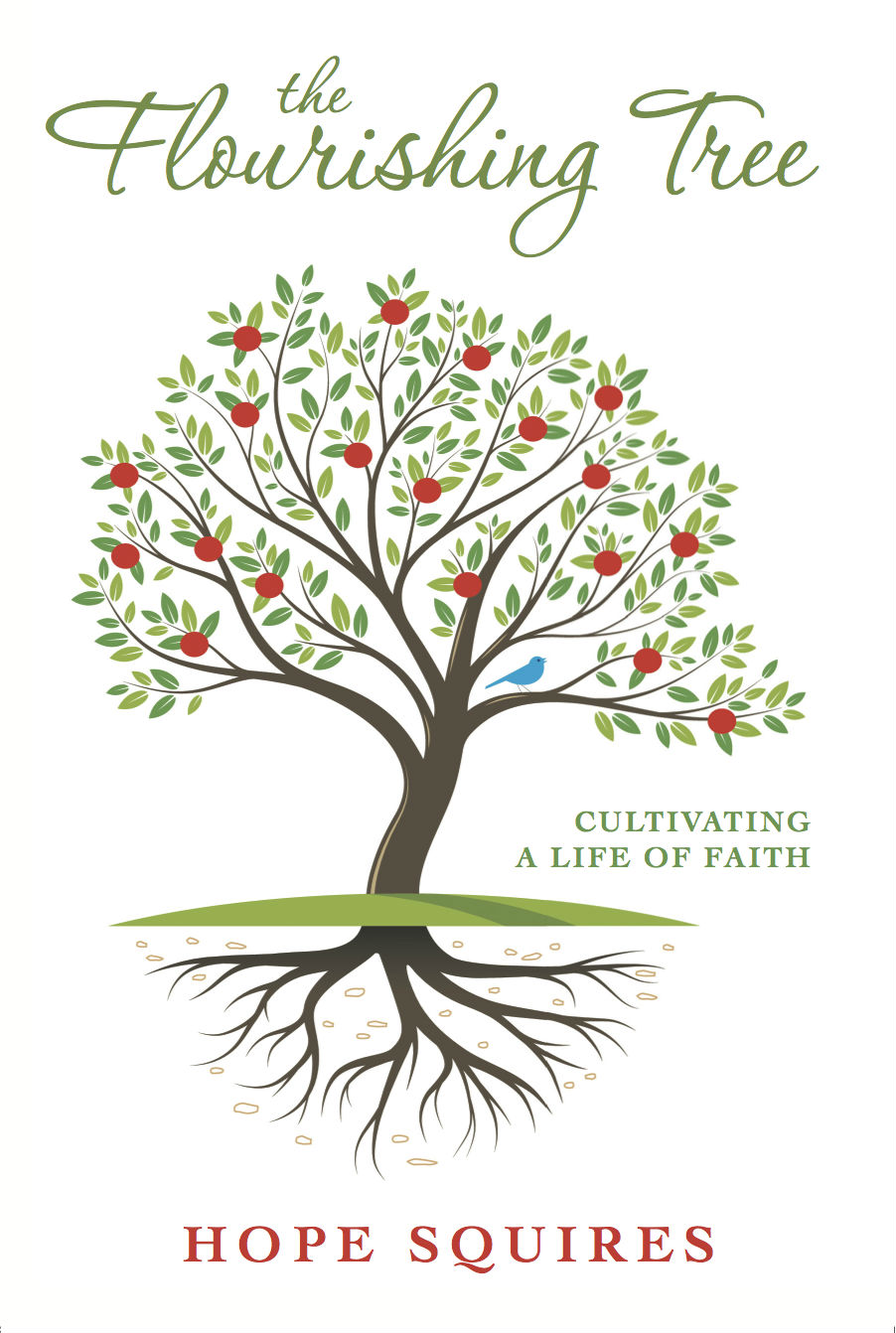
I’ve got exciting news this Thanksgiving Eve! My book The Flourishing Tree is available for purchase.

FT_COVER-finalforhsc

Available now at Lulu.com

It will be available only through Lulu until sometime early in the new year, when it will be widely available (Barnes & Noble, Amazon, etc.). For those of you who prefer electronics to paper, you may purchase the eBook through Lulu, too. To celebrate the Thanksgiving holiday, the eBook is on sale for $3.99 through Monday (it’s regularly $8.99). The paperback version is on sale for 20% off.

Thank you for your support
How many of you remember the Bartles & Jaymes commercials from many years ago? You know, the ones with the two old guys who always ended by saying “Thank you for your support.” Well, let me quote them here: “Thank you for your support.” Those of you who follow this blog have encouraged me and lifted me up and helped me get here today. I am deeply grateful for you.

If you like the book, would you do me another favor? Would you rate it on Lulu? Would you leave some feedback for me here? Or at hopesquires.com? I’d love to hear how this book touches you.

My hope for the book
I hope those of you who read the book will walk away with a renewed sense of God’s unfailing love and grace for you. I hope you’ll be encouraged in your faith journey. I hope you will experience a new (or renewed) excitement for pursuing a relationship with God. And I hope the book will fill you with God’s light.

Together, you and I can be bearers of the light. We live in a broken world, and it is easy to feel overcome by the strife and despair and sorrow and violence in this world. Yesterday morning, the morning after Ferguson erupted in fresh riots, I was out running with my dog. Two chickadees dropped to the road from a high limb of a tree, hitting the pavement with a loud “thwack.” I thought they might be babies falling from a nest, but they were full-grown and in full fight mode. Their battle made me despair, “If even the birds are at war with one another, what hope is there for humans to heal their differences?”

Yet God calls us to let our light shine and to love one another. In the days to come, may you find moments that heal the broken places inside of you, and may you encounter ways both tender and loud that shine through with the light of God’s love for us all.

Happy Thanksgiving, y’all. I hope your travels will be safe and cheerful. I hope you find yourself in the company of those you love. I hope your bellies and your hearts will be filled with all good things.


Hope and headbands

Despite still fighting a nagging ankle injury, I signed up for a cross-country 5K that was this past weekend: the Sweat Hope 5K. One of my dearest friends agreed to run it, too, and because it raised money for a great cause and promised to be my last race in my hometown for awhile (and because of its spectacular name, especially appropriate for me), I wanted to have as much fun with it as possible.

The fun started a day early.

I picked up my race packet Friday afternoon, and, having just come from a Girls on the Run (GOTR) event, was sporting my GOTR coach’s t-shirt. When I arrived, several folks greeted me with enthusiasm and remarked on my shirt. It turns out that the race organizer (Jessica Ekstrom—also the CEO/Founder of Headbands of Hope) and her sister had been in the very first Girls on the Run.

The very first season! The one that started it all. Both girls are grown now, and they were both at packet pick-up Friday. They joked that they must have been the reason GOTR kept going. I walked away wondering how many other success stories such as theirs had come out of GOTR.

SweatHope_2014FT

My new “Sweat Hope” headband with a sticker from Saturday’s race. I thought my happy Fall mum was the perfect place for this shot.

On Saturday, the fun continued. Although I didn’t run as well as I had hoped and had to walk the big hills on the course, it was a beautiful day and a good excuse to spend time with my friend and her husband.

I emailed Ekstrom after the race to congratulate her on such a great inaugural race. This was a great race, in large part because it was so well organized. The race started on time (yay!). It had great volunteers along the course and at the finish (yay!). There were great sponsors who were present with goodies for all of us (including a yogurt parfait station complete with dairy and vegan yogurt — double yay!). There was even a sack race for kids after the main race wrapped up.

I don’t know if Ekstrom plans to organize future Sweat Hope races, but if she does (and I hope she will), you runners out there won’t be disappointed.

Ekstrom kindly agreed to share a little about her experiences as a founding member of the GOTR family and in her role leading her own company. Headbands of Hope makes and sells fantastic headbands (seriously, runners, these things do not slip while you’re running). For every headband the company sells, it donates a headband to a girl with cancer and also gives $1 toward cancer research.

Ekstrom is gaining national attention for her work, and I wanted to know more of her story. Continue reading

Uprooting, or the big push, part 2

When you hear the word “uprooting,” what do you think of? Maybe pulling up weeds or transplanting flowers? If people are uprooted, is that a good thing or a bad thing? I guess that all depends on your perspective and your faith.

My uprooting news is that, after a lifetime of living in North Carolina, I’m moving to Northern California for my husband’s job. Yep, I’m leaving home, leaving the South, leaving sweet tea and biscuits (oh, the biscuits), leaving family, leaving friends. (I apologize to any friends who are reading this news for the first time here. I tried to reach you all in person, but I hope you’ll understand that this is a busy/hectic time right now.)

I’m filled with equal parts excitement and dread. While I’m looking forward to this new adventure, I’m not always happily or gracefully packing up a life I love here. So I’m looking for signs of hope and words of reassurance wherever I can find them.

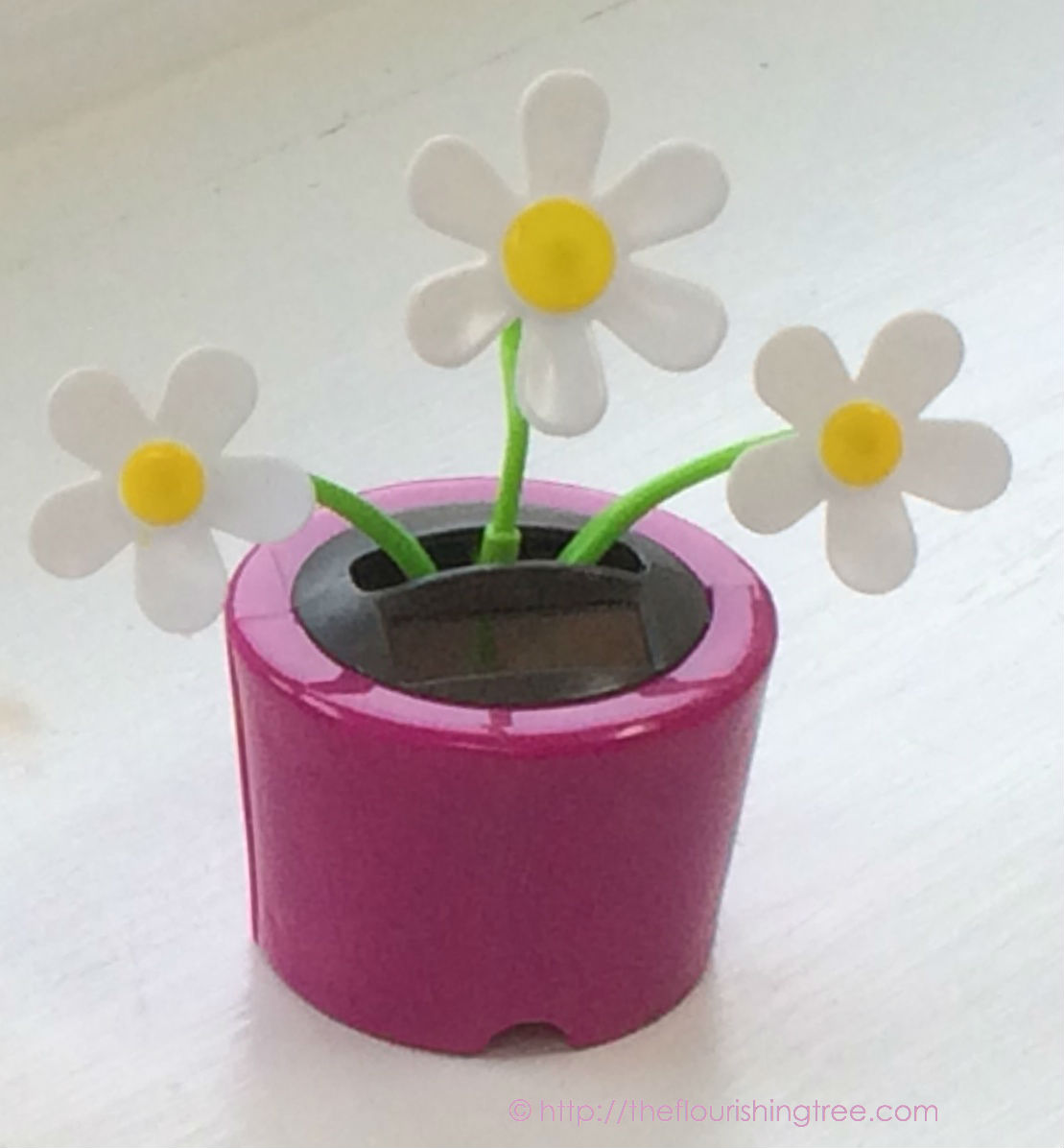
As my husband and I work to declutter our home to get it ready to sell, we’re moving lots of little treasures out of the house. About a year ago (maybe longer given how quickly time flies), he brought home three little gifts for me: solar-powered plastic flowers that wave in the sunlight. He’s adorable that way.

SolarFlower2014_FT

I set them in a sunny window and waited for them to start waving. The blue one started. The red one started. The purple one … well, it didn’t start. Even after I set it out in direct sunlight for a bit, it still didn’t wave. I don’t know why I didn’t throw it away, but it sat next to the other two, never budging all this time.

Two weeks ago, I took all three flowers for a road trip. We’re fortunate to have a place where we can bring boxes and our treasures to wait while our house sells. I set the three flowers up in another sunny window sill and checked them the next morning. I took this video to share what I discovered:

Wow! I’m not one to overuse exclamation points as a general rule, but wow!!!

I never thought plastic solar flowers could amaze and delight me so much. You see, all that little flower needed was a road trip—a bit of shaking up and uprooting—before it could thrive. And maybe if that’s true of a little plastic flower, it can be true of me, too. I can thrive in a new place, uprooted, shaken up, in an unfamiliar sunny spot.

Those little plastic flowers are a comfort to me now in the moments I get panicky about moving away.

Back in March, I wrote a post called The big push. I know Richard Rohr didn’t write the words I quoted in there just for me, but they comfort me even more than the little plastic flowers. God is giving me a big push. I’ll be honest: some days it feels like a bully’s shove. But I have hope and reassurance that God is going with me and dreaming a California dream for me that I never imagined for myself.

A.A. Milne, creator of Winnie the Pooh, wrote, “You can’t stay in your corner of the Forest waiting for others to come to you. You have to go to them sometimes.” I’ll be leaving my little corner of the forest soon, and I’m looking forward to meeting those who needed me to come to them out in California. I’m trusting the uprooting will bring a wonderful change.

How about you? What ways has life surprised and pushed you? I’d love to hear your uprooting stories in the comments below.

Much ado about ice buckets

The ALS ice bucket challenge has taken social media by storm in recent weeks and is generating plenty of talk, pro and con.

For the ALS Association, the bucket challenge has generated awareness and raised millions of dollars in a short time. School children have enjoyed watching their principals get doused with icy water. Friends and families have come together for a moment of joy and hilarity. And for ALS sufferers such as Lorri Carey, the ice bucket challenge has brought hope. These are all great reasons to call the challenge a success.

icebucketchallenge2014_FT

There has been a backlash to the bucket challenge, though. Clean water advocates are decrying the waste of so much clean water in a country where some regions are suffering devastating drought and in a world where access to clean water is a struggle for more than 700 million people. Even the ALSA site suggests repurposing the water and offers suggestions of water-free ways to help the organization.

While the waste of clean, drinkable water troubles me, I don’t want to diminish the success for ALS research. Besides, even though I haven’t dumped a bucket of ice water on my head, I can understand why August is the perfect time for such a challenge, and I know I’m guilty of a lifetime of wasting water in fun ways.

So for me, the ice bucket challenge has brought up complex issues of balancing the rights and needs of those of us who live in a privileged place, those who live with a terminal illness and hope and pray for a cure, and those who lack basic necessities and dignities of life.

I reached out to several non-profit groups who raise funds and awareness for clean water projects around the world to ask for their take on the ice bucket challenge. Lopez Lomong—a U.S. Olympian I’ve blogged about before—responded with enthusiasm.

Lomong’s foundation has partnered with World Vision in a project called 4 South Sudan. One of the major goals of the project is to help communities in South Sudan gain access to clean water and sanitation facilities.

Here is Lomong’s challenge:

Take the ice bucket “Clean Water” challenge for the women and children of South Sudan who walk miles every day for clean water. Taking the challenge will give thousands in South Sudan the gift of education, safety and life. Just $50 gives clean water for LIFE to one person in South Sudan.  Thank you for being awesome and bravely taking the challenge to save lives in South Sudan!

So will you accept the challenge? If you have already done a bucket challenge for ALS, consider skipping a second bucket and making a donation to fill someone else’s bucket with clean water.

If you feel like you’ve been missing out on the fun and want to cool off with a bucket of water (and would repurpose the water or conserve water in some other way to make up for it), have at it. Two worthy causes—more research funds to find a cure for ALS and better, safer access to clean water in South Sudan—could benefit from your bucket of fun.

Have you taken the bucket challenge and repurposed the water? Maybe filled up a kiddie pool that you were going to fill anyway? Or stood in a garden that you needed to water? I’d love to hear your creative ideas for repurposing the water. And if you accept Lomong’s challenge to give a person water for life, please let me know in the comments below so I can thank you.

HOPE for vulnerable women and children

“And what does the Lord require of you
But to do justice, to love kindness,
And to walk humbly with your God?”
– Micah 6:8

—————————————

In the Great Lakes region, there’s an epidemic we don’t hear much about. Women and girls are suffering rape in great numbers, sometimes at the hands of gangs, and these women and girls then suffer the subsequent shaming that comes with rape. Many end up shut out of their families, giving birth to unwanted children, and mothers and children alike are ending up on the streets.

Haven’t heard about this in the news? Oh, perhaps you thought I meant the Great Lakes region in the United States? If that were the case, we North Americans would likely hear more about it. But this Great Lakes region is in the Democratic Republic of the Congo (DRC). Now before you decide to stop reading because you’re weary of atrocities in other countries far away from your own world of problems, I beg you to read this story and search your heart to see how God may be calling you to help.

The prevalence of rape in the DRC
The DRC is about a fourth of the size of the United States, and its vast wealth of minerals and other resources help explain the wars that ravage the country. Especially in the eastern part of DRC, the Great Lakes region I mentioned, rebel fighting continues with threats from neighboring Uganda and Rwanda never far enough away. Just this past Sunday and Monday, the city of Goma on the eastern edge of DRC was shelled in fighting that involved UN troops and rebels.

Yesterday, I met Maguy Makusudi, who is spending her vacation here in the United States raising awareness about her organization HOPE (Humanitarian Organization for People Empowerment).

She lives in Kinshasa, the capital of DRC, where she has lived since fleeing her home region of Kivu in eastern DRC in 1996 to escape war there. She still has family, including two sisters, who live in the eastern DRC and remain under threat of violence. Because of the prohibitive cost and difficulty of traveling from Kinshasa to her home region, Makusudi is rarely able to make the trip.

Makusudi traveled to my part of the United States thanks to a college friend of hers, who happens to be a member of my church (and who teasingly calls me one of his American nieces). Together, they are telling her story to all who will listen. It’s not an easy story. But I know that he is not only my African uncle but also my brother in Christ, and she is my sister in Christ, and as God’s family, we are called to share each others’ burdens.

The birth of HOPE
When Makusudi first arrived in Kinshasa, she saw the effects of war in the number of displaced children living on the streets: from abandoned children to child soldiers discharged from the army. She helped form HOPE in 2002 to aid these displaced children in retracing their families and negotiating with the families to reunite with these children.

It is better for the children to be reunited with their families, but this, she explains, is not always easy. Children born of rape are unwanted, and often the women themselves are cast out by their families instead of receiving comfort and care from them. Another mouth to feed is a burden many families are simply unwilling to accept. Makusudi also points out that many of these children are orphans, and it is the aunts or uncles who have no place for them and no willingness to take responsibility for their survival.

Accusing unwanted children of being witches is a common way of getting rid of them. Families take these children to local “churches,” where they are beaten or exorcised and then abandoned. Can you imagine this level of evil and negligence toward vulnerable children? Makusudi assures me it is the reality in the Congo.

A 2006 UNICEF census identified 20,000 children under the age of 18 living on the streets of Kinshasa alone. Makusudi says the problem has only grown worse as the cycle continues for girls growing up on the streets, being raped, or entering into prostitution to feed themselves and then also their children born into this horrific situation.

Where reunification is not possible, Makusudi works to place children in foster homes, a rare possibility in Kinshasa. For the others, HOPE’s center houses the children and provides schooling, healthcare and psychological counseling for them. HOPE partners with another organization to provide vocational training such as sewing or hairdressing classes so that the girls can gain skills that will give them a way out of life on the streets.

Even in the desert, a rose can bloom
Through the years, HOPE has seen its share of accolades and visits from prominent dignitaries. UN Secretary General Kofi Annan visited the center in 2006, and Unicef Italy recognized the center with a prize in 2002. Makusudi spoke of the award, a piece of sculpture depicting a desert rose. She explains, “Because even in the desert, a rose can bloom. Even in very hard situations, you can have a smile. You can have hope.”

HOPE is bringing smiles and hope to as many girls in Kinshasa as possible, currently housing girls from ages two through 18, with younger boys sometimes accompanying older sisters or mothers. The priority for acceptance at the center is given to very young girls and older girls who have babies, but for those who don’t get to come to the center, HOPE’s healthcare workers go out to the streets to treat women and their children when possible.

In addition to schooling and shelter, there are also games and team sports at the center, an attempt to give these children elements of a normal childhood. A pastor visits some Sundays, and when the center can find a van to rent, the girls will attend church two to three kilometers away, an outing they look forward to.

HOPE for the future
Makusudi has many hopes for her organization’s future growth. She’d love to expand services to the eastern part of the country, where she sees great need among the women ostracized from their communities and left vulnerable because they can no longer work in farming that leaves them open to more attacks. Micro-loans, healthcare and therapy, vocational training and a safe community for these girls and women can help them improve their lives.

HOPE is currently housed in buildings owned by another organization, and though HOPE owns land, there aren’t funds enough to begin building yet. Eventually, HOPE plans to build shelter, a healthcare center and a school for the girls they help.

Among these plans for HOPE’s future, you can see Makusudi dreaming of a better, safer Congo. She tells me that these are the ways you and I can help:

  • First and foremost, pray for the Congo in general and for peace in particular there. With peace would come renewed safety and opportunity for work, as well as a chance for families to rebuild.
  • Pray for the gang-raped women and girls.
  • Support HOPE with your gifts and service.
  • Visit Kinshasa to see how HOPE is at work saving the lives of these girls, giving them hope and helping them transform their lives.

We sat in a coffee shop bustling with people as Makusudi told me her story and her hopes for the organization. I thought how incongruous her visit here must seem compared to the daily heartbreak she witnesses in Kinshasa. She came here, though, because aren’t we all connected and called to kindness and justice and care for those who are more vulnerable than we are? Aren’t we all called to offer one another hope?

Toward the end of our conversation, I asked her to tell me what is most beautiful about the area of the Congo where she grew up, and she smiled large as she told me of the beautiful lakes and volcanoes (a few still active) and the beauty of the land that wows even European travelers. And I thought, this love of place connects us, too, this love of the beautiful world we call home. A place we should all work a little harder to make safer for our children.

Maguy Makusudi and me (taken by Joe Mabiala)

Maguy Makusudi and me (taken by Joe Mabiala)

I share her story with you because God charges us to act with mercy and love and “to do justice” (Micah 6:8). Will you help in Makasudi’s fight for justice for the children of DRC?

Want to learn more?

Makusudi is currently working with friends here in the United States to create an English-language website for HOPE, and I’ll share that link here as soon as the site is up and running.

In the meantime, here’s the contact information for the organization:

HOPE International
Asbl
KINSHASA RDC
39, Bld Lumumba, Q/Immo-Congo
Commune de Kalama/Kinshasa. Congo DRC

By phone:
Tel: +243 818110833; +243 815258301