Neglecting the riotous garden

Two years ago, I wrote one of my favorite posts called The riotous garden and shared photos and the story of the garden my husband and I have created in our front yard.

The garden has been years in the making and the creating and the trying and failing and sometimes succeeding. A woman whose garden I admired told me once that gardening is equal parts tending and neglecting and knowing when to do each.

The last few weeks – while my broken toe has been healing – our riotous garden has seen too much neglect but has also produced so much beautiful chaos in its rush to bloom that I feel undeserving of it all. I thought you might enjoy a photo update of the garden as it looks today.

Spring2014RiotousIrisesFT

A sea of irises

Despite my promise to myself each of the last two years that “this will be the year I divide the iris bulbs,” it still hasn’t happened. I’m vowing to divide them this year, but the neglect has rewarded me with abundant blooms that make me giddy. I’m guessing the irises loved the cold winter. Continue reading

Late bloomers (flowers and people)

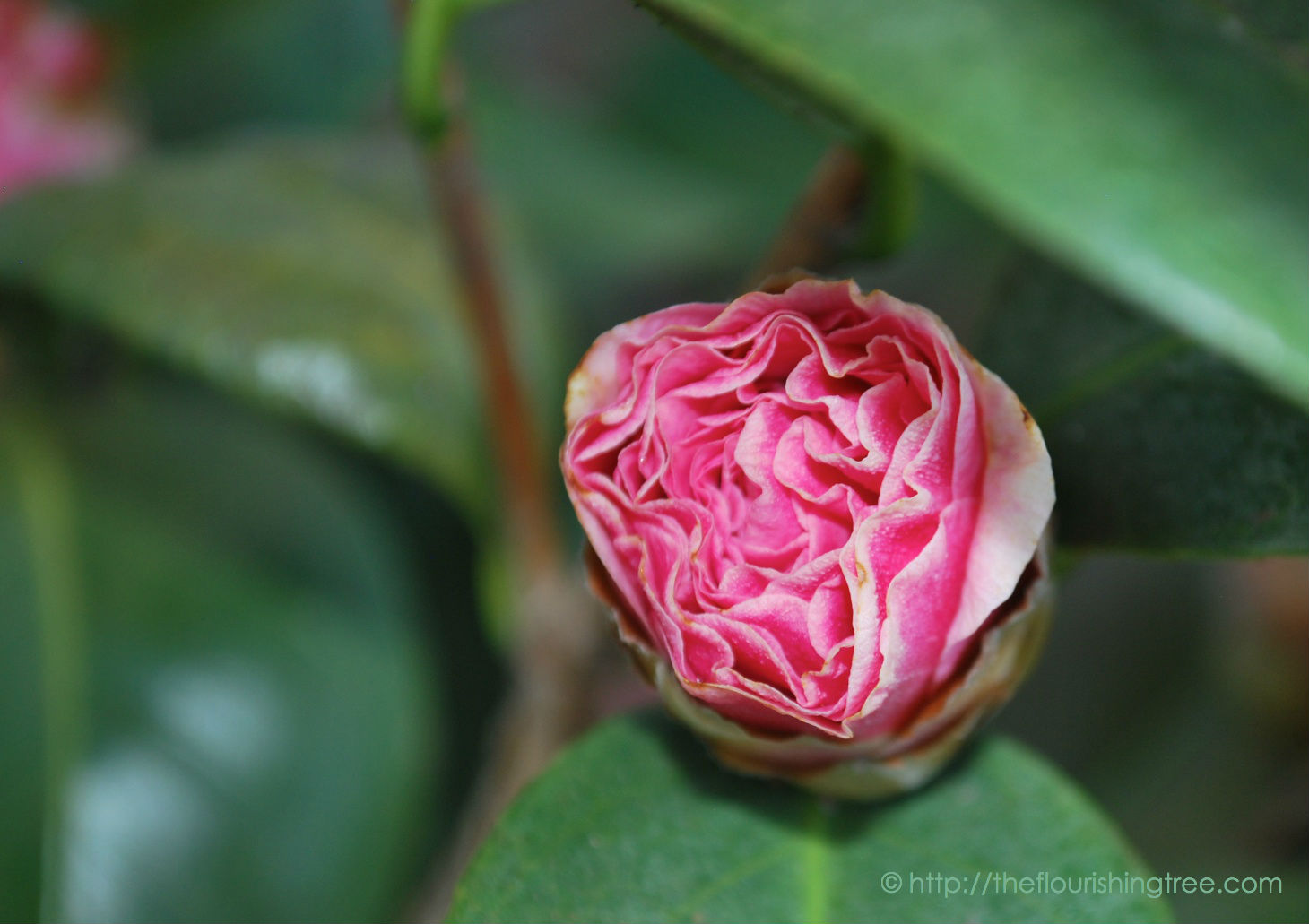
Right after Christmas, my camellia looked ready to bust out in gorgeous blooms too numerous to count. One perfect bloom had even opened up. But then came the coldest weather we’ve had in years. The buds stayed tightly shut and browned a little at the tips.

Camelliabud_2014ft

I thought the camellia buds would stay like this until I plucked them off.

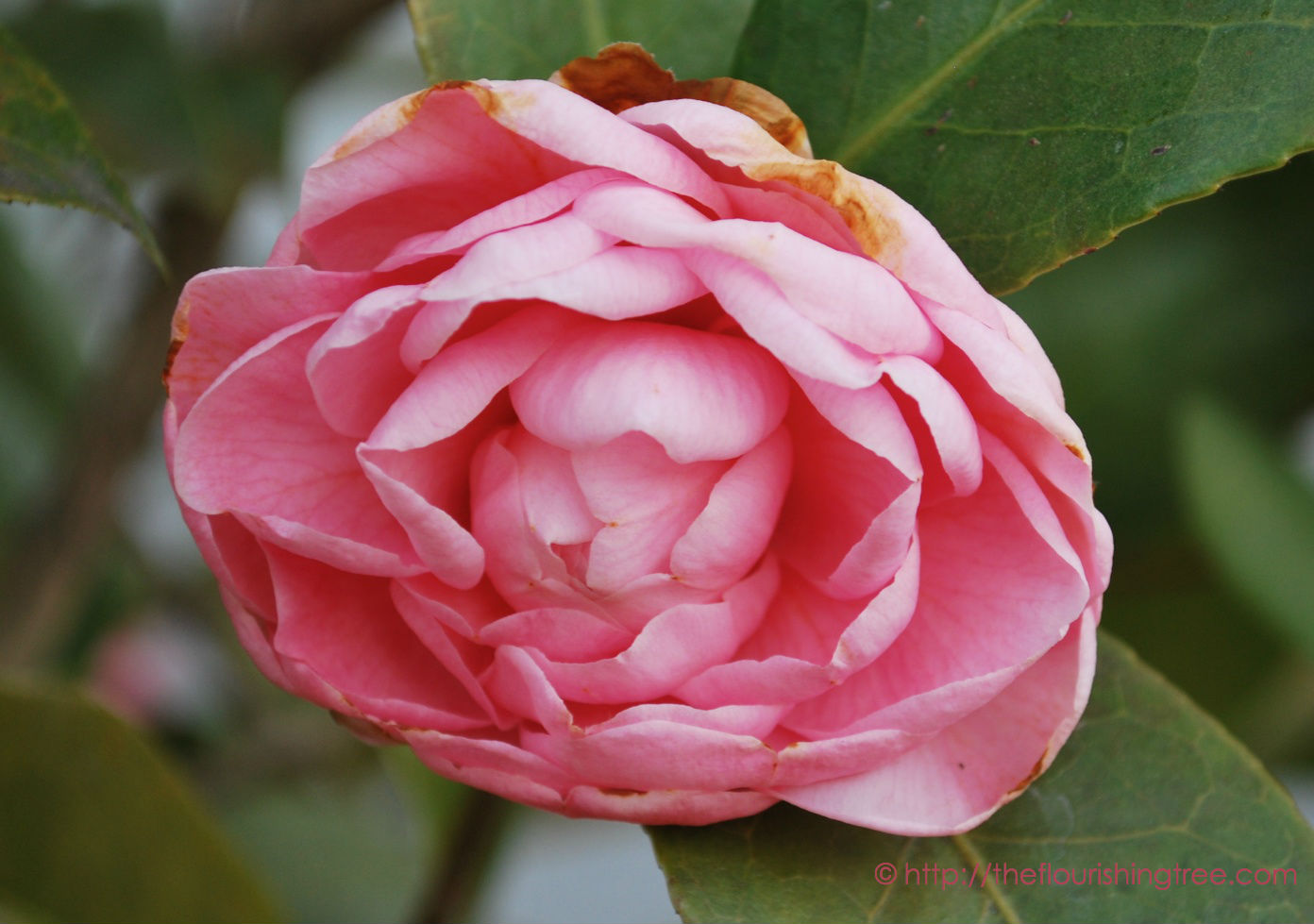
Slight warming and then bitter cold repeated again and again until I had given up hope that any of the buds would open. But then, this past weekend, we had a glorious stretch of spring weather, and my camellia bush embraced the change:

Camelliabloom_2014ft

Just one of the open camellia flowers

The one above, tucked toward the house and away from the harshest of the winds, managed to avoid browning much at all. Even the ones with browner tips, though, make me happy as I see them open one after another. I think they’re all beautiful, brown bits and all.

Camelliabloom2_2014ft

A little brown around the edges, but beautiful nonetheless

I can relate well to these late bloomers in my garden. I’ve always thought of myself as a late bloomer. My teenage years felt like torture while I waited to catch up with my friends. I’ve had a few career starts and stops and redirections while trying to discover what path I was supposed to be on. My marriage came later than most of my friends, though not as late as some (I had a great aunt who married for the first time just before she turned 60!).

I was even a late bloomer when it came to running, an integral part of my life now that I hope to continue for the rest of my life.

I’ve been quiet on the running front on my blog lately, mostly because of a nagging injury which is healing after I finally admitted I needed to try something different. A great physical therapist, discipline when it comes to the stretches and exercise she gives me, and a new way of running seem to be the right recipe. I am improving, and I am getting faster in the process (bonus!).

I often wonder how my running life might have gone differently if I had started when I was younger and thinner and free of injury. By the time I started running in my early thirties, I had already sprained a toe (for which I blame Riverdance and my barefoot attempts to follow along in my carpeted living room), and I had struggled with weight gain.

But what if I had used the injury and extra weight to keep me from trying to run at all? What if I had let myself believe I was too old to pick up a new activity? I might never have started running, and then, I might never have discovered the beautiful things in me that running has helped me see. The discipline. The courage. The stubborn streak (oh, wait, I think I knew about that one before running.). The mental toughness. The physical strength.

I might never have understood the community – and the camaraderie – of runners. I might never have visited some of the beautiful places I’ve encountered on my runs. I might never have shared my love of running and the ways it has made my life immeasurably better with the girls I coach. I would not have been the me I am now.

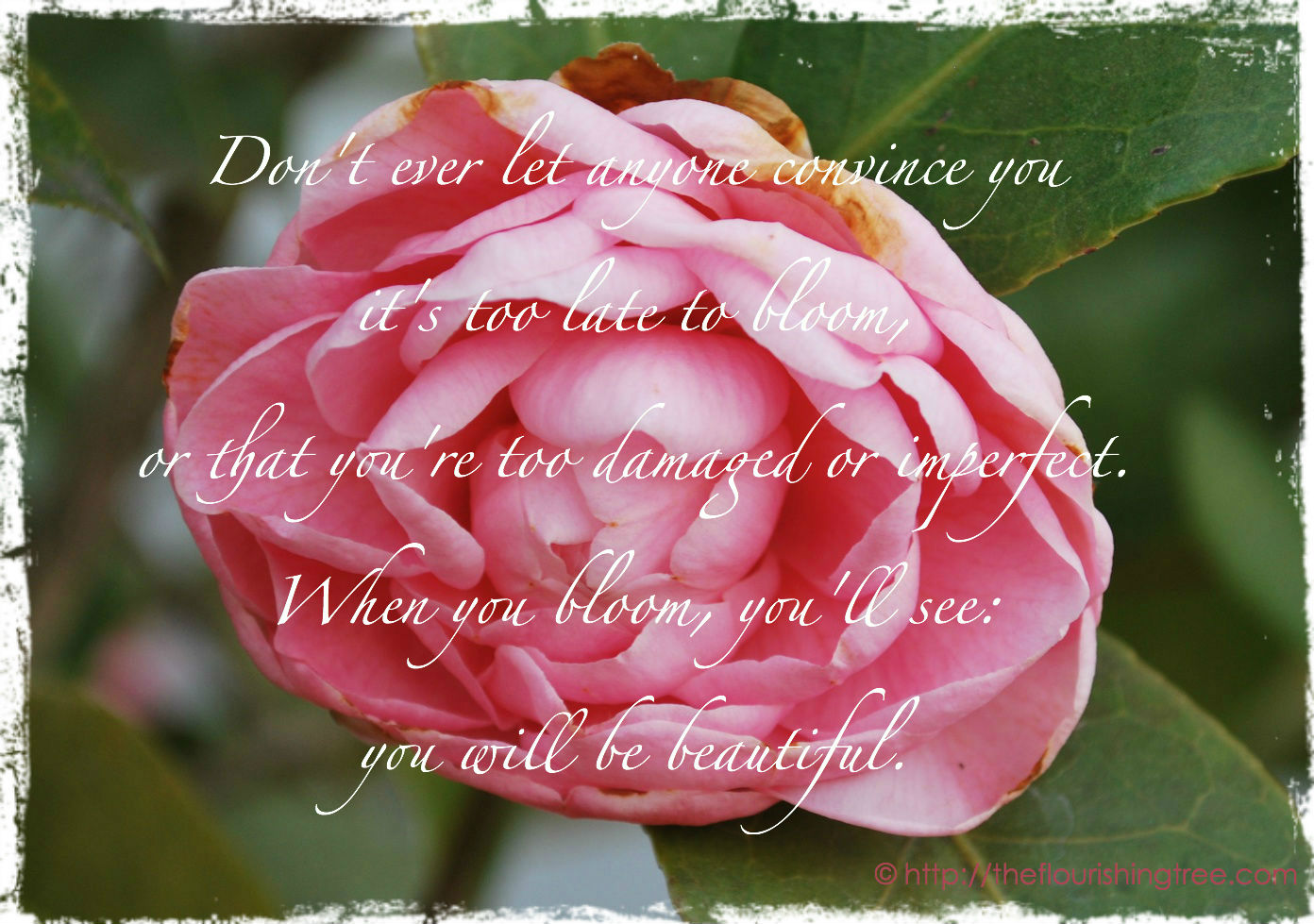
So to those of you who feel like late bloomers, who feel like that tightly closed bud on the camellia bush that may or may not open, I say to you: Let yourself bloom. Don’t ever let anyone convince you it’s too late to bloom, or that you’re too damaged or imperfect. When you bloom, you’ll see: you will be beautiful.

As a little gift to you today, to encourage you to bloom, here’s a little something I made to share with you:

Camelliabloom_grungeeffect_22014ft

Are you a late bloomer in some area(s) of your life? Are you afraid of what might happen if you bloom imperfectly? Did this post inspire you to try something new? I’d love to hear from you in the space below.
The promise of spring

“Ha!” I can hear many of you saying as you sit blanketed under snow today. Or is it a “Bah!” that you’re calling out to my promising the return of spring.

Spring seems an unreal probability in this wintry season. Even here in the south, we got a little sneeze of snow last night. Not enough to cover the world with its cleansing white cover, but enough to get the local kids excited about a school delay and enough to glue the little kid still inside me to the windows as the snow drifted down last night. I dream of a proper snow day while many of you are ready for it to just. go. away. already.

I will admit to wishing for warmer weather. too. This has been an unusually cold winter, and if it’s going to be this cold, I’d prefer snow to accompany it. While I’m busy wishing for more snow or warmer weather or both – after all, it could be warmer here and still snow, too – I thought I’d share some photos from my recent visit to San Francisco’s Japanese Tea Garden with you.

Some of the trees in the gardens are bare, but there are cherry blossoms, too. And nothing promises spring to me as much as a cherry blossom. So enjoy these photos and a cup of something warm. I promise: spring is on its way, but for some of us, it can’t get here soon enough.

SFJTG_promiseofspring_2014ft

Nothing promises spring to me like a cherry blossom

SFJTG_treesandpond_2014ft

Someone is having fun training these shrubs (trees?) to grow like this.

SFJTG_koiandtrees_2014ft

The koi and the trees’ reflections mesmerized me in equal measure.

SFJTG_clearreflection_2014ft

More reflections, thanks to a clear, still day

SFJTG_gnarledtree_2014ft

I love the shape of this gnarled tree and am thankful for winter’s opportunity to see the flinging shape of its branches.

SFJTG_dwarftrees_2014ft

A garden of dwarf trees, while a pagoda looms over the garden

A quick note about this garden of dwarf trees. Sometimes even trees get caught up in wars, and these dwarf trees are no exception. The Hagiwara family that cared for this garden from 1895 to 1942 was, according to the plaque nearby, “forced to relocate” during World War II. I guess that’s the genteel way of describing the internment of Japanese Americans during that war. The Hagiwara family left these trees in the care of a landscape architect Samuel Newson, who later sold the collection to Hugh Fraser. Fraser’s wife gave the collection back to the tea garden in her will, and they’ve been back here – flourishing – for almost 50 years.

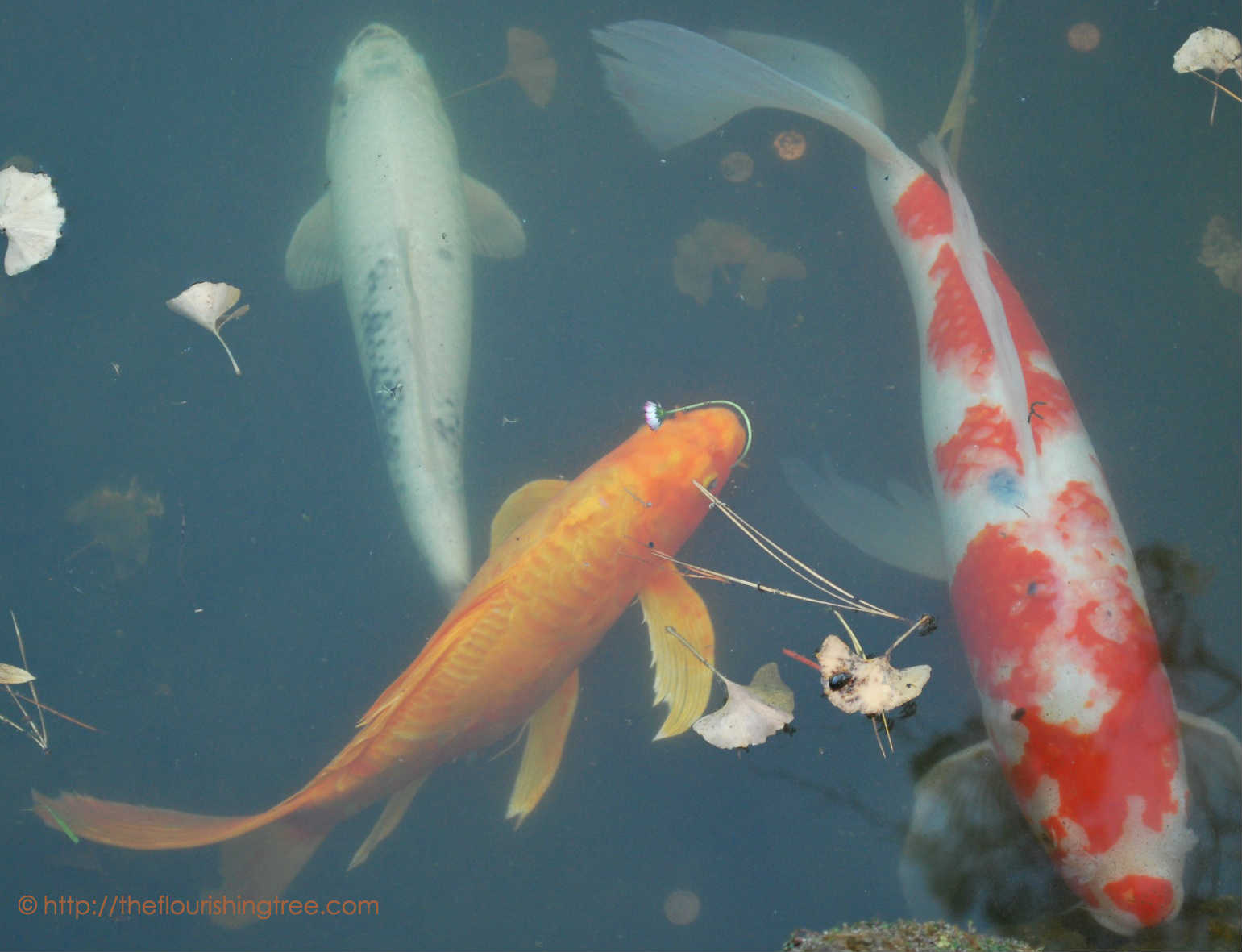
SFJTG_hopefulkoi_2014ft

One last picture of these hopeful koi (I didn’t feed them, but they hoped nonetheless.)

What are the signals or promises that you look for to prove that spring will return?

Lessons from red geraniums

My mother-in-law recently shared a story with me about her red geraniums, and it got me thinking about geraniums and what they can teach us about life.

She lives in a climate where geraniums are perennial (not always the case where I live). Many years ago, a gardener who had beautiful geraniums gave my mother-in-law four cuttings from her plants, and for years, my mother-in-law kept them in pots and trimmed them or broke off stems when they started to outgrow the pots. But then she decided to start planting them in the ground at her home and her church. She also began giving away cuttings from neighbors and friends (and friends of friends) who asked for them. She told me she feels like the Johnny Appleseed of geraniums.

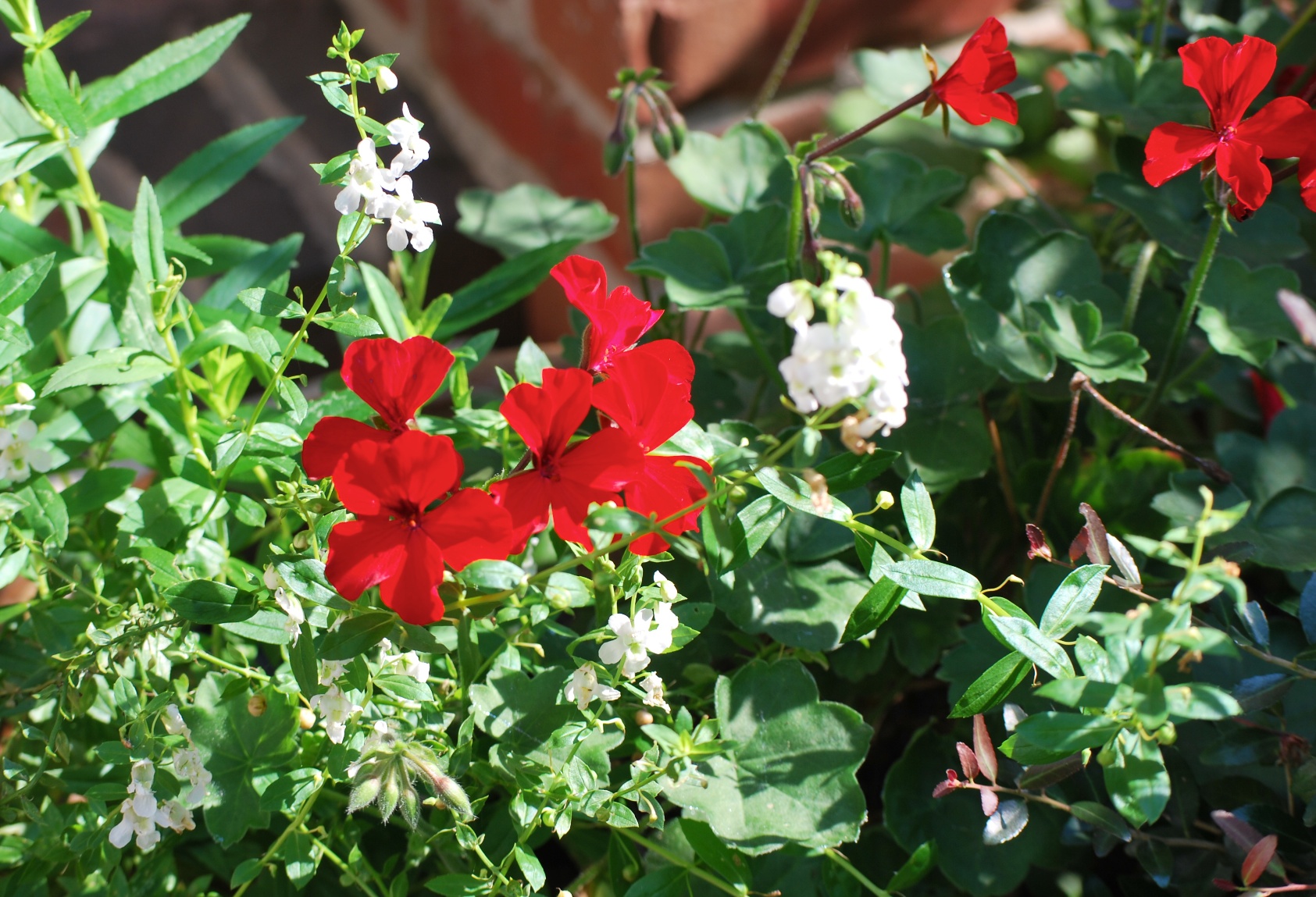
I love this story for many reasons. One is that I love geraniums, especially red ones. I love their smell and their fuzzy stems and their cheerful blooms. As I said, geraniums don’t always come back from one season to the next where I live, and when they do, they’re usually much punier than the first year:

Lastyearsgeraniums2013

Though the blooms were larger last year, I’m still happy for this geranium to have come back this summer.

I managed to buy a really strange variety this summer and have been disappointed with how sparse they look. I guess I just prefer the big clomps of blooms that I get with standard geraniums.

Thisyearsgeraniums2013

The new variety of geranium I planted this year isn’t my favorite, but I still like the pop of color they add to the front porch.

I love her story because it was a response to one of my blog posts, and her response to my writing is one of the things I cherish about her. She is always so encouraging and excited about what I’m working on. Her sharing this story was a way to connect with me and let me know she cares about my vocation and my avocations. I do not take this for granted.

I also love this story because of the lessons it can teach us about what we share with others, not just in the garden but also in life. In the case of my mother-in-law, she took a gift and multiplied it, sharing her talent for gardening and a gift of beauty with others near and far. She could have kept them all for herself, but she reached out with a gift to others.

For those of you who garden or have yards to care for, imagine the difference between a neighbor who shares beautiful flowers with you as opposed to the neighbor who – through neglect – shares weeds and tangled mess with you. Or maybe you’re the neighbor sharing the poison ivy vines? (I don’t judge: poison ivy can sprout up quickly and in the most expected places!)

In this same way, we choose what we share in life, too. We can share flowers or weeds with everyone around us in the way we speak to them, treat them and even ignore them. We can put up a thorny exterior that keeps others away from us, or we can be soft and fuzzy and inviting like those geranium stems, and cheerful like their blossoms.

I hope you’ll take a moment in the coming days to think about what you share with others. If you need a tangible reminder of what you want to share, put a red geranium on your front porch to remind you each time you leave your house that only you can choose what you give to the world.

Garden envy … er, inspiration

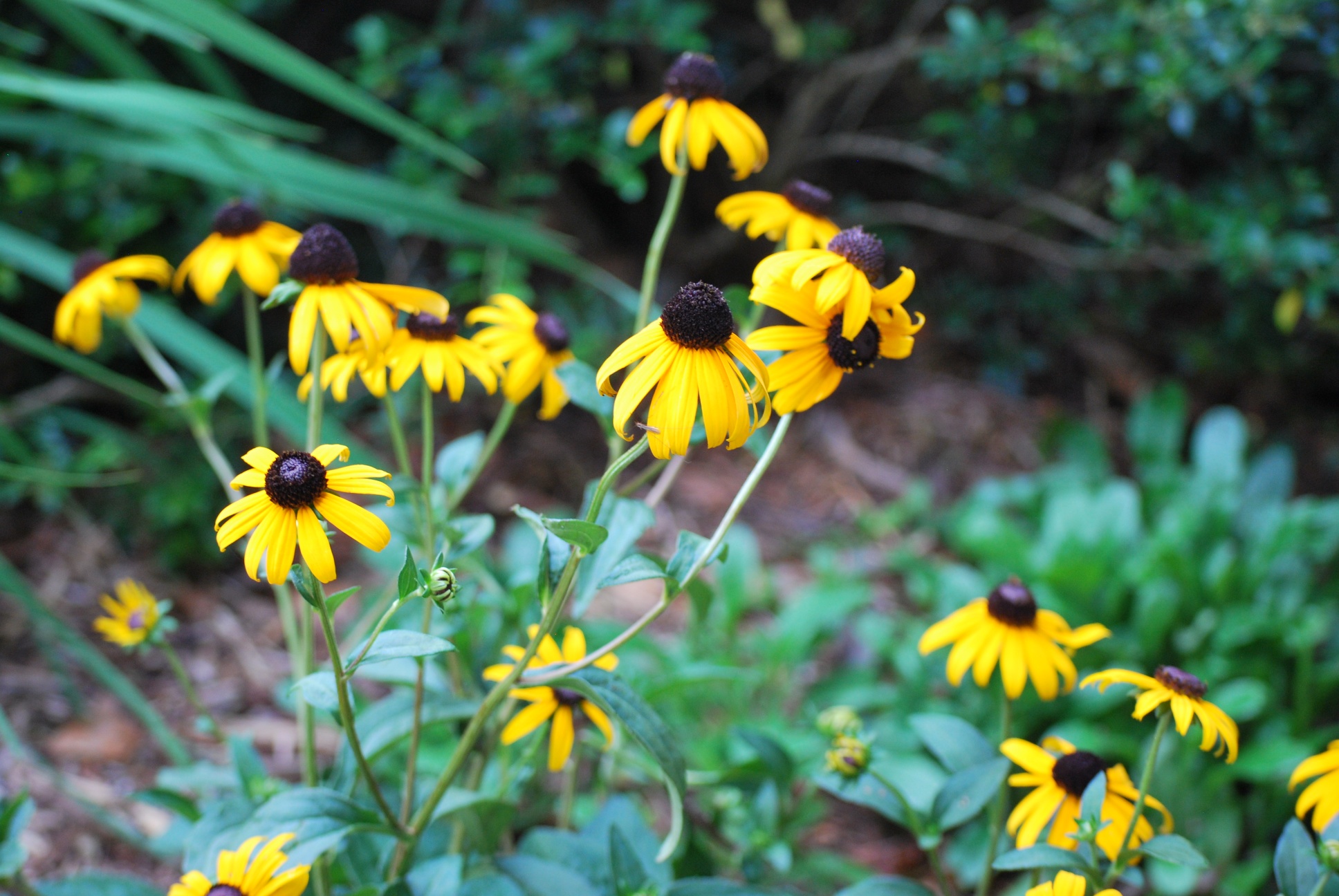
When my husband and I stroll by a certain neighbor’s yard, the one lined with Black-Eyed Susans at the front of her garden, he says quietly, “That looks really nice.” He’s right. The eight bushes shine their own light in the setting sun.

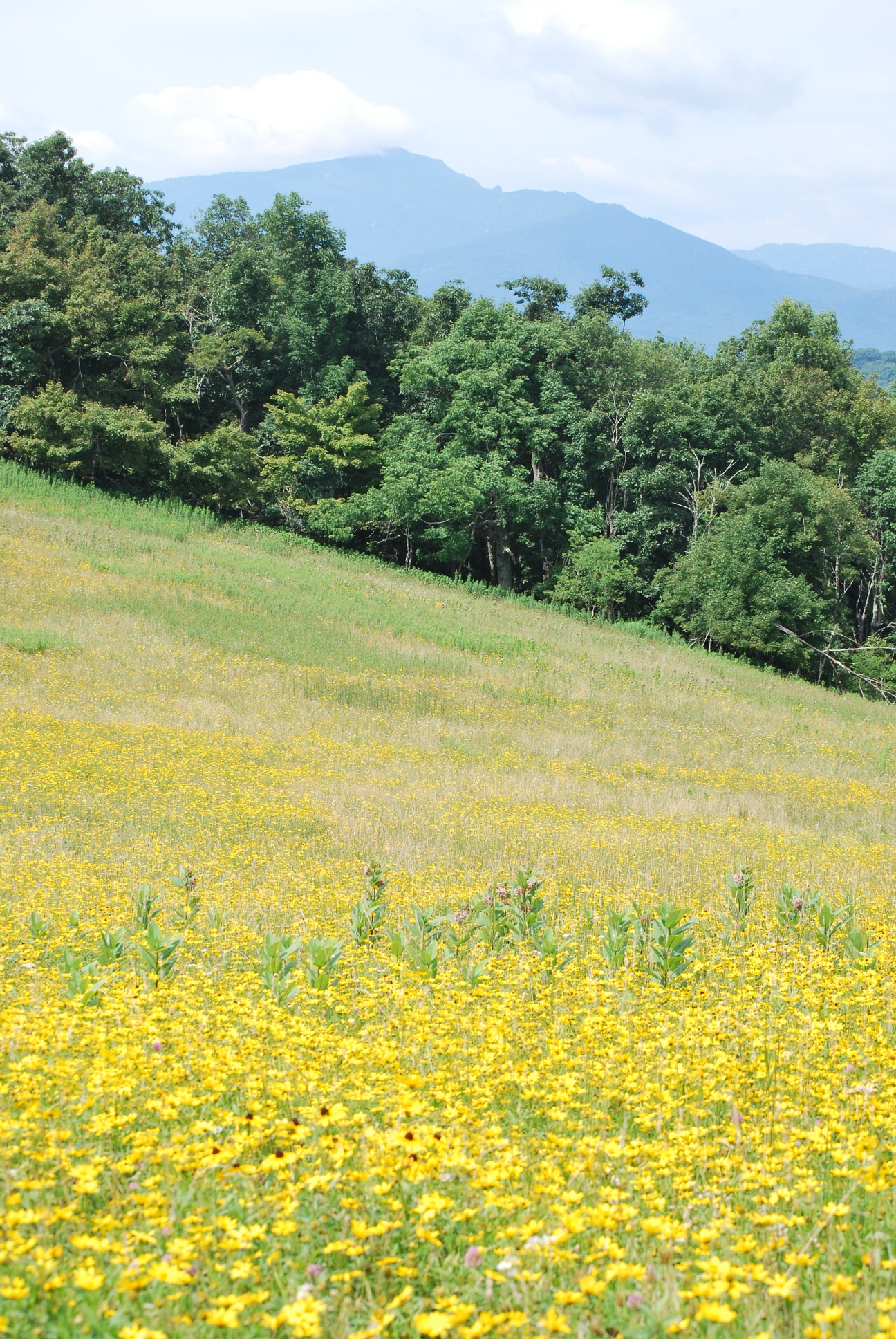
I walk through a meadow filled with Black-Eyed Susans and feel a need to capture a small part of that golden riot in my own yard.

fieldofblackeyedsusans_2013

A field ablaze with Black-Eyed Susans

I want to plant as many Black-Eyed Susans as I can find, except that I’m not sure how they’ll do in our less sun-filled garden spots shaded by towering trees. I hate to waste the money, and even more, I hate to waste the plants if I can’t put them in a good place to grow.

firstofmany_2013

Perhaps this one bloom will bring many more.

So I’ve started with two pots full – just to try them out – knowing I can add more if these two thrive where I’ve put them.

blackeyedsusansinthepot_2013

This one enjoys a sunny spot on the porch steps, but I must find a place in the ground for it.

blackeyedsusansbythedoor_2013

In the ground. Will the deer and chipmunks leave them alone?

They’re in the ground now, and time will decide how they fare.

While I wait for time and the flowers to decide their own fate, I read Sandra Cisneros’ sweet coming-of-age book The House on Mango Street and am moved by what the young narrator – a girl with my name in Spanish – says right there on page 33:

You can never have too much sky. You can fall asleep and wake up
drunk on sky, and sky can keep you safe when you are sad. Here
there is too much sadness and not enough sky. Butterflies are too
few and so are flowers and most things that are beautiful. Still, we
take what we can get and make the best of it.

I plant because I want butterflies too many to count and flowers too numerous to pick a favorite and a garden that captures beauty, so that no one walking by will say there is not enough of any of it.

But there’s this small part of me that wonders: is envy what drives me to fill the garden? Or is it inspiration?