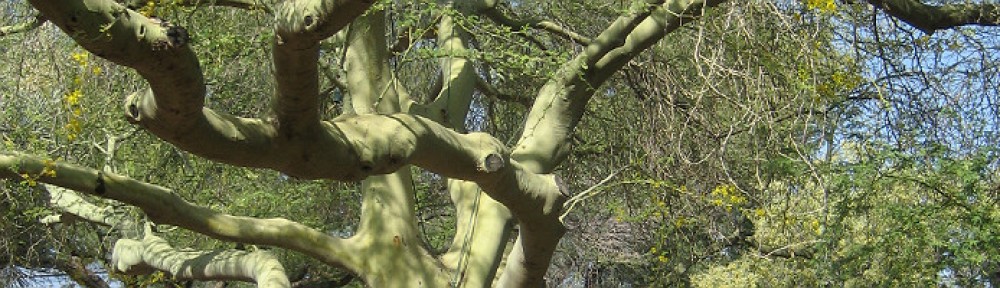
Will I ever learn to shut up and obey God?

This week, as I’ve continued work on the book I’m writing about trees in the Bible, I’ve turned to the book of Exodus to look at Moses. When you think of him, what pops in your mind first? The ten commandments? Moses proclaiming to Pharaoh, “Let my people go”? Or maybe it’s a Moses that looks remarkably like Charlton Heston parting the Red Sea? Those are all images of a strong, confident Moses, but he wasn’t always that way.

One day, he was leading his flocks near Mount Horeb (known as the Mountain of God), when he saw something peculiar:

The angel of the Lord appeared to him in a blazing fire from the midst of a bush;
and he looked, and behold, the bush was burning with fire, yet the bush was not
consumed. So Moses said, “I must turn aside now and see this marvelous sight,
why the bush is not burned up.” When the Lord saw that he turned aside to look,
God called to him from the midst of the bush and said, “Moses, Moses!” And he
said, “Here I am.” Then He said, “Do not come near here; remove your sandals
from your feet, for the place on which you are standing is holy ground.” He said
also, “I am the God of your father, the God of Abraham, the God of Isaac, and the
God of Jacob.” Then Moses hid his face, for he was afraid to look at God.
– Exodus 3:2-6

Moses’ curiosity stopped him in his tracks, and his encounter with God that day would change him forever. Notice that God didn’t call out to him until Moses had turned aside from his flock. God was waiting until Moses was quiet and fully paying attention.  Continue reading
A Valentine’s ode to chocolate trees

Valentine’s day is just around the corner, and I’ve been reminded in the last few days of a few of the reasons why I love trees.

One reminder came yesterday in The Diane Rehm Show. Rehm invited a panel of experts to discuss the state of the cacao tree – which provides us those lovely pods filled with beans that, when fermented and roasted, are transformed into a favorite Valentine’s gift: chocolate.

Save the chocolate trees
Scientists are hard at work trying to learn more about cacao trees so they can help farmers around the world produce stronger, healthier cacao trees – ones more resistant to climate change, drought, pests and disease. They’re doing this in part by mapping the genome of known varieties of cacao trees, and by exploring the Amazon to find wild, uncultivated strands that may be able to infuse greater genetic diversity to the current pool of cultivated chocolate trees.  Continue reading

Running roots

I’ve mentioned my love of running before, but these days, it takes up a lot of my thoughts. Just a few short weeks ago, I registered to run my first marathon and sat down with my husband (who also happens to make a great unofficial running coach) and mapped out my long runs from now until mid-June, when I’ll run the marathon.

I wish I could say I feel completely confident about reaching this new goal, but overly tight muscles and memories of old injuries keep threatening to drag me down. Anyone who has run a marathon will tell you that overcoming the mental hurdles is half (or more) of the battle. And so I know I need to win the mental race before I’ll be able to endure the physical one.

That’s where patience and discipline come in. Let me be the first to admit that neither of these two virtues is a strength of mine, but I know I’ll need to cultivate both to toe the line at that June marathon with a firm hope of finishing.

Running the marathon is a bit like enjoying a fully grown and thriving tree planted in your yard. Trees don’t just spring up fully grown overnight, just as humans don’t typically wake up one morning and find themselves magically able to run 26.2 miles.  Continue reading

When the devil hijacks your hashtag

Show of hands: How many of you know what a hashtag is? Need a hint? A little bird told me it looks like this: #

For those of you who don’t use Twitter (I don’t either), a message sent through Twitter is called a tweet.

Basically, tweets are short messages about what’s on your mind. They’re limited to 140 characters, and so you can’t ramble on about a topic. (The last two sentences were exactly 140 characters, to give you an idea of how short that is.)

A hashtag helps you identify keywords in tweets, and hashtags can help you find communities discussing the same topic. For instance, you’ll often see Webcast producers provide a hashtag so viewers can tweet live with each other and submit questions to the speaker during the event. If I were to present a webcast based on my blog, I might create this hashtag for my blog readers to use: #flourishingtree.  Continue reading

Two lives imitating trees

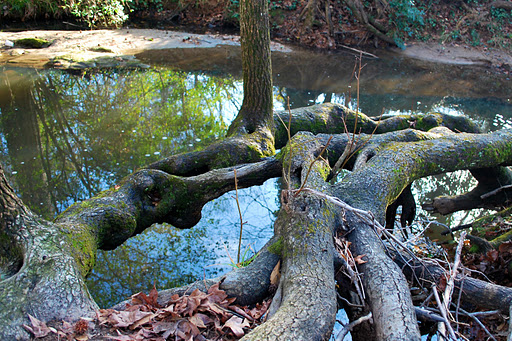
In last week’s post Two trees imitating life?, I wrote about two tree sculptures imitating life, or death, or maybe even tennis balls, depending on how you view the art. I promised to follow up this week with more about the blessed life being like a tree planted by water, and here’s a picture of some pretty cool tree roots to get you thinking of what the tree planted by water may look like:

Trees and their roots growing by a creek

The passage I shared with you last week actually describes two lives that are like trees, just very different kinds. One life is blessed, but the other is cursed.  Continue reading