The dog days of winter

I love snow days, and today has offered up a good one where I live. I know many of you who live north of here are sick and tired of snow, but for those of us who don’t often get snow, it’s pretty special when it happens.

My dog and I got out early this morning, and with the exception of a few cars trying to head down the road and a few other paw prints and footprints in the snow, we had the streets to ourselves.

I have always loved snow days. My dad often had to walk to work, but both he and my mom made sure snow days were special for us. My brother and I spent most of our time outside on snow days: sledding, building snowmen, having snowball fights, sledding, sledding, more sledding. Even my mom, a northern transplant herself, took some rides on the sled. It helped that we lived on the perfect hill for sledding, and I sometimes wonder how many times I’ve walked that hill dragging the Flexible Flyer behind me for the next ride.

When we came in to thaw out, she’d have soup and grilled cheese and maybe even hot chocolate waiting for us after we peeled off sopping-wet layers to dry by the fire. I even wrote my first book (when I was five) on a snow day and called it The Snowy Day. It was a picture book – because I liked to draw, too, and I was busy reading picture books at that age – and I updated it a few short years later on another snow day.

I think my inner child taps into those memories and enjoys spending time outside, alternating with trips inside to thaw out with something hot to drink and a pen in my hand.

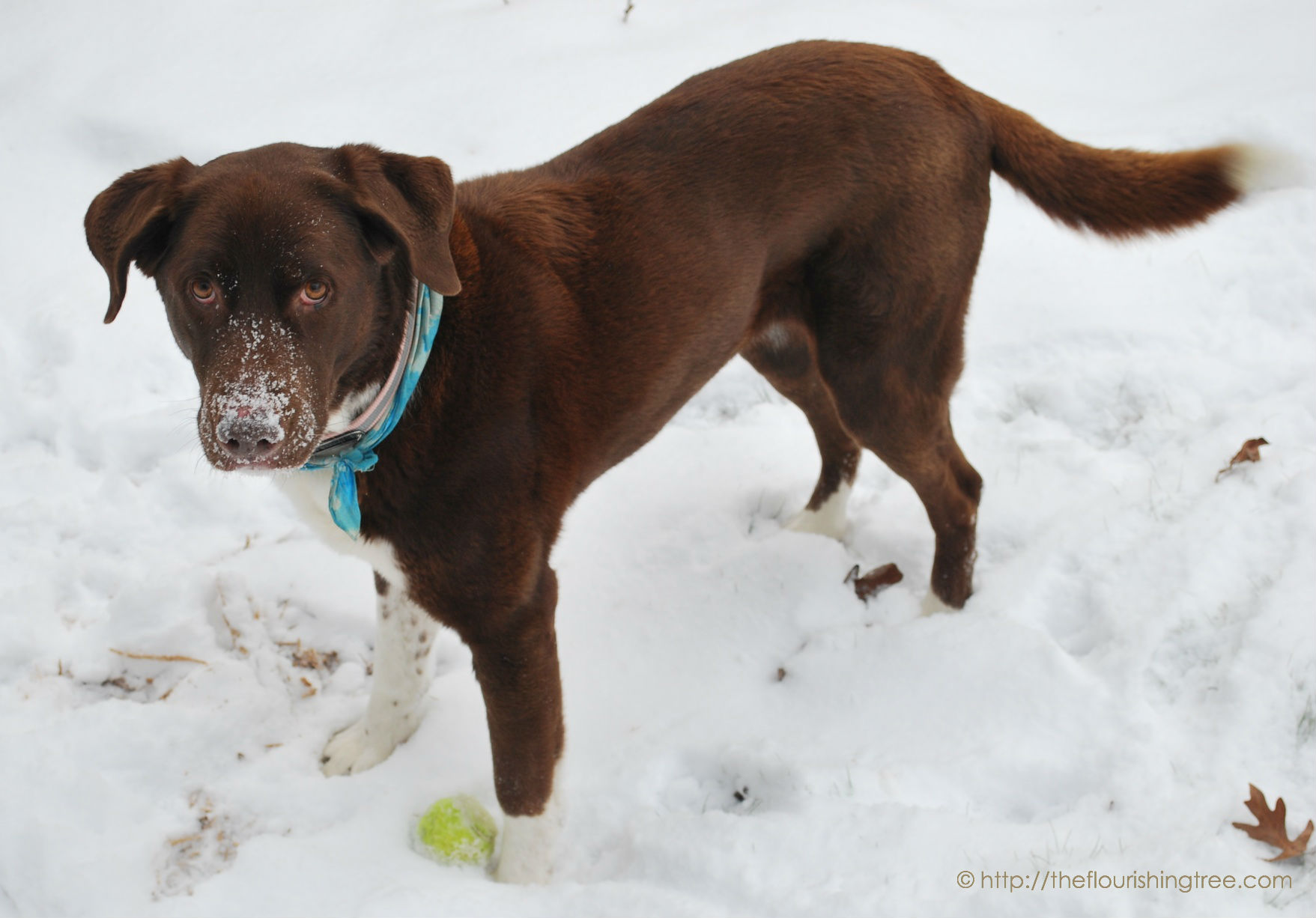
Having a dog makes snow days even more fun. My dog especially loves to freeze her tennis ball in layers of snow, chase after it, bury it in the snow and then dig it back up with her nose or her paws. She is equal parts joy and energy on snow days.

Adogssnowday_2014ft

A blur of fun

SnowPup_2014ft

Guarding her prized tennis ball; waiting for another throw

I think this is one of my favorite pictures of her.

The colder-than-usual weather forced both of us back inside pretty quickly (she would have lingered if I had let her). It’s one thing to play in 30 degrees and snow but another entirely in 18 in wind and snow.

Teaforsnowdays_2014ft

Warming up from the snowy chill

I went back outside later to take some more photographs. Tonight looks like it’ll be the coldest night we have had in years, and I’m hoping the snow will protect the plants. I guess I won’t know until spring which ones will survive and which won’t.
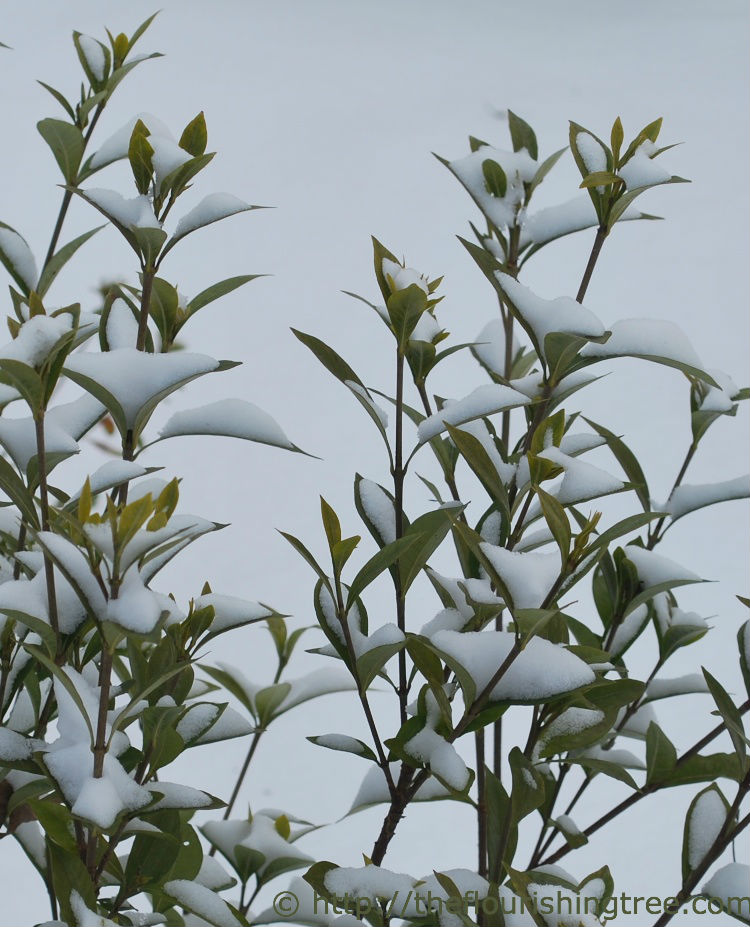
Gardeniaswaitingforspring_2014ft

A gardenia waiting for spring

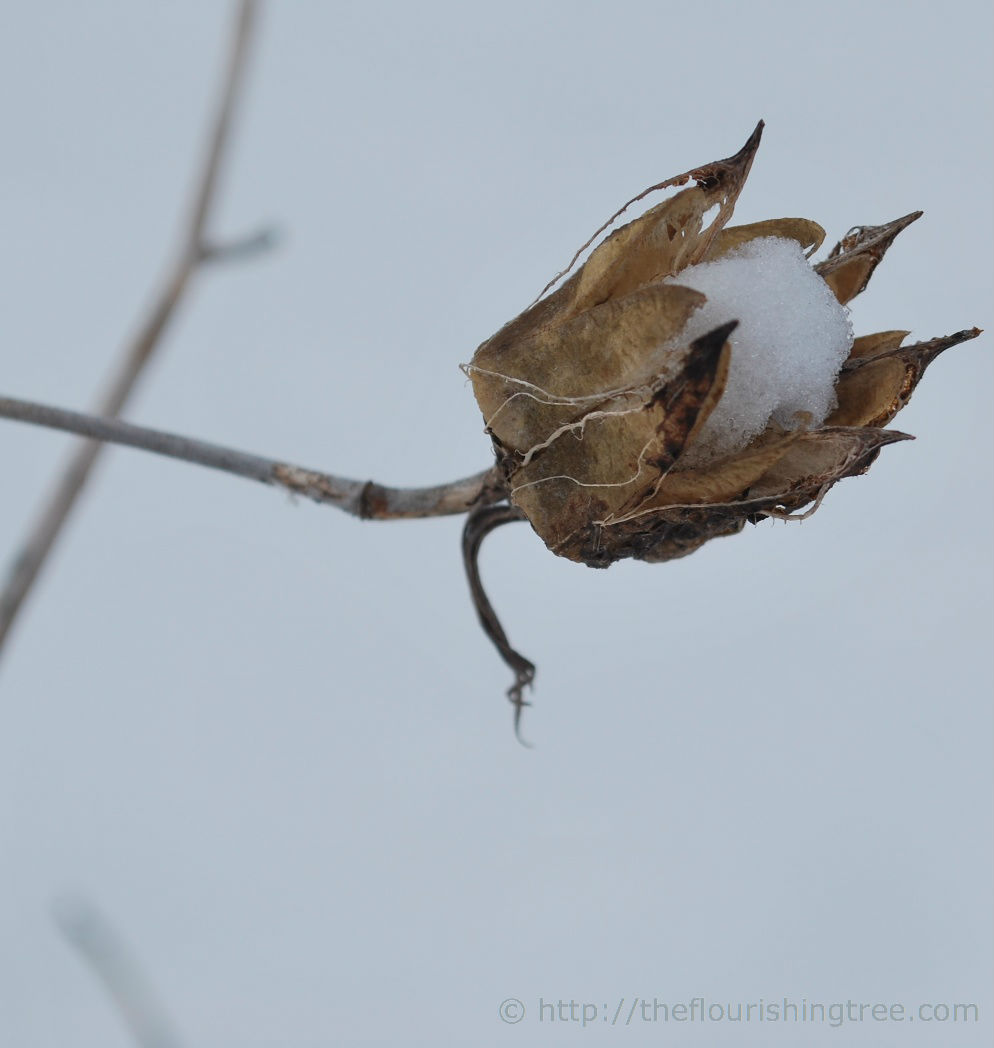
SnowBud_2014ft

A snow bud?

I didn’t last long on this trip outside with my camera.

When I went back inside, I curled up under a blanket with a book I’ve been reading, Isabel Allende’s memoir My Invented Country. The dog snored and dreamed of chasing her snow-encrusted tennis ball while I read for a bit and enjoyed some hot tea.

One of the most poignant parts of Allende’s book so far is her description of leaving Chile as a child, with a journal in hand to keep her company:

I wrote everything down in my notebook with the industry of a notary,
as if even then I foresaw that only writing would anchor me to reality.
… When she gave me that notebook, my mother somehow intuited
that I would have to dig up my Chilean roots, and that lacking a land
into which to sink them I would have to do that on paper. (108-109)

My parents always kept scrap paper handy, and so I can relate to Allende’s sense that writing would be an anchor for her, that paper would be where she thrived. Maybe that’s why writing is one of my anchors on snow days and why snow days remind me of my earliest days as a writer.

How about you? What do you love best about snow days?

The promise of spring

“Ha!” I can hear many of you saying as you sit blanketed under snow today. Or is it a “Bah!” that you’re calling out to my promising the return of spring.

Spring seems an unreal probability in this wintry season. Even here in the south, we got a little sneeze of snow last night. Not enough to cover the world with its cleansing white cover, but enough to get the local kids excited about a school delay and enough to glue the little kid still inside me to the windows as the snow drifted down last night. I dream of a proper snow day while many of you are ready for it to just. go. away. already.

I will admit to wishing for warmer weather. too. This has been an unusually cold winter, and if it’s going to be this cold, I’d prefer snow to accompany it. While I’m busy wishing for more snow or warmer weather or both – after all, it could be warmer here and still snow, too – I thought I’d share some photos from my recent visit to San Francisco’s Japanese Tea Garden with you.

Some of the trees in the gardens are bare, but there are cherry blossoms, too. And nothing promises spring to me as much as a cherry blossom. So enjoy these photos and a cup of something warm. I promise: spring is on its way, but for some of us, it can’t get here soon enough.

SFJTG_promiseofspring_2014ft

Nothing promises spring to me like a cherry blossom

SFJTG_treesandpond_2014ft

Someone is having fun training these shrubs (trees?) to grow like this.

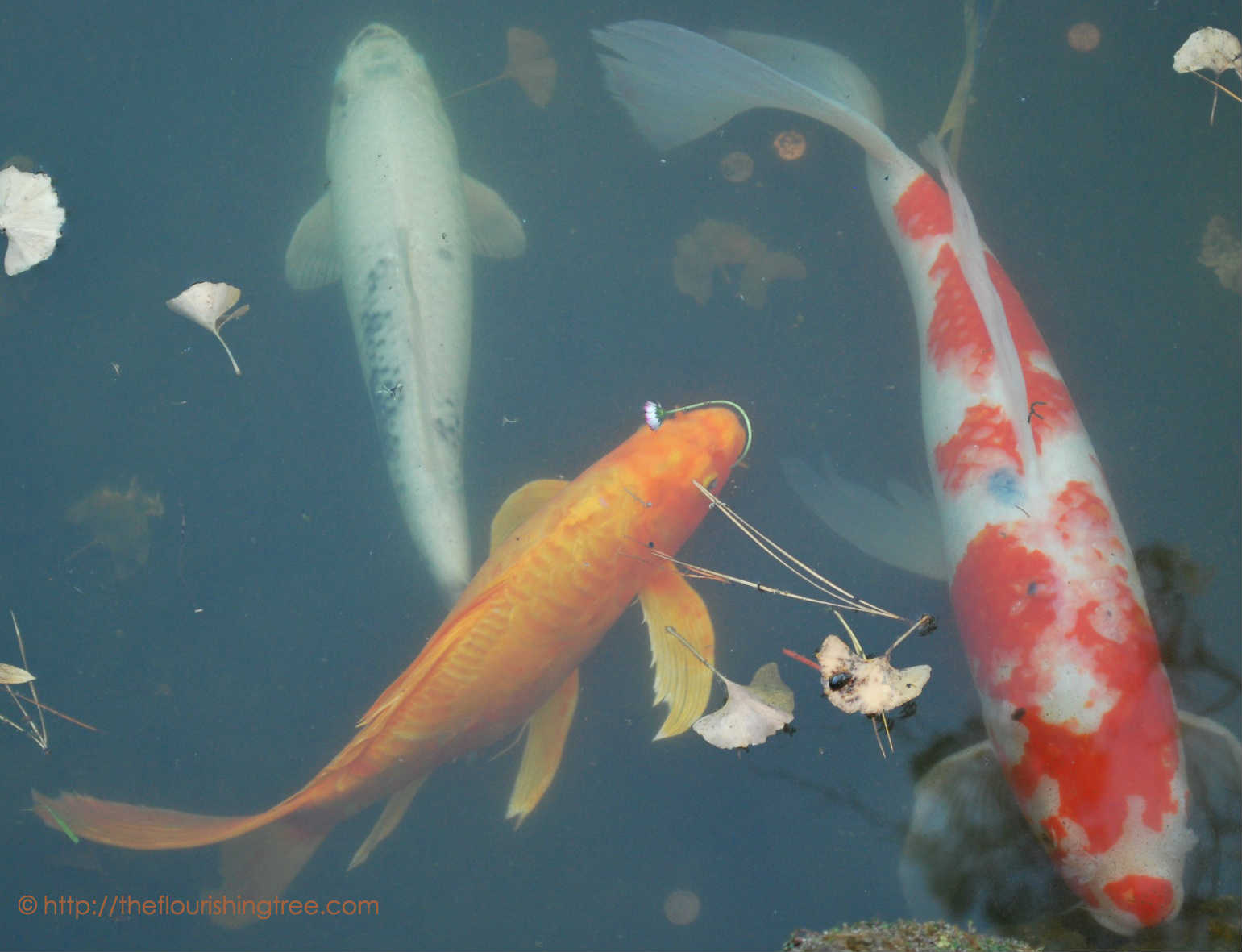
SFJTG_koiandtrees_2014ft

The koi and the trees’ reflections mesmerized me in equal measure.

SFJTG_clearreflection_2014ft

More reflections, thanks to a clear, still day

SFJTG_gnarledtree_2014ft

I love the shape of this gnarled tree and am thankful for winter’s opportunity to see the flinging shape of its branches.

SFJTG_dwarftrees_2014ft

A garden of dwarf trees, while a pagoda looms over the garden

A quick note about this garden of dwarf trees. Sometimes even trees get caught up in wars, and these dwarf trees are no exception. The Hagiwara family that cared for this garden from 1895 to 1942 was, according to the plaque nearby, “forced to relocate” during World War II. I guess that’s the genteel way of describing the internment of Japanese Americans during that war. The Hagiwara family left these trees in the care of a landscape architect Samuel Newson, who later sold the collection to Hugh Fraser. Fraser’s wife gave the collection back to the tea garden in her will, and they’ve been back here – flourishing – for almost 50 years.

SFJTG_hopefulkoi_2014ft

One last picture of these hopeful koi (I didn’t feed them, but they hoped nonetheless.)

What are the signals or promises that you look for to prove that spring will return?

Among the ancient trees

My husband and I spent the weekend out in California’s Bay Area, and while it wasn’t his first trip to the area, it was mine. I wanted to find some things to do that would be new for him, and so I polled friends on Facebook for some suggestions. Several friends mentioned Muir Woods, and one used these words: “A few minutes north of there is Muir Woods where you can stare at the bottoms of very big trees.” I thought, “I must go.”

Another friend who lives in the Bay Area cautioned that traffic had been terrible getting to Muir Woods and that several of her out-of-town friends who tried to visit there had given up because of that. But I was determined. After all, how can someone who writes about trees miss out on this opportunity?

We tried for an early start, getting breakfast bagels to eat in the car, and that seemed to make the traffic and parking problem less of an issue. Even in the parking lot, I felt like I was entering an enchanted place.

EntrytoMuirWoods2014_ft

A tree canopy in the parking lot invites visitors into this enchanted place.

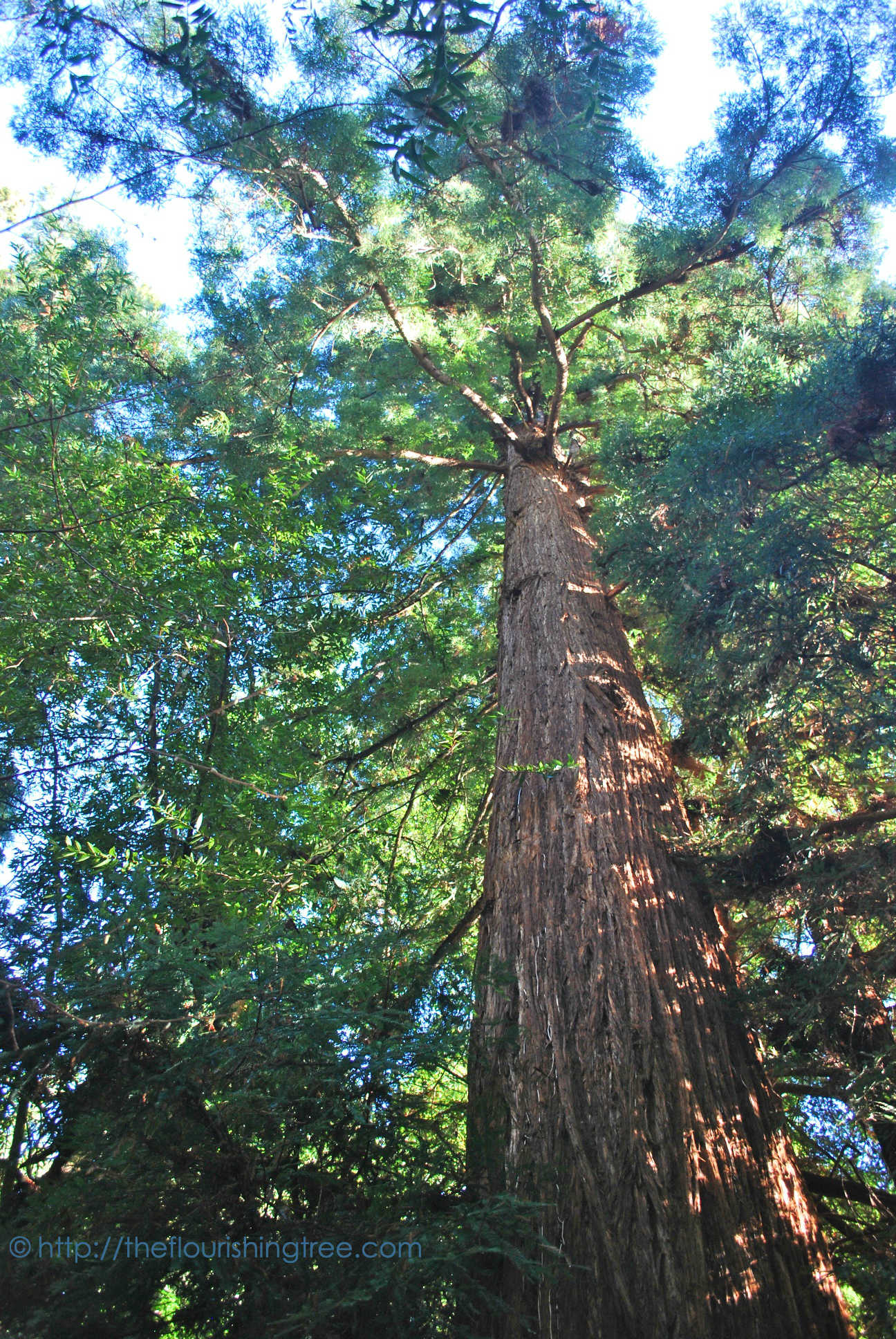
I quickly realized my friend’s comment about staring at the bottoms of these trees was dead on. It’s hard to even imagine the scale, and I post these pictures knowing full well that even the pictures don’t do justice. It’s like seeing the Grand Canyon in person instead of looking at its pictures. Pictures alone cannot convey the majesty of this place.

AMightRedwoodMuirWoods2014_ft

Looking up at one of Muir Woods’ majestic redwoods

Muir Woods is a national monument, instead of a national park, because the landowners who were donating the land wanted it saved more quickly than national park status would have. William Kent and his wife Elizabeth Thacher Kent bought the land to protect it from logging that wiped out much of the redwood growth in the area, and then they donated it to the federal government, hoping to ensure it would remain unlogged, which it has. The Kents asked that the place be named in honor of John Muir, the great conservationist who played a key role in the National Parks movement. In his letter thanking the Kents, Muir wrote of this place: “This is the best tree-lover’s monument that could possibly be found in all the forests of the world. You have done me a great honor.” Continue reading

What I meant to say

As a writer, I always have ideas and plans and words swirling around in my head, but sometimes, when I actually sit down to write, I forget details I meant to say. Last week’s post is a perfect example.

In talking about resolutions, I wanted to delve into whether our resolutions arise from a sense of lack or a sense of gratitude, but I completely forgot about adding that part in as I sat writing the post. Happily, I remembered for this week’s post.

In thinking of resolutions within the framework of gratitude, an example may help. For instance, if I say that I want to run faster this year, I need to determine whether that desire stems from a feeling that I’m inferior to other runners and should try to catch up or a more healthy desire to challenge myself with a new discipline and goal because I’m running well at my current level but am also blessed with the feeling that I could get even better. Do you see the difference? To the outside world, the result looks the same, but what’s at the heart will determine whether my plan to get faster is worth pursuing.

Toward the end of December, I came across two different discussions about the concept of gratitude that made me think about how and why we make resolutions.

The first came in a newsletter for ZOE, an amazing organization whose mission is “helping orphans and vulnerable children in Africa.” ZOE is all about empowerment instead of hand-outs: helping children gain skills and keep their families together through training and loans that forever change the trajectory of their lives.

I never read one of ZOE’s newsletters without feeling deeply moved and without taking away some piece of wisdom from the children themselves. In this newsletter, a ZOE participant in Mutare, Zimbabwe, said, “I thank God for giving me the opportunity to be enrolled in this great program. The elders have a saying, ‘Kusatenda Huroyi’ (it is a sin not to appreciate good things).”

His statement made me wonder how differently we would live if we embraced Kusatenda Huroyi, if we made it essential to appreciate the good in our lives, even the simple good, instead of taking so much for granted or assuming these things are our right to have.

This week alone, I’ve found myself grateful for (among many) a coat and gloves, a warm home, pipes that didn’t freeze, and a flexible schedule that allowed me to run when the polar vortex was not at its punishing worst. There’s a much longer list of things I’ve overlooked but should be openly grateful for.

The second place where I encountered a new take on gratitude was in C.S. Lewis’ novel Perelandra. Perelandra is the second in Lewis’s space trilogy and takes place mostly on Venus (aka Perelandra), where the trilogy’s hero Dr. Ransom meets and converses with a beautiful lady, who, though she thinks of herself as young and naive, has a lot of wisdom to offer Ransom and us:

“One goes into the forest to pick food and already the thought of one fruit
rather than another has grown up in one’s mind. Then, it may be, one finds
a different fruit and not the fruit one thought of. One joy was expected and
another is given. But this I had never noticed before—that the very moment
of the finding there is in the mind a kind of thrusting back, or setting aside.
And if you wished—if it were possible to wish—you could keep it there.
You could send your soul after the good you had expected, instead of
turning it to the good you had got. You could refuse the real good; you
could make the real fruit taste insipid by thinking of the other.” (p. 59)

How often do I do that in my own life: barely register or even completely miss the good in my present circumstances because I’m so busy reaching for the “good thing” I’m expecting or hoping for? How often do I let my soul turn after the good I expected instead of the good I now have? How often do I make the real fruit in my life taste insipid?

So maybe “presence” needs to be my resolution for the year, a greater awareness that makes me recognize and acknowledge and celebrate all that is good in my life instead of endlessly fretting over the many supposedly better things that I want.

I’m not suggesting that you toss out your plan to run more miles this year or finally organize your closet or exercise at least three days a week or watch less television or whatever other resolutions you have made. I’m simply asking that you look at the why behind your resolutions to see if there are ways you might be missing the good that you have got.

One more thing before I go
By the way, if you’ve read Perelandra, I’d love to discuss it with you sometime (not here, of course, because I don’t want to ruin any surprises for its future readers). There are images that haunt me from it, usually revisiting me when I’m out running and thinking. It’s not action-packed, but it is a beautifully crafted tale.

Lewis had such a gift for capturing our imaginations with fundamental truths that resonate because we know them to be unerringly correct. He was a master at holding up the beautiful mirror to reality that was his fiction, and in so doing, revealing concepts to us that we might have ignored or misunderstood in his nonfiction. But I’m grateful that he wrote both.

A new year’s day wish

Happy new year, my friends.

I say that feeling a bit unsettled and regretful. You see, I’d like a do-over on the holidays. I have been sick since the Sunday before Christmas, and the last week and a half have been a fog. I am finally nearing the land of the living again, but … ah, what I’ve missed.

Family I don’t see often came to visit, and I loved having them in our home, and there are lots of good memories, but they’re all dulled by the haze of medicine and feeling miserable.

There’s vacation time that I should have been able to enjoy with my husband, but I didn’t feel like leaving the house for much of anything, and so he went on walks and hikes and runs while I recuperated and gathered strength.

There’s the knowledge that I had an okay (not great) running year but missed my unstated mileage goal by 12 miles, miles that I could have run in a single day had I been healthy. I haven’t run for a week and a half, though, and tomorrow may be my first very short attempt to get back to it. Too late for 2013, though.

There’s the looking back over a wonderful year in general but alighting on the less-than-perfect parts. The dreams deferred. The plans unfulfilled. The ways I let myself and others down.

Maybe that’s the beauty of January 1. We know that there are no do-overs. We are to stop looking back and step into a new year. We have this one day to plan and dream. Some of you make resolutions. Some of you may even follow through with your resolutions.

However you spend today, here’s my wish for you for the new year:

This year, may your life be a flourishing tree.
May you have more days of sun and gentle rain than storms and biting cold and searing heat.
May you be strong enough to weather the storms that come and flexible enough to bend when the winds blow fierce.
May you have moments of pure joy in the warmth of the sun.
May your roots be strong enough that you can support others around you and give without needing anything in return.
May you delight in those who shelter in your outstretched limbs.
May you greet each dawn standing tall and ready for what the day will bring.
May you experience moments of perfect calm and times of dancing.
May each season bring its best to you.
This year, may your life be a flourishing tree.

An island of flourishing trees

An island of flourishing trees

What are your hopes and dreams for the year ahead?