
Easter gardens

Easter has long been one of my favorite holidays. The weekend leading to Easter was always a whirlwind of fun when I was growing up. My aunt, uncle and cousins drove down from Maryland, and we spent Saturday afternoon painting Easter eggs. I can still smell the boiled eggs and feel my burning fingertips as I raced to dapple on the egg dye before the egg cooled too much to hold the paint.

Sunday promised homemade bread for breakfast; a spectacular, joyful service; and a race home, where the aroma of lamb and herbs roasting in the oven greeted us before we even got inside. Dad hid Easter eggs, and after the egg hunt, my mom and aunt hid Easter baskets.

Eggs and garden flowers are inextricably linked in my memory, especially the pink azaleas that often bloomed right in time to conceal an equally pink egg. I was a terrible egg and basket hunter, while my brother was always the champion, but I always knew to check the pink azaleas for the pink egg. Somehow, Easter doesn’t feel quite the same without a hunt of some sort.

The joys of Easter Sunday always wiped away the somber Maundy Thursday service with its black draped cross, the haunting solo of Where you there when they crucified my Lord?, and the darkened sanctuary.

At this point in Holy Week, we have the somber moments yet to remember and ponder before we celebrate the joyous Easter. And as I look around at my own garden blooming, I am reminded of the two Easter gardens: one of darkness and betrayal, the other of light and joy.

Tomorrow will mark the point in Holy Week when we revisit the darker garden, the garden full of grief and trembling and betrayal, the Garden of Gethsemane.

When Jesus spoke had spoken these words, He went forth with His disciples over the ravine of the Kidron, where there was a garden, in which He entered with His disciples.
– John 18:1

Then Jesus came with them to a place called Gethsemane, and said to His disciples, “Sit here while I go over there and pray.” And He took with Him Peter and the two sons of Zebedee, and began to be grieved and distressed.
– Matthew 26:36

To read the full events of that night in the garden, read Matthew 26:36–56. The upshot is this: Jesus asked his disciples to stay awake while he went a little ways off to pray. He begged God to change what was about to happen, but Jesus also submitted to God’s will. He scolded the disciples for falling asleep in the face of his distress. He prayed again; they slept again. Judas and the soldiers arrived to arrest Jesus, and the disciples fled.

The second garden is joy-filled. It’s the garden where an empty tomb awaited visitors Sunday morning:

But Mary was standing outside the tomb weeping; and so, as she wept, she stooped and looked into the tomb; and she saw two angels in white sitting, one at the head and one at the feet, where the body of Jesus had been lying.

And they said to her, “Woman, why are you weeping?” She said to them, “Because they have taken away my Lord, and I do not know where they have laid Him.”

When she said this, she turned around and saw Jesus standing there, and did not know that it was Jesus.

Jesus said to her, “Woman, why are you weeping? Whom are you seeking?” Supposing Him to be the gardener, she said to Him, “Sir, if you have carried Him away, tell me where you have laid Him, and I will take Him away.”

Jesus said to her, “Mary!” She turned and said to Him in Hebrew, “Rabboni!” (which means Teacher).
– John 20:11–16

I love John’s account of Mary mistaking for Jesus for the gardener. Her eyes and brain and heart weren’t ready yet to see the risen Jesus standing in front of her, alive, in the garden. Are your eyes and brain and heart ready?

I’ll leave you today with a tour of my Easter garden. Most of these flowers I can identify, but I need your help with one of them. I hope you enjoy them. May these blooms remind you of the joy of Easter.
EasterGardentulipmagnolia2015_FT

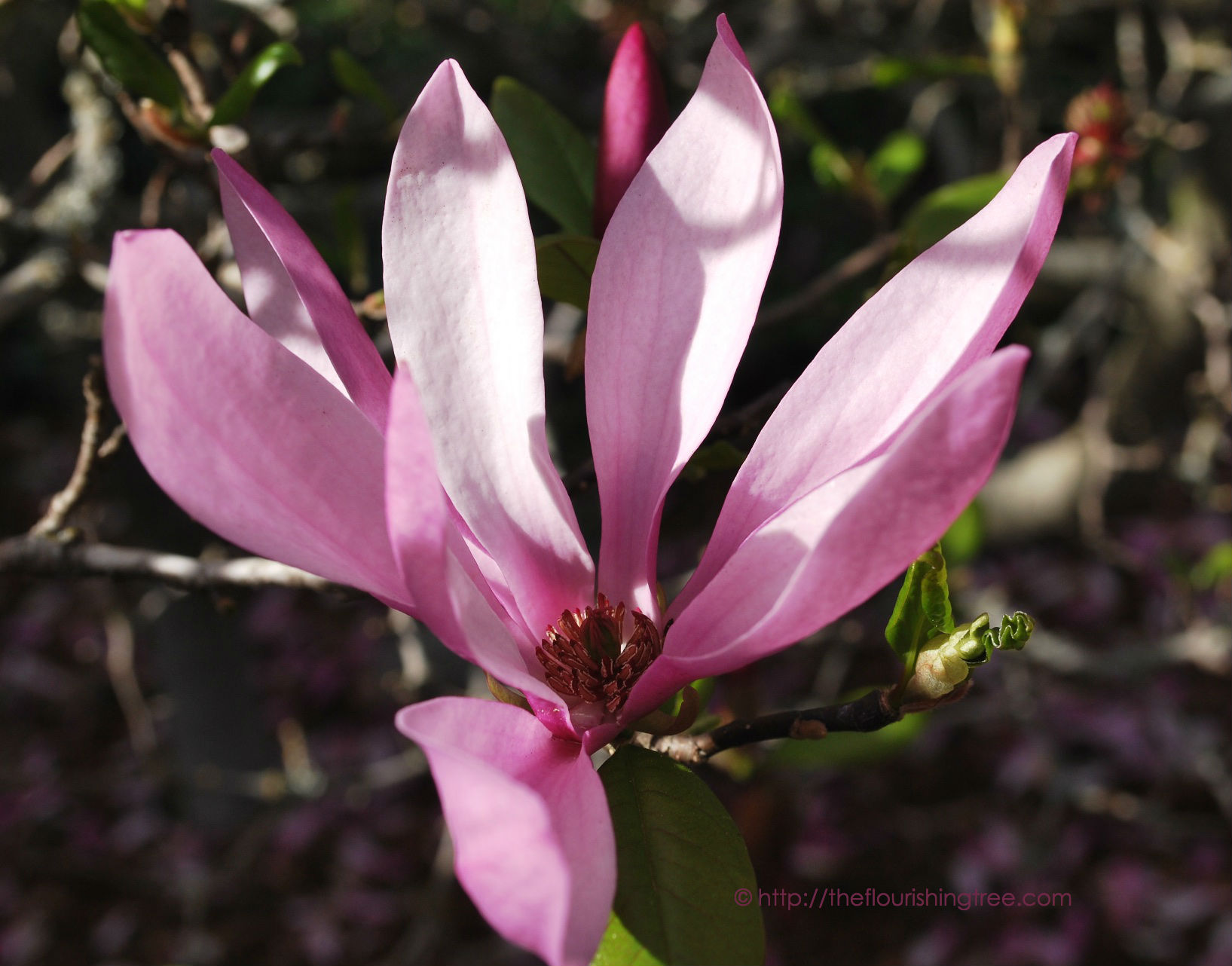
A few blooms still remain on the tulip magnolia, but some days, it looks as though the tree sneezed and shed many of its blossoms.
EasterGardenazalea2015_FT

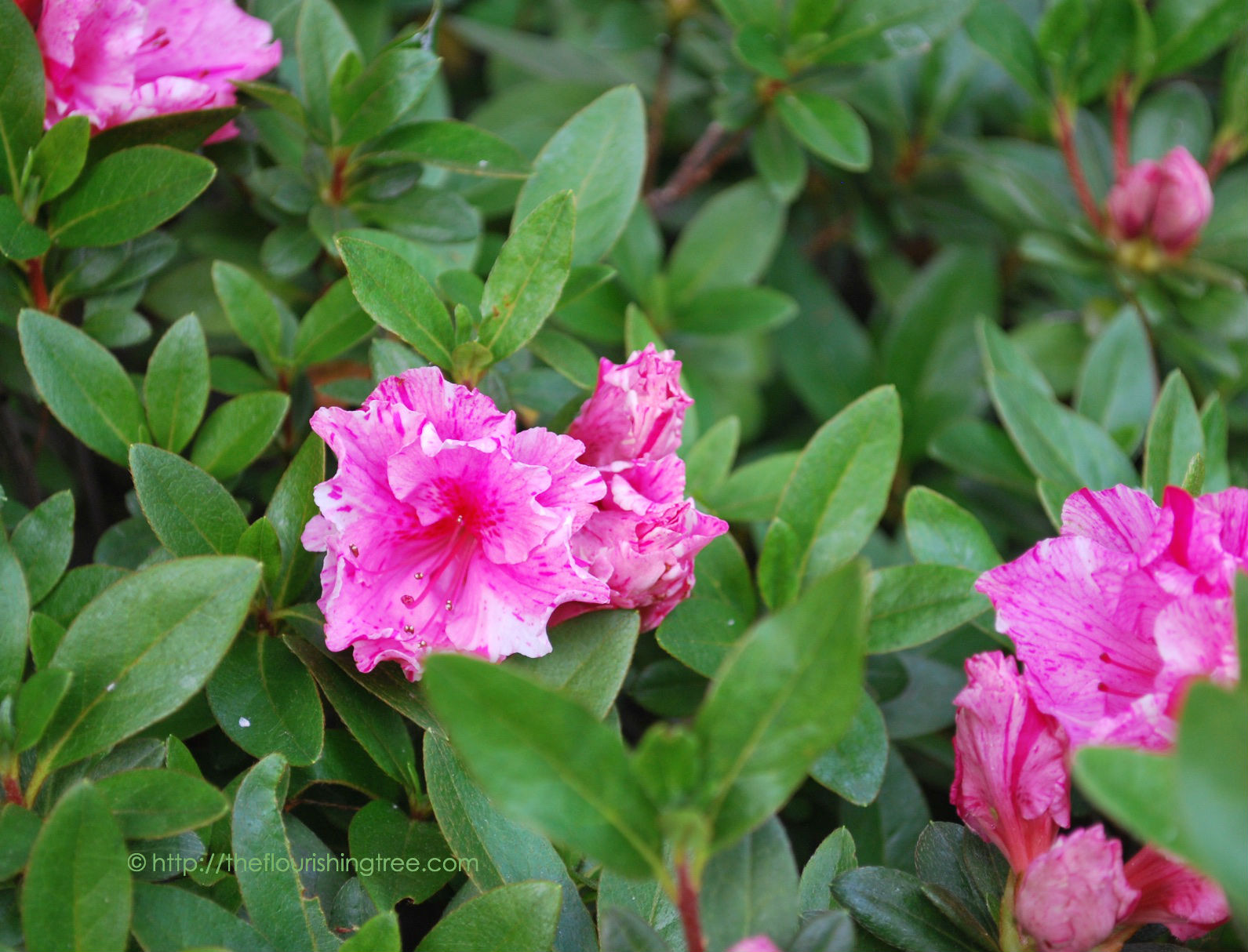
I was delighted to see that some gardener before me had planted pink azaleas here. Yay!

EasterGardenIris2015_FT

An iris blooms amid a mass of leaves. The clump of bushes is taller than other irises I’ve seen, and so I was surprised to discover this bloom. I’m enjoying the almost daily surprises in my new Easter garden.

EasterGardenJerusalemSage2015_FT

The Jerusalem Sage I planted recently is now blooming. You can see the second whorl starting to bloom, too.

EasterGardenOrangeBlossom2015_FT

We still have a few oranges left to eat, but the trees are already beginning to flower.

EasterGardenmysteryflower2015_FT

Any idea what these are? I’m enjoying their red/yellow and pink/white color combinations.

Happy Easter, my friends! I’d love to know what’s abloom in your Easter garden and how you celebrate the joyous day.

Going home

I’m heading home soon for a visit and am so excited I can hardly stand it. As the trip draws nearer, I have caught myself wishing, “Couldn’t we just leave right now?”

My last December Sunday in Raleigh, the early winter weather was kind enough to let me walk around with my camera. I wanted to capture the essence of this place—its beautiful, silly, even mundane details.

My dear, sweet friend Anna and I played tourist in our own hometown, an activity I highly recommend, no matter where you live.

We met at Dorothea Dix, the 306-acre property near the center of town that will one day become an urban park. We walked in places neither of us would have dared to go when we were young Raleigh girls, the future park once home to the state’s largest psychiatric hospital.

Dorothea Dix is situated on a number of hills that offer some of the best views of downtown, including its popular shimmer wall.

Raleigh2014_downtownviewFT

Downtown Raleigh from one of Dorothea Dix’s hills

From there, we headed downtown for more detailed pictures.

Raleigh2014_shimmerFT

The shimmer wall closer up

Raleigh is known as the City of Oaks and has embraced the moniker in many details of its public spaces.

Raleigh2014_oakdetailFT

These leaves and acorns cap a sidewalk light.

Sir Walter Raleigh enjoys lots of attention, getting adorned for a variety of reasons and seasons throughout the year. Here he stands dressed in his Christmas best.

Raleigh2014_SWRFT

Raleigh’s namesake tolerates a lot from visitors and residents alike.

Anna and I took turns watching for cars so we could capture the long stretch of Fayetteville Street looking toward the Capitol, before heading down to the train tracks to watch a few trains come and go.

Raleigh2014_FayettevilleStFT

Kids: Don’t try this shot at home, but we had fun taking turns getting pictures of this view.

After watching the trains, we needed to warm up and so headed to Videri Chocolate Factory, a recent, welcome addition to Raleigh’s booming local business scene. Best hot chocolate ever, by the way.

Raleigh2014_VideriFT

Seriously good chocolate

After Anna and I said our goodbyes, I stopped at Bojangles to pick up dinner. For those of you who don’t live near a Bojangles, I don’t expect you to understand. But, oh, how I miss the chicken, the buttermilk biscuits, the spicy fries, the Bo Rounds. Oh, the Bo Rounds. (Those are hash brown rounds, in case you were wondering). They are irreplaceable.

Raleigh2014_bojanglesFT

I imagine there could be some weight gain on my upcoming trip. I’ll just have to run extra fast or extra long to counter the biscuits and Bo Rounds.

I hadn’t looked at these pictures since uploading them in December, and seeing them again as I prepared this post struck me with a wave of homesickness I had not anticipated, a feeling more intense than I’ve had at any other point in these past months. Perhaps, it’s a darkest-before-dawn feeling?

Settling into a new life here with new routines and new friends and new writing spaces has kept me busy and distracted—in a good way. But, oh, how I’m ready to see home again.

If you could play tourist in your own hometown, where would you go? What would you do? What pictures would you take to remind you of places and things you love?

Seeking the right church fit

Perhaps one of the hardest parts of moving has been the search for a new church to call home. After visiting several churches, my husband and I recently went to a service that felt more right, not a perfect fit, just a better fit than the ones we’ve visited already.

It wasn’t because of the Christian pop rock concert that blared on stage as we took our seats. I’ve been to my share of loud concerts (probably more than my share, as my brother played in a rock band when I was in high school, and I went to as many of his shows as I could, and I still love to go hear live music). But this was too loud for my increasingly tender ears, a sad reminder I’m not as young as I used to be. The band tucked in a traditional hymn, though, and my spirit lifted a nudge.

The preacher was warm and inviting, delivering a strong sermon with a deprecating sense of humor. We took communion, the first communion my husband and I have had since arriving here in December. Too long to fast from such an important sacrament.

We decided we’d go back again.

My husband was away this past weekend, but we talked shortly before the service time, and he encouraged me to go, even though I’d be going by myself. I went but arrived late, not a surprise for those of you who know me. But this lateness was intentional—I was hoping to miss some of the loud music at the beginning.

Shortly after I arrived, a young guy with an old beard stood up and welcomed us, offered up a prayer, ushered us in to a time of worship. And then it happened. He picked up a banjo and sat down with the rest of the band.

A banjo. The part of my heart that so loves bluegrass sat up and payed attention, hopeful about what was to come. Romans 5:5 promises, “and hope does not disappoint.” The band launched into one of my favorite bluegrass gospel songs, I’ll Fly Away. I sang as loud as anyone around me, maybe louder.

The sermon, part of an ongoing series about the names of God, focused on the story of Abraham, Isaac and the provision of a ram in the bushes following God’s test of Abraham’s faith. In that story, Abraham named God as Jehovah-Jireh, the God Who Provides.

God provided me with what I needed to feel more at home at this church, beginning with a few chords from a banjo and a familiar, well-loved song.

God showed off a little more, then. The old-beard young guy invited us to take a gift at the end of the service, to remind us that we are meant to find ways to be a blessing to others. The gift? Balm (and an arrow loosed toward the heart) for this gardening girl:

Plantblessings_2015_1_FT

Did the church know how much this tiny clay pot with seeds and soil would mean to me?

Plantblessings_2015_2_FT

I’m excited to see what these seeds become, but the gift has already been a blessing.

Are you struggling to find a church where you feel you belong? Let me encourage you to keep trying. You may have to try many different churches, and you may have to try a lot of services at the same church before you find a home.

If you want to understand better the “why” of belonging as much as the “how” of belonging to a church community, I encourage you to read Lessons in Belonging by Erin Lane. I read this right after moving, and it helped remind me that I was going to have to do more than just sit in strange pew after strange pew but that the journey was so worth the effort.

LessonsinBelonging_2015_FT

She approaches the whole topic of belonging to church in an honest, funny, sometimes breathtaking way. She quotes Emily Dickinson in the book, “Tell the truth, but tell it slant.” I could have highlighted truths told slant on every page of her book. Read it, and you may just find it’s the kick in the pants you need to start visiting churches. And who knows what ways Jehovah-Jireh will show up and show off by providing precisely what you need to get your heart to open up to the new possibilities of church?

A favorite Irish blessing

Just a quick post to say happy St. Patrick’s Day, friends! I wanted to share my favorite Irish blessing with you today:

IrishBlessing_2015FT

For many years, the choir at my church in Raleigh sang this blessing at the end of each service, and I can’t read the blessing without hearing their beautiful voices in my mind.

May the road rise to meet you.
May the wind be always at your back.
May the sun shine warm upon your face.
May the rains fall soft upon your fields,
And until we meet again,
May the Lord hold you in the palm of his hand.

See you back here tomorrow with a new post.

On poetry and place, and an Irish blessing for writers

My thoughts have been on Ireland of late, probably because St. Patrick’s Day is fast approaching. I missed last year’s St. Patrick’s Day parade in Raleigh, one of the largest parades the city hosts each year. After the parade, an all-day street festival breaks out, and I’m always torn between hanging out at the festival or going home to watch the ACC tournament. It’s an easier decision if my team is already out of the tournament.

This year, I’ll miss the parade, and I’m not sure I’ll be able to find tournament coverage out here. If it weren’t for Duke (Coach K’s wins) and Syracuse (sanctions), I’m not sure the ACC would have made it into the papers here at all this season. But I digress.

Along with a daily devotion, I’ve also been spending time in the mornings reading through The Collected Poems of W. B. Yeats, a tome I brought home from Ireland several years ago. I could have easily bought it at home, but I wanted it to come with me from Yeats’ own country.

County Sligo—the setting of many of Yeats’ poems and the place where Yeats spent much of his youth—has embraced Yeats as its greatest poet, and you’ll find a Yeats literary trail throughout the county. County Sligo is one of my favorite places on this earth, mostly for its rugged beauty and friendly people, and seeing a place so embrace its native poet only endeared it to me even more.

I read a poem of his yesterday that instantly transported me to a churchyard in Drumcliffe in County Sligo.

CountySligo2006_FT

This sculpture beautifully interprets Yeats’ poem He wishes for the Cloths of Heaven.

Had I the heavens’ embroidered cloths,
Enwrought with golden and silver light,
The blue and the dim and the dark cloths
Of night and light and the half-light,
I would spread the cloths under your feet:
But I, being poor, have only my dreams;
I have spread my dreams under your feet;
Tread softly because you tread on my dreams.

The final line resonates with me. Artists share our dreams with the world in many forms, and we hope the world will embrace what we offer.

Several friends of mine have released new books this year, and one of the most prominent (if superficial) ways the world treads on these books is by inviting reviews on websites such as Amazon and Goodreads. Some reviewers tread softly, offering warm words and a four- or five-star review. Others stomp and crush with cruel reviews. If I were to offer an Irish blessing to my writing friends this year, it would look something like this:

May your light always burn bright.
May your pen’s ink freely flow.
May Amazon’s reviews bring only delight,
And silence the one-star review.

How about you? What dreams of yours do you hope the world will treat with kindness? What Irish blessings would you like to share with your friends to uplift them?

Will you celebrate St. Patrick’s Day by going to a parade or seeing Irish dancers or listening to some fiddle tunes? Maybe you’ll read a Yeats poem or two? If you do, I hope you’ll let me know your favorite lines. However you choose to celebrate, have a happy St. Patrick’s Day.